Iran Rejects US Terms as Hormuz Blockade Standoff Deepens
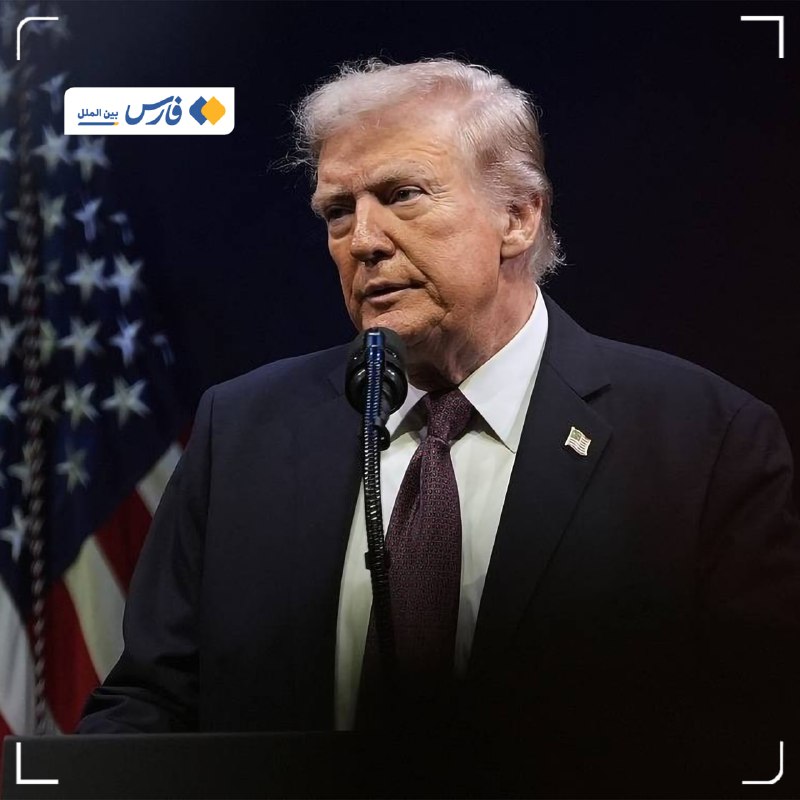
Iranian state television delivered a sharp rejection on 29 May of the terms the Trump administration had put forward for lifting the Hormuz strait blockade, deepening a diplomatic deadlock that has rattled energy markets and prompted rare bipartisan concern in Washington.
The broadcast, carried by state-run outlets and amplified through state-affiliated channels, argued that President Trump understood perfectly that any deal required the unfreezing of Iranian sovereign funds currently held under US sanctions architecture. The statement dismissed Trump's public assertions that no transfer of funds would occur as a negotiating position rather than a final position — a signal, Tehran suggested, that Washington still intended to extract concessions on uranium enrichment as the price of reopening the strait.
The rejection came hours after the US president had outlined what his administration described as a comprehensive framework: in exchange for Iran ceasing its naval interdiction of commercial shipping through the strait, Washington would lift the blockade, guarantee no tolls on vessels transiting Hormuz, and ease sanctions pressure on Iran's oil sector. Iran, the statement said, would be required to halt uranium enrichment at the 3.67 percent threshold set under the 2015 JCPOA and submit to international monitoring of its nuclear sites.
Tehran refused. Iranian officials have consistently argued that enrichment policy is a sovereign matter and that the Hormuz blockade is a legitimate response to US economic pressure — not an aggressive act requiring concession as the price of normalisation.
The deadlock and its structural dimensions
The Foreign Affairs analysis circulating in diplomatic circles this week frames the impasse as the product of two incompatible logics. Washington, the assessment notes, is attempting to avoid what it terms the trap of endless war with Iran while simultaneously avoiding what it calls the quagmire of accepting a negotiated settlement that leaves Tehran's nuclear programme functionally intact. Iran, for its part, interprets every US offer as an attempt to extract through economic pressure what military force cannot achieve.
The result is a negotiating posture with no clear off-ramp. American officials insist the blockade must end before sanctions relief can follow. Iranian officials insist sanctions relief — specifically the unfreezing of funds held in third-country accounts — must precede any normalisation of the strait's status. Neither side appears willing to move first, and the other's precondition is non-negotiable.
The immediate casualty of the impasse is commercial shipping. Lloyds of London has confirmed increased insurance premiums for vessels transiting the strait, and at least two major shipping firms have rerouted vessels around the Cape of Good Hope — adding roughly two weeks to journey times and significant cost to global supply chains. The rerouting is not yet a panic; it is a缓慢 haemorrhage that energy traders describe as sustainable in the short term but unsustainable over months.
The Greek national and the intelligence dimension
Separately on 29 May, a Greek national was charged in the United Kingdom with assisting Iranian intelligence operations, a development that has added a security dimension to an already volatile diplomatic situation. British prosecutors allege the individual facilitated the transmission of information relating to commercial shipping through the strait to an Iranian intelligence service. The Crown Prosecution Service has not disclosed the individual's name pending trial, but court filings indicate the alleged activity predates the current blockade and relates to operational intelligence rather than political coordination.
The timing of the charge, emerging on the same day as Iran's formal rejection of US terms, is unlikely to be coincidental. Western intelligence services have long suspected that Iran's naval interdiction operations in the strait are informed by real-time intelligence about vessel routes and cargo manifests — information that requires sources inside the global shipping information ecosystem. The charge will intensify scrutiny on other individuals operating in the maritime intelligence space and may prompt requests from allied governments for greater transparency from shipping data providers.
Oil markets and the quiet pressure building
Brent crude has risen approximately eight percent since the blockade intensified in late April, settling in the $92–96 range as of 29 May. The rise reflects not panic but a risk premium — a consensus among traders that the strait disruption is not a temporary blip but a structural feature of the negotiating landscape for the foreseeable future.
OPEC+ production capacity has not expanded to compensate. Saudi Arabia and the UAE have both signalled through official channels that they are at or near practical production ceilings, a position that energy analysts consider credible given the investment constraints of the post-2022 capital discipline environment. Russia's compliance with its OPEC+ quota has also tightened, reducing the spare capacity buffer that existed during earlier periods of Middle Eastern disruption.
The practical implication for European and Asian importers is a renewed cost pressure arriving precisely as manufacturing activity in both regions is recovering from a period of weak demand. China, which imports approximately four million barrels per day through Hormuz, has not publicly reacted to the blockade with diplomatic escalation; instead, Chinese state media has carried commentary emphasising the need for a negotiated resolution while simultaneously increasing imports from Russia via overland routes. The structural adaptation is not seamless — the pipeline capacity from Russia does not replace the Strait volumes — but it reflects a pattern Beijing has tested during previous disruptions.
What remains uncertain
The sources do not agree on several points that will determine whether this deadlock resolves or escalates. Whether Iran's leadership has internalised the cost of prolonged blockade to its own hard currency earnings remains unclear — the Iranian economy has absorbed severe sanctions pressure before, but the current combination of isolation and strait disruption is qualitatively different. Whether the Trump administration has a defined internal threshold below which it would accept a partial deal — perhaps sanctions relief on humanitarian grounds in exchange for partial strait normalisation — is also unknown; public statements from administration officials have been uniformly maximalist, but negotiating histories suggest private flexibility exists.
What is clear is that the strait remains blocked, the talks remain deadlocked, and the tanker rerouting is accelerating. The eight percent oil premium may be the most reliable indicator of where this is heading — and it is pointing toward a longer disruption, not a quick resolution.
This publication covered the Hormuz standoff with emphasis on Iranian state media framing and shipping disruption data, a different structural emphasis from wire services that focused primarily on the US domestic political dimension of the negotiations.