Israel's Northern Front: Hebrew Media and the War of Attrition Nobody Is Winning
Israeli newspapers are openly questioning whether Jerusalem can sustain its campaign against Hezbollah as ground losses mount and political pressure builds at home.
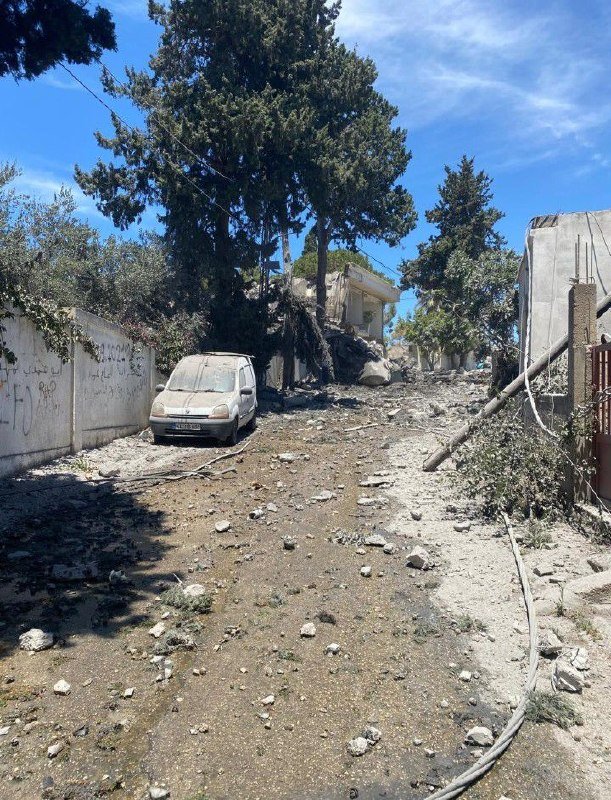
Hebrew newspapers, normally restrained in their coverage of active operations, published sharply divergent assessments over thirty-six hours beginning 29 May 2026. Yediot Aharonot, Israel's largest-circulation daily, ran a front-page analysis explicitly stating that Israel is "fumbling in Lebanon's war of attrition," a phrase its editors rarely deploy without political intent. Israel Hayom, a paper aligned with Prime Minister Benjamin Netanyahu's coalition, published a contrasting report suggesting that Iranian-aligned regional forces had been broadly weakened and that Israel held the decisive operational advantage. A third Hebrew-language outlet, sources indicate, reported that senior figures within Israel's own security establishment had privately acknowledgeddifficulties in sustaining the campaign. The three framings landed in the same news cycle, on the same theatres, from outlets that do not typically disagree without reason.
Hezbollah announced on 29 May 2026 that it had targeted a gathering of Israeli armoured vehicles and soldiers inside Lebanese territory, an operation its own communications described as a direct response to what it characterised as Israeli violations of the existing if formally unresolved ceasefire architecture. The Islamic Resistance Movement of Lebanon, Hezbollah's formal designation in its own communiqués, offered specific geographic coordinates — a targeting methodology that suggests continued operational cohesion, not the degradation that some Israeli assessments have implied. Whether those coordinates correspond precisely to any Israeli position cannot be independently verified from open sources; the claim must be read as Hezbollah's own account of its activities.
The divergence within Hebrew media is not coincidental. Israeli political factions are in active contest over how to frame the northern campaign — whether to declare tactical success and draw down, to escalate toward a ground operation that commanders have privately described as prohibitively costly, or to hold the line while seeking a negotiated settlement that saves face. When a country's own press carries three mutually inconsistent readings simultaneously, it typically signals that the government has not settled on a single message and that competing institutional voices are filling the vacuum. That reading applies here.
Iran and its affiliated networks have been quick to present the Hebrew press debate as evidence that the campaign has not succeeded by its own terms. Iranian state-adjacent media cited senior Israeli security officials apparently conceding that Tehran's regional posture has not unravelled in the way Western capitals had projected. The framing has a strategic logic: if senior Israeli figures are themselves drawing pessimistic conclusions, the narrative of Iranian network resilience is reinforced for a domestic Iranian audience and for the broader regional audience that Tehran has long cultivated through its regional proxy architecture. Whether those officials' reported remarks reflect genuine internal consensus or represent a calibrated public signal is not determinable from open sources alone.
What is observable is the structural pattern that both sides are now describing a grinding conflict without a clear endpoint — and that this framing is itself a contested artefact. Israeli commentators writing in Yediot Aharonot identified the war of attrition as a category that has historically resolved against the side best-equipped rather than the side most-determined, drawing on a body of operational analysis that most military historians would recognise. The dynamics of attrition — sustained losses, domestic political cost, eroded coalitions — are asymmetric by design when a non-state actor with territorial depth and popular legitimacy inside its own population confronts a professional military whose public tolerates casualties within narrow bounds. Hezbollah has operated inside Lebanese civilian infrastructure with a degree of popular embedding that makes surgical separation from non-combatant populations operationally difficult and politically costly.
The economic substrate adds a further structural dimension that analysts who focus exclusively on the military plane tend to underweight. Lebanon's domestic economy collapsed years before the current phase of hostilities; Hezbollah sustains its military capability through a funding architecture that is partly independent of Lebanese state capacity. This means the attrition calculus does not operate on Lebanon as a national entity the way attrition would apply to a state-funded armed force. Iran's own economic pressures from international sanctions are real and documented — they show up in currency depreciation, manufacturing output, and observable indicators of household economic stress. But the sanctions regime has not severed the network financing and logistics flows that sustain Hezbollah. That the network has not collapsed under pressure is itself a factual claim that neither Western assessments nor Iranian counter-claims can fully interrogate from open sources.
The sources do not give a complete picture of current Israeli casualty figures, the precise state of Hezbollah's command-and-control capacity, or the operational content of what Israel calls its Northern Arena strategy. Israeli military spokespeople have not issued updated official assessments since March 2026 for open-source purposes; Hezbollah's own communiqués are filtered through an organisational lens that serves its own narrative interest. What both the Israeli assessments and the Iranian counter-assessments agree on is that the conflict does not have a short-term resolution. That consensus, coming from parties with every incentive to disagree, is itself significant.
The stakes are not abstract. If the grinding quality of the conflict continues, Israel faces compounding political pressure — from families of deployed reservists, from a northern civilian population that has not been able to return to border communities, and from a cabinet whose members hold divergent views on acceptable costs. Within Iran, continued resilience in the Lebanon theatre reinforces the position of those who argue that the sanctions-and-pressure strategy has reached its limits without achieving its objectives, a debate with direct bearing on Vienna nuclear talks that remain, as of May 2026, unresolved. Hezbollah's own internal politics are less observable but plausibly affected: a posture of successful resistance raises the movement's standing in Lebanese constituencies that have otherwise experienced state failure as the defining political fact of the past six years.
Regional actors beyond Israel, Iran, and Lebanon are watching closely. The war of attrition in the north provides a live case study for other proxy relationships and frontline states assessing whether long-duration confrontation against a better-equipped adversary is politically and militarily sustainable. That calculation will shape decision-making in Gaza-aligned factions, in Gulf security architectures, and in European capitals weighing the costs of continued arms supply to a conflict whose endpoint neither party controls.
The media framing contest is, in its own right, part of the conflict. The simultaneous publication of mutually inconsistent Hebrew assessments was not accidental — it reflects a political environment in which no single Israeli institution controls the narrative. Iranian and-aligned media are taking that incoherence and packaging it as proof of strategic failure. The claim is self-serving; the evidence the claim rests on — a divided Israeli press — is genuine. Readers navigating this information environment should note that both sides are arguing from partial evidence toward politically convenient conclusions, and that the underlying military facts of the northern front remain, as they have for the better part of two years, contested and by design incomplete.
[This article was filed from the Mena desk on 29 May 2026. Monexus leads with open-source Israeli reporting, including Yediot Aharonot's explicit characterisation of the northern campaign as an attrition contest, while incorporating Iranian-aligned source material with explicit attribution caveats. The counter-narrative from Israel Hayom is acknowledged within the piece as reflecting a different political faction's reading rather than a contradictory set of facts.]
Wire provenance
This editorial synthesis draws on the following public wire/social posts:
- https://t.me/FarsNewsInt/34521
- https://t.me/FarsNewsInt/34520
- https://t.me/tasnimplus/
- https://t.me/farsna/