Israeli Airstrike Targets Gathering in Eastern Gaza City, Killing At Least One
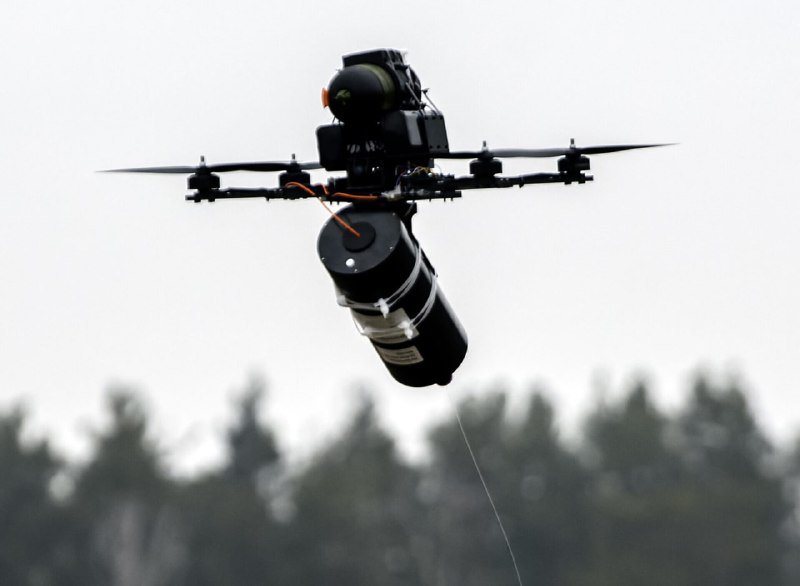
At least one person was killed and several others were taken to hospital on 29 May 2026 after an Israeli airstrike targeted a gathering at Al-Shawa Square, east of Gaza City. The IDF Spokesperson's Unit confirmed the strike was conducted by Israeli military aircraft against the specified location. Initial reports from Palestinian civil defence sources and Arabic-language wire services described multiple casualties. The incident occurred amid sustained Israeli military operations across the Gaza Strip, which have produced widespread civilian casualties and near-total destruction of residential infrastructure over sixteen months of conflict.
What the sources confirm is limited: a strike, a location, and a casualty count that — at time of publication — stood at one confirmed fatality with several wounded. The identity of those targeted, the nature of the gathering, and the Israeli military's stated justification remain absent from the available wire reporting. IDF statements on individual strikes are typically issued through the Spokesperson's Unit, sometimes within hours of an operation, but no such statement covering Al-Shawa Square had been published as of 13:45 UTC on 29 May. That gap is significant. It is the space into which competing narratives rush.
What the IDF says it does — and what the record shows
The Israeli military's standard position on strikes in Gaza emphasises precision targeting and measures taken to reduce civilian harm — advance warnings to civilian populations, the use of precision munitions, and operational rules designed to distinguish combatants from non-combatants. IDF spokesperson briefings routinely describe targets as Hamas infrastructure, weapons depots, or operatives. Where civilian casualties are acknowledged, the framing is typically that Hamas exploits civilian areas for military purposes, placing the responsibility for harm on the militant group rather than on targeting decisions.
The structural tension between those two claims — precision targeting versus consistently high civilian casualty ratios — is well-documented. Human rights organisations monitoring the conflict have recorded thousands of civilian deaths from strikes in circumstances where the military's proportionality claims have been contested. Gaza's population density, which exceeds 15,000 persons per square kilometre in some governorates, means that virtually any strike carries a high civilian harm floor regardless of the technology deployed. The IDF has historically maintained that the density of militant infrastructure within civilian areas — tunnels beneath residential buildings, command centres adjacent to schools — creates conditions where civilian harm is unavoidable, a position that has found partial acceptance in some international legal interpretations but has been rejected outright by the International Court of Justice in its provisional measures findings.
Civilian harm as information event
Incidents with multiple civilian casualties in a concentrated setting like Al-Shawa Square function differently from isolated strikes in the information environment that surrounds the conflict. A gathering — whether a funeral, a distribution queue, or simply people socialising — is legible to international audiences in a way that an intelligence-identified target inside a building is not. The visual language is different. The civilian-to-combatant ratio in the immediate aftermath is harder to obscure. And in an environment where the IDF Spokesperson's Unit has not yet issued a statement, the information vacuum is filled by whatever documentation emerges from the ground.
This creates a structural asymmetry that is not unique to this conflict but is particularly acute in it. The IDF has invested heavily in real-time Arabic-language messaging — phone calls, roof-knocking, and SMS warnings — designed to shift civilian populations before strikes. The existence of those mechanisms means that when a strike does hit a gathering, the question of whether warnings were issued becomes a live factual dispute. If warnings were given, the strike's legitimacy is partially reinforced. If they were not, the incident becomes an escalatory data point in arguments about violations of the laws of armed conflict. Whether those warnings were actually delivered, and whether they were actionable given the conditions on the ground — collapsed roads, lack of communications infrastructure, ongoing ground operations — is not a question the available sources resolve.
Ceasefire calculus — before and after Shawa Square
Indirect negotiations involving Qatar, Egypt, and the United States have produced multiple rounds of proposals since the original ceasefire framework collapsed in early 2026. The core sticking points are consistent: the sequencing of hostage releases against a permanent cessation of hostilities, the disposition of Hamas's armed wings, and the question of who governs Gaza after the conflict ends. Both sides have publicly expressed willingness to negotiate while simultaneously carrying out operations that deal kills to negotiating conditions.
An incident at Al-Shawa Square that produces civilian casualties is, in the near term, a negotiating lever. Hamas-aligned political figures will frame it as evidence that Israel has no interest in a ceasefire that does not involve unconditional surrender of the Strip. Israel's political leadership will frame it — if the IDF's confirmed account describes a legitimate military target — as evidence of the continued necessity of military pressure to achieve hostage recovery. Whether either framing is accurate depends on information that remains in the possession of the IDF Spokesperson's Unit, which has not yet published its account of the strike.
The longer trajectory is harder to move. Sixteen months of sustained operations have produced a population in Gaza that is overwhelmingly displaced, and a political environment in Israel in which the durability of any ceasefire depends on whether a sufficient number of hostages are recovered to make the political cost of ending the campaign bearable for the governing coalition. The Shawa Square incident does not alter those structural constraints. It may, however, alter the temperature of the negotiating rooms in Doha and Cairo where the next session is expected to take place.
What remains unconfirmed
The sources reviewed for this article do not specify who was present at Al-Shawa Square at the time of the strike, what activity the gathering was engaged in, or what intelligence led Israeli military planners to select that location. The IDF has not published a statement on the incident. Casualty figures remain preliminary, and the condition of those transported to hospital has not been reported. Whether any of the dead or wounded are confirmed as combatants is unknown at time of publication. These are not trivial gaps. They are the difference between an incident that is analytically categorisable — and therefore interpretable within existing frameworks — and one that remains raw fact awaiting a narrative.
This article drew on initial wire reporting from The Cradle and Arabic-language services. Broader coverage from international wire outlets was not yet available at time of publication.
Wire provenance
This editorial synthesis draws on the following public wire/social posts:
- https://t.me/thecradlemedia/
- https://t.me/alalamarabic/