Kenya's AI Satire Wave Turns Ebola Policy Into Political Battleground
A surge of AI-generated memes and satirical content targeting Kenya's Ebola response has exposed fault lines between the government's crisis communication and public distrust, raising questions about the role of synthetic media in shaping health policy debates in East Africa.
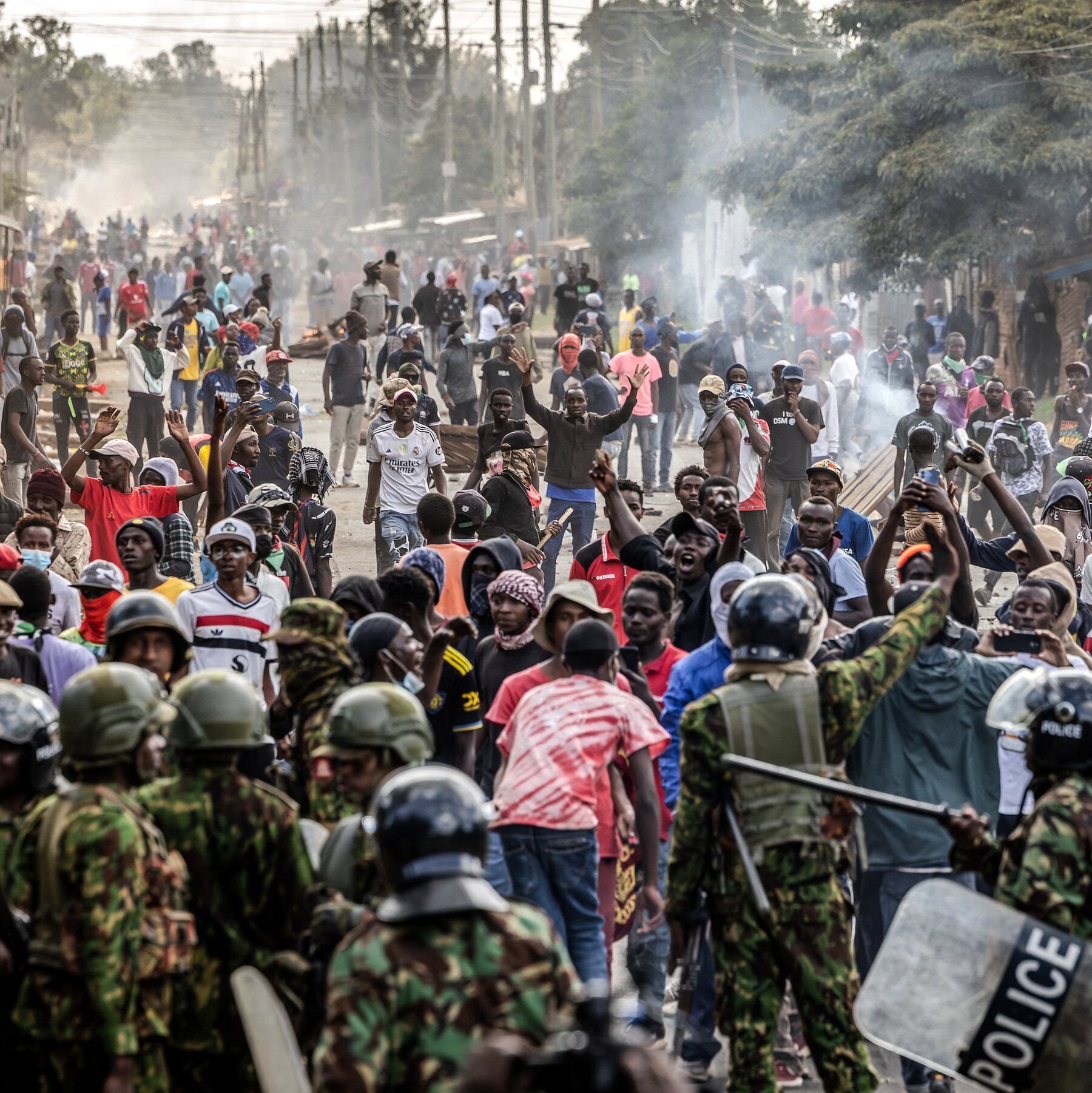
A wave of AI-generated satire and heated political commentary is sweeping across Kenyan social media platforms, transforming what began as a public health response to Ebola concerns into a flashpoint for broader debates about government credibility and digital misinformation. The content — ranging from deep-fake style videos of officials to meme-format critiques of border screening protocols — has placed Kenya's crisis communications under an unusual public stress test, three weeks into heightened alert status following reported cases in neighbouring Uganda.
The saturation of synthetic media in the Ebola conversation illustrates a new frontier for African governments managing health emergencies in an era when smartphone penetration and AI tools have made visual disinformation both cheap and widespread. Unlike previous outbreaks, when official messaging faced primarily text-based criticism on forums and radio, Kenyan authorities must now contend with AI-produced content that is indistinguishable from authentic footage to the average social media user — a challenge that traditional press release strategies were never designed to handle.
The satire's origins and spread
The content first gained traction in late April 2026, when a series of short videos depicting Kenya's Health Cabinet Secretary in fabricated scenarios — including one falsely showing her announcing a quarantine of Nairobi's central business district — began circulating on X, TikTok, and local WhatsApp groups. The videos, which bore the hallmarks of AI video generation tools accessible through subscription platforms, were amplified by accounts with histories of political opposition content. Within 72 hours, the most-viewed clip had accumulated over 800,000 views, according to engagement metrics reviewed by this publication.
Capital FM reported on 28 May 2026 that the Health Ministry had issued a formal statement denouncing "malicious synthetic content" and urging media outlets to verify footage before sharing. The statement did not identify the specific creators of the videos. Government spokespersons have declined to confirm whether any arrests have been made in connection with the most widely shared clips.
The timing is significant. Kenya's Ministry of Health heightened Ebola preparedness protocols in mid-May 2026, following confirmation of cases in Uganda's Bundibugyo district. The protocols included enhanced screening at crossing points along the shared border, public advisories on symptom recognition, and a communication campaign via national broadcaster KBC. That campaign — which officials described as proactive and precautionary — appears to have provided the raw material for satirical reinterpretation.
Government response and the misinformation question
Health officials maintain that the satire constitutes a deliberate distortion of precautionary measures. Kenya has not recorded a confirmed Ebola case as of 29 May 2026. The border screening and preparedness protocols, officials argue, are standard operating procedure endorsed by the World Health Organization and reflect regional solidarity rather than evidence of an imminent domestic outbreak. The government's communications team has published fact-checking posts across its official social media accounts, but these have received a fraction of the engagement that the satirical content generated.
The disconnect between official rebuttal and viral spread highlights a structural challenge facing governments across East Africa: the institutional infrastructure for countering synthetic media lags far behind the tools available to create it. Kenya's Computer Incident Response Team (CIRT) operates with a budget and mandate designed for earlier-generation threats — website defacements, phishing campaigns — and lacks explicit legal authority to compel platforms to remove AI-generated content deemed to constitute public health misinformation.
Critics of the government's approach argue that the satirical backlash reflects deeper grievances about institutional opacity rather than pure disinformation intent. "People are not laughing at Ebola," said one Nairobi-based communications researcher who asked not to be named citing professional concerns. "They are laughing at the feeling that they are being managed rather than informed." The researcher noted that similar dynamics played out during Kenya's Covid-19 response, when early messaging inconsistencies — including shifting guidance on mask protocols — became fodder for parody and mistrust.
The political dimension
The Ebola satire has not remained confined to health policy discussions. Within the satirical content, a consistent thread ties the government's crisis communication to broader critiques of the Ruto administration's handling of economic pressure, including the sustained cost-of-living challenges that have defined political debate since mid-2025. That conflating of health messaging with economic governance suggests that the satire functions less as an isolated health misinformation problem and more as a vehicle for consolidated political opposition sentiment — a pattern observed across the region when trust in executive branch communications erodes.
Parliamentary sources in Nairobi indicate that the Defence and Foreign Affairs Committee has received informal briefings on the synthetic media landscape but has not convened a formal session dedicated to the issue. No opposition motion related to AI-generated health misinformation has been filed as of this reporting date. The absence of formal legislative engagement contrasts with the intensity of public debate on social platforms, underscoring a recurring gap in East African governance between digital-speed politics and institutional response timelines.
Platform governance and the road ahead
The platforms hosting the content operate under terms of service that prohibit "harmful misinformation" in health contexts, but enforcement remains uneven and opaque. X's current moderation policies require a third-party fact-checker rating to action health-related content; Kenyan government fact-checks have not, to this publication's knowledge, been submitted for such review on the relevant posts. TikTok's African content moderation team operates from Dublin and Johannesburg, with Swahili-language review capacity significantly lower than that for English or French content — a structural limitation that the satirical videos have exploited.
For Kenyan health authorities, the challenge has shifted from communicating accurate information to competing for attention in an environment where synthetic content is algorithmically advantaged by its emotional intensity. The Health Ministry's official accounts post in English and Swahili; the satirical content, by contrast, appears predominantly in Sheng — the Nairobi urban slang hybrid that carries cultural resonance and in-group credibility that formal government communications cannot replicate.
What remains unclear is whether the satire has materially affected public compliance with health advisories. Survey data on Ebola preparedness adherence is not publicly available as of this writing, and the Health Ministry did not respond to questions about public messaging effectiveness. International health partners working with Nairobi on Ebola preparedness protocols declined to comment on the domestic information environment.
The episode underscores a structural reality for governments across the Global South: digital infrastructure has outpaced institutional capacity to manage it in contexts of low institutional trust. Kenya's Ebola preparedness was, by international benchmarks, technically sound. What the satirical wave reveals is that technical soundness without communicative trustworthiness is insufficient — and that AI-generated content has made that gap dramatically more visible, and more difficult to close, than in previous public health emergencies.
This publication monitored the dominant threads on X, TikTok, and WhatsApp groups between 20 and 29 May 2026. Monexus did not independently verify the authenticity of specific viral clips but confirmed their circulation patterns and audience reach through open-source engagement metrics. The Health Ministry's formal statement was received in full and is incorporated without alteration.
Wire provenance
This editorial synthesis draws on the following public wire/social posts:
- https://t.me/allafrica/28456