Ghost Empire: How Matteo Messina Denaro's $230 Million Fortune Survived Death
Italian police have dismantled the hidden business empire of the dead Cosa Nostra boss Matteo Messina Denaro, uncovering assets worth $230 million after a tip about a wealthy Sicilian woman's holdings in a European principality.
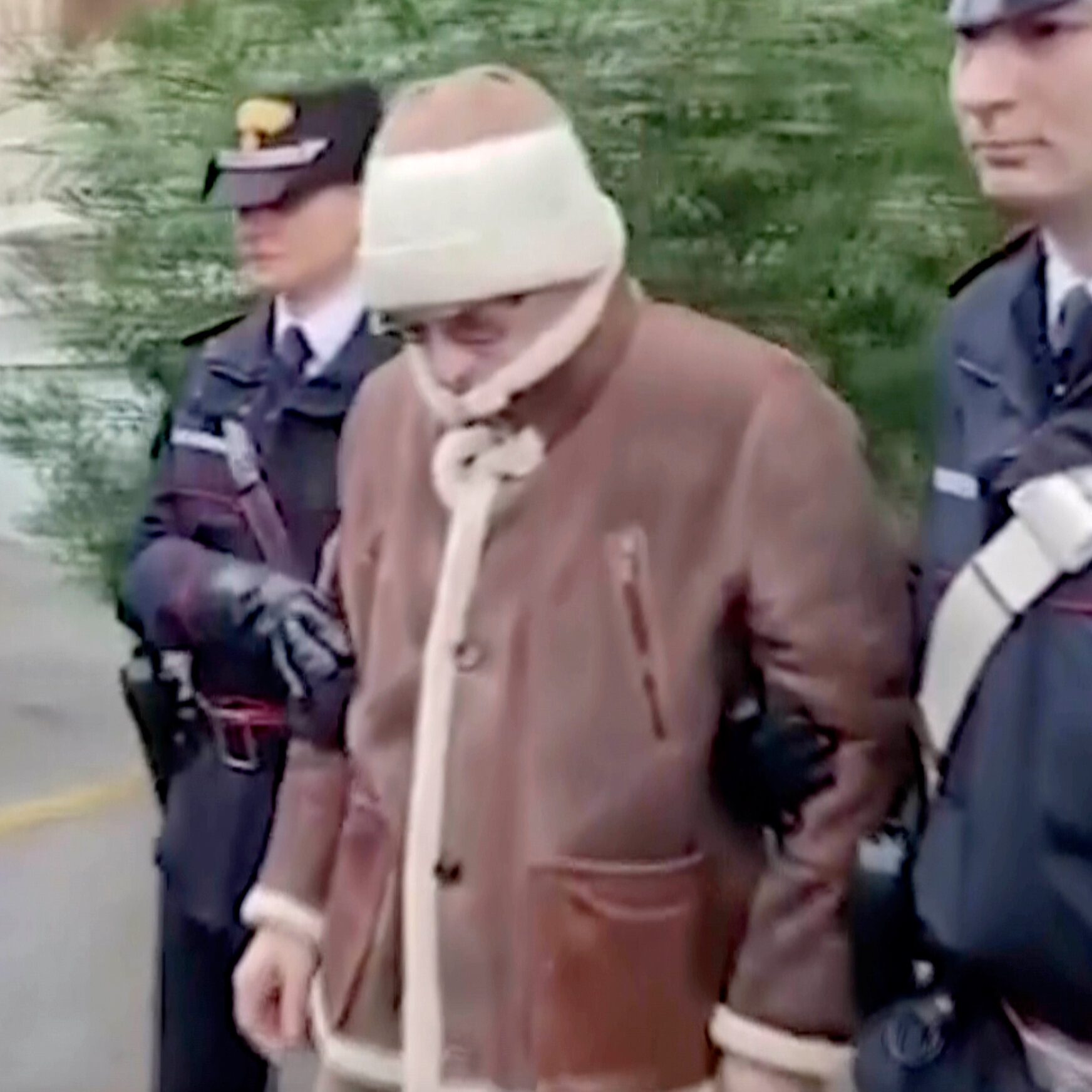
Matteo Messina Denaro died on 25 June 2023 in a specialist prison ward in Lanciano, Abruzzo, surrounded by the clinical silence of a man who had outlived almost every rival and escaped almost every consequence. He had spent the final years of his 30-year run on the run — captured only in January 2023 after decades in hiding — serving life sentences for the bomb murders of Judges Paolo Borsellino and Giovanni Falcone in 1992 and a string of other Cosa Nostra killings. The official record said he was finished. The financial record, it turns out, had other ideas.
Italian police announced on 28 May 2026 that they have dismantled a business empire linked to Denaro's network totalling approximately $230 million in assets, including companies, properties, and financial holdings. The investigation, conducted by the Ragusa financial crime unit and the Carabinieri's anti-mafia command, was triggered by a tip about the significant assets held by a wealthy Sicilian woman in a small European principality. The case underscores a persistent structural reality: death, imprisonment, and even decades of operational failure did not prevent Cosa Nostra's financial machinery from continuing to churn.
The Tip That Broke the Ice
For two years after Denaro's death, investigators knew that large portions of his financial life had died with him — or so it appeared. The boss had maintained the discipline typical of top Cosa Nostra figures, compartmentalising information, rotating nominees, and keeping written records to a minimum. The authorities held his person but not his books.
The breakthrough came when a financial intelligence report flagged anomalous activity in a tiny European principality: a Sicilian woman, not herself under criminal investigation, held significant real estate and corporate interests that did not correspond to any declared income trajectory. Cross-referencing against known Denaro associates revealed the link. From there, investigators traced a network of companies, nominee holdings, and cash flows stretching back years, eventually reconstructing an asset base that one senior Italian official described, off the record, as "historically significant for a single individual Mafia network."
The woman has not been named in court filings publicly disclosed to date. Italian prosecutors have applied to freeze the assets pending formal confiscation proceedings.
Why Cosa Nostra's Money Never Stops
The Denaro case is not anomalous. It is structural. Italian anti-mafia prosecutors have long understood that theaki financial system of organised crime operates on different logic than its operations wing. A boss can be dead, imprisoned, or in hiding for decades; the vehicles he built — the family butcher shop, the aggregate quarry, the construction firm with the convenient supplier relationship — continue to generate income, collect invoices, and pay dividends to whoever holds the nominee shares.
Denaro's network, according to the Italian police statement, was particularly resilient because it was built and maintained primarily through relatives and long-standing associates rather than through formal conspiracies that might attract law enforcement attention. The woman identified by the financial intelligence tip operated as an arm of the Denaro network for years without triggering any threshold-reporting mechanism in the principality where the assets sat. When Italian investigators eventually requested mutual legal assistance under existing European financial disclosure frameworks, the response was cooperative but the process took months — a friction point that anti-mafia prosecutors routinely flag as a structural vulnerability in cross-border asset recovery.
The $230 million figure represents the best estimate of total asset value reconstructed by investigators at this stage. Confiscation proceedings may ultimately recover a smaller sum, depending on what can be legally proven and what counterparties can demonstrate legitimate provenance.
The Principality Problem, Revisited
Small European principalities have long occupied an uncomfortable position in anti-mafia finance architecture. Andorra, Monaco, Liechtenstein, San Marino, and microstates of similar scale offer legal structures — shell companies, trusts, private banking relationships — that are not illegal in themselves but that, by design, complicate the transparency chain that financial intelligence units depend on.
Italian investigators did not accuse the principality in question of complicity. The mutual legal assistance request was honoured, and the asset freeze was executed. But the case illustrates a gap that has existed for years: even within Europe, the information-sharing mechanisms between financial intelligence units operate on request-and-response timelines that allow assets to sit undisturbed for extended periods while paperwork moves between jurisdictions. Denaro's network appears to have exploited precisely this interval — holding assets in a jurisdiction where the question "whose money is this?" was not automatically fed back to Italian authorities until someone asked the right question.
The principality in question has not been publicly identified in the Italian police statement. Court filings refer to it only as a "specified jurisdiction" in the context of the mutual legal assistance proceedings.
What Remains Unknown and What Comes Next
Several questions remain open. Italian prosecutors have not publicly disclosed the full list of companies or properties involved, citing ongoing proceedings and the interests of co-investigators who are still building the forfeiture case. The precise role of the Sicilian woman — whether she acted as a nominee, a beneficiary, or both — has not been formally established in court. And the question of how much of the Denaro network's financial activity went undetected by Italian authorities across the decades before his death is, in the nature of such investigations, unanswerable.
Confiscation proceedings will take years to resolve. Italian law permits civil forfeiture — a lower standard of proof than criminal conviction — which prosecutors are expected to invoke given the difficulty of prosecuting a dead man for money laundering. Survivors of Denaro's network who are still alive may face separate proceedings.
The broader implication is less legal than economic. Cosa Nostra, whatever its reduced operational capacity compared with the mid-1990s peak, still functions as a financial services firm that happens to have existed since the 1960s. It has learned to hold assets quietly, rotate structures before they attract scrutiny, and delegate the personal exposure to nominees who are either trusted or afraid. Denaro's empire is the latest example of a durable pattern — not a revelation.
The desk approach to this story reflects a consistent editorial stance: the financial architecture of organised crime deserves the same analytical weight as its violent operations. Coverage of Mafia networks tends to centre on arrests, trials, and body counts. Less glamorous but structurally more significant is the question of who controls the money that outlives the men who built it.
——
Italian financial police on 28 May 2026 announced the dismantling of a business empire linked to the late Cosa Nostra boss Matteo Messina Denaro, totalling approximately $230 million in assets. Italian police / New York Times / Photography