Oil's Brutal May and the Strait That Guards the World's Fuel
Crude has not fallen this far, this fast in six years. Oman's quiet diplomatic pledge to keep the Strait of Hormuz open sits uncomfortably alongside the collapse — a reminder that the geopolitics of oil and the economics of oil rarely move in sync.
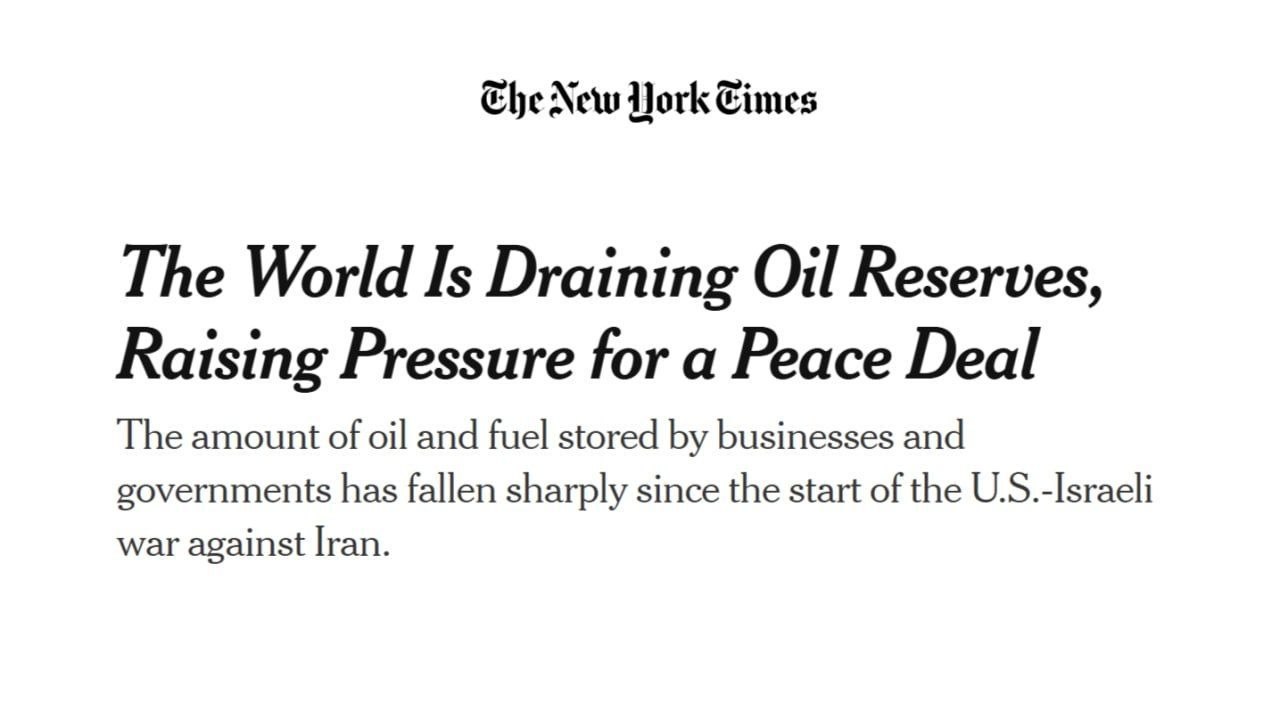
On 29 May 2026, Oman's foreign minister quietly assured Washington that his country would not levy transit charges in the Strait of Hormuz. The same day, traders absorbed data showing crude had fallen twenty percent in a single month — the sharpest monthly decline in six years. The two events arrived in the same news cycle, but they are not unrelated.
The Hormuz strait is the world's most critical chokepoint for oil. Roughly twenty percent of global supply transits its narrow waters daily, moving from Gulf producers to buyers in Asia, Europe, and the Americas. A disruption there — whether from Iranian threats, a naval incident, or a toll imposed by a littoral state — would move markets far more violently than any supply-demand accounting. Oman, which has managed a careful neutrality between Tehran and Washington for decades, made its Hormuz assurance through Treasury Secretary Scott Bessent, according to reporting carried by The Epoch Times on 29 May 2026. The timing was notable: the pledge arrived not in a period of crisis, but in a period of extraordinary market softness.
The Scale of the Price Collapse
The May decline was not a single bad week. It was a sustained, grinding move lower that left Brent crude down roughly twenty percent for the month — the largest monthly percentage drop since mid-2020, when pandemic-era demand destruction briefly cleared storage tanks and sent futures negative. The reporting on the decline appeared across financial wires on 29 May 2026, with markets citing a confluence of factors: slowing demand in China, rising inventories in the United States, and the knock-on effects of the Trump administration's tariff regime on global trade flows.
The tariff calculus is not subtle. When Washington raises the cost of Chinese goods, it risks slowing Chinese industrial activity. Slower Chinese growth means less energy consumption. Less consumption means inventory builds. Inventory builds eventually mean price pressure. The chain runs from trade desk to oil terminal to tanker booking rate, and it is running fast right now. OPEC+ has attempted to manage the supply side, but the cartel's cuts have struggled to offset demand-side deterioration, particularly in Asia.
What makes the May move remarkable is its speed. Markets had been braced for a difficult year. They were not braced for a twenty-percent monthly wipe. The psychological shift matters: a gradual erosion invites producers to wait for a rebound; a sharp, large decline forces them to react. Hedge funds and institutional money moved to reduce long positions. The contango in futures markets — where near-term contracts trade below later ones — deepened, signalling that traders expect soft demand to persist.
Oman's Diplomatic Tightrope
The Omani assurance on Hormuz deserves more attention than it has received. Oman controls the Musandam Peninsula, which borders the strait's narrowest point at the Fujairah Narrows. It has long resisted pressure from Riyadh and Abu Dhabi to take a more assertive posture toward Iran. It has also resisted pressure from hardliners in Washington who see any Gulf state restraint toward Tehran as tacit accommodation.
That Oman's foreign minister chose to make the Hormuz non-toll pledge through Bessent — rather than through a public statement or a multilateral Gulf body — suggests the communication was transactional. Oman needs the United States. The sultanate's state budget is under pressure from exactly the same oil-price dynamics that are worrying every Gulf monarch. A sovereign wealth fund under strain, a riyal pegged to the dollar that absorbs the currency pressure indirectly, and a population that expects a certain standard of state provision — these are the quiet constraints that do not appear in diplomatic communiqués but that shape every diplomatic communiqués' timing and tone.
Iran, for its part, has its own Hormuz calculus. The Islamic Republic has repeatedly threatened to close the strait in periods of maximum tension — particularly during the maximum pressure years of the Trump administration's first term. The threats are real enough that naval planners in Washington and Brussels track them continuously. But the threats are also instruments of signalling. Tehran closes the strait rhetorically when it wants to deter further sanctions escalation. It leaves the strait open operationally when it wants to keep the nuclear diplomacy door cracked. The gap between the two is where Gulf policy lives.
The current moment sits in that gap. Negotiations over Iran's nuclear programme have not broken down, but they have not advanced. The Trump administration has maintained sanctions pressure while signalling openness to a revised JCPOA framework. Iran has moved its enrichment levels but not yet to weapons-grade. Neither side wants a conflict that closes the strait — because both understand that closing it would spike prices in ways that damage them as much as their opponent.
The Structural Shift Beneath the Price Move
The May collapse sits inside a larger structural change that is quietly reshaping the energy geopolitics of the Gulf. The United States is no longer a passive consumer of Gulf crude. American shale production has turned the country into a major exporter. The strategic logic that once bound Washington to Gulf security guarantees — we need the oil, therefore we protect the sea lanes — has weakened. Washington now has an interest in low oil prices that competes with its interest in Gulf stability.
This creates a genuine tension in American policy. Low prices damage Iran and Venezuela, both of whom depend on oil revenues to fund state functions and, in Iran's case, regional proxy networks. High prices benefit those same producers but also inflate costs for American consumers and complicate the Federal Reserve's inflation management. The Trump administration, which has made energy dominance a stated policy goal, finds itself wanting cheap gasoline for American drivers and cheap crude input for American petrochemical firms — while also wanting maximum financial pressure on Iran.
These objectives are not fully compatible. A twenty-percent oil price drop, if sustained, does more to relieve inflationary pressure at American pumps than any Federal Reserve rate decision. It also, quietly, does the work of sanctions without requiring a single new sanctions designation. Iran that cannot sell its oil at profitable prices is Iran that cannot fund Hezbollah as effectively. Gulf monarchies that see their revenues fall are Gulf monarchies that need American security guarantees more — and that will be more compliant with Washington on a range of issues from normalised relations with Israel to 5G network decisions.
China complicates this calculus further. Beijing is Iran's largest oil customer. Chinese demand, to the extent it slows under tariff pressure, reduces the floor on Iranian export revenues. But China also has its own interest in keeping Hormuz open and stable — its manufacturing economy runs on Gulf crude. A Chinese observer of the current moment sees cheap oil as a short-term benefit and Hormuz stability as a permanent interest. These are not the same thing.
What Comes Next
The immediate question is whether the May price trajectory holds. A twenty-percent monthly decline is statistically extraordinary. Markets that fall that hard, that fast, tend to find technical buyers. OPEC+ has called emergency ministerial meetings before. The cartel's self-discipline has limits — members cheat on quotas, and the incentive to cheat grows as prices fall — but the Gulf monarchies, Saudi Arabia in particular, have historically moved to defend price floors when the fall threatens their fiscal projections.
The deeper question is whether the Hormuz assurance marks a genuine de-escalation or a tactical pause. Oman has earned the right to be taken seriously on both counts. It mediated the secret back-channel talks that produced the original JCPOA in 2015. It has maintained diplomatic relations with Tehran through every round of Gulf confrontation. Its sovereign wealth fund is large enough to absorb a year or two of depressed oil revenues without regime-threatening social spending cuts.
But Oman's room to manoeuvre depends on the broader geopolitical temperature. If American-Iranian tensions escalate — if nuclear talks collapse, or if a naval incident occurs in the Gulf — Oman's quiet assurances become difficult to honour without visible cost. The strait is not Oman's alone to guarantee. It is a shared security space in which the United States Fifth Fleet, the Islamic Revolutionary Guard Corps Navy, and the coast guards of six littoral states all operate, sometimes in挤 proximity.
The May 2026 convergence of a price collapse and a diplomatic assurance is, at one level, just two facts in a single news cycle. At another level, it is a reminder that energy markets and geopolitical signalling operate on different clocks. Markets move on quarterly earnings, inventory reports, and algorithm-driven trading. Diplomacy moves on decades of accumulated relationship, threat perception, and the slow work of establishing that one party will not do the thing that the other party fears. Oman told Washington it would not charge tolls. The question is what happens when the oil price falls so far that someone else considers charging them anyway — and what Washington does when the answer comes from a strait it no longer controls as absolutely as it once did.
Wire provenance
This editorial synthesis draws on the following public wire/social posts:
- https://t.me/epochtimes/78432
- https://theepochtim.es/7ryrj1
- https://en.wikipedia.org/wiki/Strait_of_Hormuz