Oil Markets Ride the Iran Deal Rollercoaster as Military and Diplomatic Signals Collide
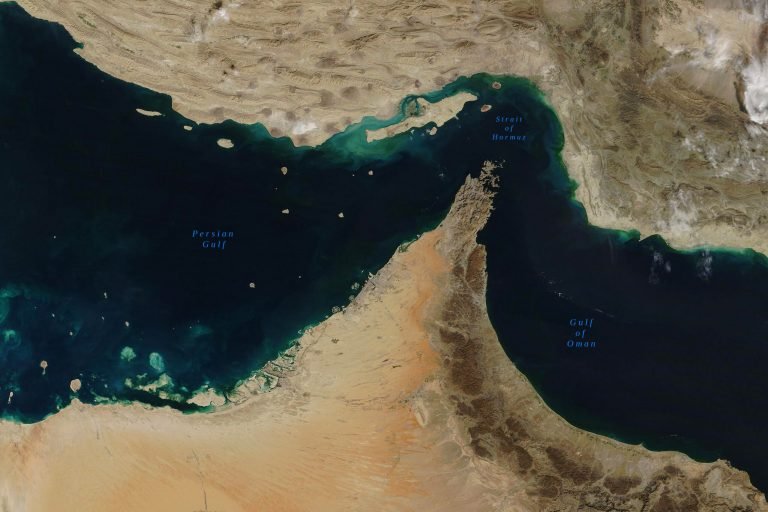
Oil prices fell sharply on May 29 after President Donald Trump announced what he described as an agreement with Iran on nuclear disarmament, while simultaneously hinting at the possible reopening of the Strait of Hormuz to normal traffic. The announcement triggered an immediate rally in Asian equity markets, with Japan's Nikkei and South Korea's KOSPI both reaching fresh historical highs. But the optimism sat uneasily alongside reports of strikes on US vessels in the same waterway and Iranian officials positioning Hormuz access as a bargaining chip in ongoing talks.
The episode encapsulated the whiplash dynamic that has defined US-Iran relations since the collapse of the JCPOA: markets pricing peace while the underlying military posture remains volatile, and a diplomatic process in which the most significant leverage—control of a transit chokepoint carrying roughly a fifth of the world's oil—has not been formally relinquished.
A Tentative Deal, Unconfirmed on the Ground
Trump told reporters on May 29 that Iran had agreed to nuclear disarmament and that the Strait of Hormuz would reopen to normal commercial traffic. Kazakhstan, meanwhile, offered to take custody of Iran's enriched uranium, a diplomatic move that would remove material critical to any weapons programme and serve as a physical guarantee of compliance. Those developments, taken together, represented the most concrete step toward de-escalation since tensions escalated earlier this month.
But Iranian officials offered a more qualified account. According to statements cited in regional wire reports, Iran views Hormuz traffic management as a negotiating asset, not a concession automatically tied to any broader framework. The reopening of the strait remains "unconfirmed" by Tehran, even as Trump publicly framed it as settled. That gap—between a US presidential announcement and an Iranian denial of any binding commitment—left oil traders uncertain how to price the news. Futures initially fell more than three percent before paring losses.
Markets React Before the Ink Is Dry
The equity response was faster and cleaner than the oil response. Japanese and South Korean indices surged to record levels on May 29, with investors apparently treating the Trump announcement as sufficient signal to reprice regional risk. The assumption baked into that rally was straightforward: a US-Iran rapprochement would reduce the premium baked into energy prices, ease shipping insurance costs across the Gulf, and remove a tail-risk scenario—Hormuz closure—that had weighed on Asian manufacturing and trade logistics for months.
That read may prove correct. But it runs well ahead of what the available evidence supports. The sources do not specify the terms of any agreed framework, the verification mechanisms that would govern it, or whether Iran's Revolutionary Guard Corps, which controls much of the Gulf's maritime security apparatus, has been consulted or is even aware of the contours of what Trump described.
Military Posture Has Not Adjusted
Against the diplomatic optimism, reports emerged of strikes on US naval vessels operating in the Strait of Hormuz. Those incidents—which the sources describe as occurring amid an "Iran war crisis"—did not feature in the market-moving narratives circulating on May 29 but are inseparable from the operational reality. Even if talks are genuine, the military dimension has not been switched off. Iran has historically used a combination of official negotiations and proxy pressure to extract concessions; there is no indication in the source material that this pattern has been broken.
Iranian positioning of the Hormuz strait as leverage—rather than as a precondition-free concession—suggests Tehran is managing the negotiation rather than capitulating to it. If Iran controls when and how much traffic moves through the strait, it retains the ability to re-impose disruption if talks stall. That is not a closed fist; it is a managed hand.
What Comes Next Depends on Verification
The structural stakes are large. A genuine US-Iran agreement would remove one of the most persistent sources of geopolitical risk premium in global energy markets. It would also complicate China's strategic calculus, given Beijing's long-standing energy partnership with Tehran and its dependence on Gulf transit. Whether a deal benefits American allies in Asia, or primarily benefits Iran and its non-Western partners, will depend on the specifics—verification timelines, sanctions relief sequencing, and what, if anything, the US extracts on Iran's regional missile programme.
Those specifics are not in the public record as of this writing. What is in the record is a presidential announcement, a Kazakh offer, an Iranian qualification, and a set of military incidents that have not been explained. Markets moved on the first three. The fourth deserves equal attention.
This publication's wire coverage led with the Trump announcement and the equity market response. We have attempted to flag the Iranian counter-framing and the military incidents that the dominant narrative treats as background noise.
Wire provenance
This editorial synthesis draws on the following public wire/social posts:
- https://t.me/CryptoBriefing/14206
- https://t.me/CryptoBriefing/14207
- https://t.me/NikkeiAsia/9812
- https://t.me/CryptoBriefing/14204
- https://t.me/CryptoBriefing/14203
- https://t.me/CryptoBriefing/14210
- https://t.me/CryptoBriefing/14198
- https://t.me/CryptoBriefing/14199