Oman and Iran Open Diplomatic Channel on Strait of Hormuz Management
Tehran's foreign minister held a telephone conversation with his Omani counterpart on 29 May 2026 to discuss the Strait of Hormuz's future governance framework, a development that signals a deliberate effort to place regional management of the world's most critical chokepoint on a diplomatic rather than a military footing.
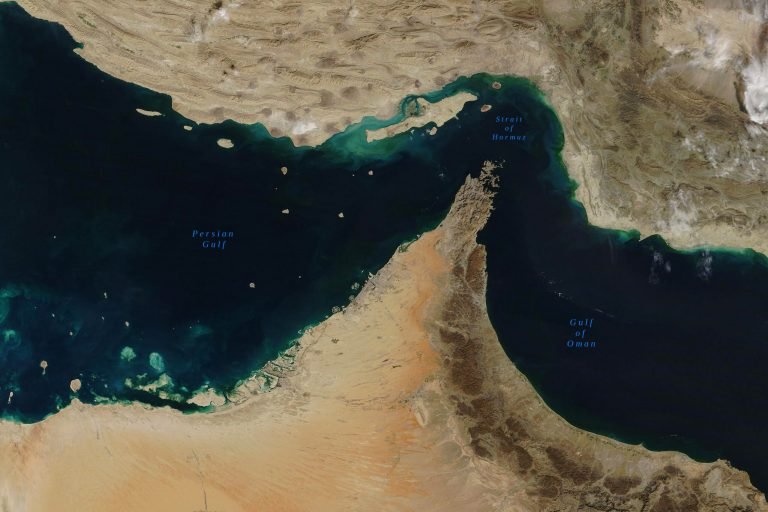
Iranian Foreign Minister Seyyed Abbas Araghchi held a telephone conversation with his Omani counterpart on 29 May 2026 focused entirely on the Strait of Hormuz — its current dynamics, its future governance, and the sovereign responsibilities attached to one of the world's most consequential waterways. The Iranian Foreign Ministry characterized the discussion as substantive, with Araghchi framing the conversation around the management of the strait within the bounds of both Iranian sovereign rights and international law. The Omani foreign minister participated from Muscat, placing the Sultanate at the center of what Tehran is positioning as a regional, multilateral conversation rather than a unilateral assertion of control.
The deliberateness of that framing matters. This is not a crisis call. There are no reports of naval incidents, of threats, of commercial disruption in the immediate aftermath. What Monexus finds in parsing the available record is a structured diplomatic outreach — one that positions Oman as a co-interlocutor rather than a messenger between Tehran and Washington. For a strait that carries roughly one-fifth of global liquid petroleum trade and through which the majority of the world's very large crude carriers must transit, the stakes of any governance arrangement are enormous. Araghchi's choice of Muscat — not a Western capital, not a Gulf ally of the United States — as the venue for this conversation tells its own story.
The Sultanate's Diplomatic Latitude
Oman occupies one of the most singular positions in Gulf geopolitics. It shares a coastline with Iran at the Musandam Peninsula, the narrow finger of Omani territory that forms the southern lip of the Strait of Hormuz. It has been, historically, the quiet diplomatic address between Tehran and the West — a role it played during the initial Iran nuclear negotiations and one it has maintained even as the Abraham Accords restructured the海湾's alignment map. Muscat is not Riyadh, and it is not Abu Dhabi. Its interests in strait stability are organic — the Sultanate's own economic zone and fishing grounds are bound up with the waterway's accessibility — but its diplomatic profile is distinct from the more publicly anti-Iranian posture of its neighbors.
The conversation between Araghchi and his Omani counterpart on 29 May 2026 should be understood in that light. Oman did not mediate this exchange. It was a direct bilateral discussion about shared interests in a shared corridor. That distinction matters when assessing whether this represents a shift in how Tehran approaches the strait's governance — from a posture of latent leverage toward one that explicitly incorporates regional partners on terms Muscat can publicly acknowledge.
What Tehran Is Signaling
Iran has, at various points over the past decade, made explicit threats to close or disrupt the Strait of Hormuz in response to sanctions pressure, assassination operations on Iranian soil, or perceived acts of economic warfare. The Islamic Revolutionary Guard Corps Navy controls access from the Iranian side of the strait, and Tehran has the mines, fast-attack craft, and anti-ship missile systems to make any disruption of commercial shipping a real operational possibility rather than a rhetorical one.
The phone call of 29 May 2026 does not abandon that hardware. But it does something structurally significant: it proposes a governance framework rather than a threat. Araghchi's framing of "sovereign responsibilities and international law" is, at one level, simply correct — Iran is a littoral state with legal rights to regulate navigation within its territorial waters, and the strait's international character under the UN Convention on the Law of the Sea (UNCLOS) obligates all users to respect innocent passage norms. But the framing also signals a preference for legalistic multilateralism over military coercion — a posture that would be easier for Muscat to endorse and harder for Washington to dismiss as mere posturing.
Whether this reflects a genuine strategic recalibration by Tehran or a calibrated diplomatic gesture designed to ease pressure ahead of ongoing nuclear negotiations remains the central open question. The sources do not specify any commitments, any agreed timelines, or any joint mechanisms proposed on 29 May. What they establish is a channel and a vocabulary.
The Structural Picture: Regional Order in Question
The Strait of Hormuz sits at the intersection of several competing structural pressures on Gulf security architecture. The United States maintains a robust naval presence in the Arabian Sea and the Persian Gulf, built around the Fifth Fleet out of Bahrain, and has consistently positioned itself as the guarantor of freedom of navigation through the strait — a guarantee it funds, arms, and publicly champions. The Abraham Accords, normalized under the previous administration, shifted the regional security map in ways that deepened Israeli-Gulf intelligence and diplomatic links while leaving Iran distinctly outside any new arrangement.
Tehran has responded not with isolation but with depth. Its relationships with resistance actors across the region, its support networks in Iraq and Yemen, and its deepening strategic partnership with Russia have given it a reach that its conventional military capabilities would not suggest. On the Hormuz question specifically, Iran has found that its chokepoint leverage — always real, never fully exercised — becomes more powerful the more the global economy is dependent on Gulf crude and the more commercial shipping insurance markets feel the risk.
What Araghchi's Omani outreach on 29 May 2026 suggests is that Tehran is also investing in the diplomatic track. A regional governance arrangement, even an informal one, that normalizes Iran's role as a core stakeholder in strait management — rather than a disruptive actor outside an American-led system — would alter the structural balance in ways that are difficult to reverse. Oman, for its part, gains relevance as long as it holds that channel open.
Stakes and Forward View
If the diplomatic thread opened on 29 May 2026 holds and develops into a more formal governance dialogue, the principal winners are regional actors — Iran, Oman, and by implication the UAE — whose own economic interests are tied to the strait's functioning. A stable, rules-based arrangement negotiated between littoral states, rather than imposed by an outside maritime power, would be more resilient to pressure from either Tehran or Washington. Commercial shipping markets would also benefit from reduced risk premiums on Persian Gulf tanker rates.
The United States, in this scenario, faces the prospect of its role as guarantor becoming less central rather than more critical — a structural shift that has implications for its wider posture in the Gulf and for its leverage over partners like Saudi Arabia and the UAE who have relied on the American security umbrella.
If the diplomatic track collapses — whether without formal collapse or simply through inaction — the baseline reverts to a deterrent equilibrium.Iran retains its hardware and its leverage; Washington retains its carrier groups and its partnerships; and the strait functions, in normal conditions, as it always has — until it does not. The 29 May conversation does not resolve that uncertainty. It adds a thread. Whether it becomes a cable or frays back to zero depends on developments Monexus will continue to track.
This publication's coverage of Gulf diplomatic openings typically leads with Western-counterpart statements and treats regional mediation as context rather than news. The 29 May exchanges warranted a different approach: lead with the statement as issued in Tehran and Muscat, and assess the Western reaction as response rather than origin. The asymmetry of who speaks first, and in what language, shapes the narrative that follows.
Wire provenance
This editorial synthesis draws on the following public wire/social posts:
- https://t.me/Irna_en/18456
- https://t.me/tasnimnews_en/45910
- https://t.me/mehrnews/51180