Putin's 'Legitimate Targets' Playbook: Escalation Through Exhaustion
Putin's declaration that Baltic NATO territory constitutes 'legitimate targets' frames Western defensive posture as offensive provocation — a rhetorical sleight of hand designed to erode deterrence without firing a shot.
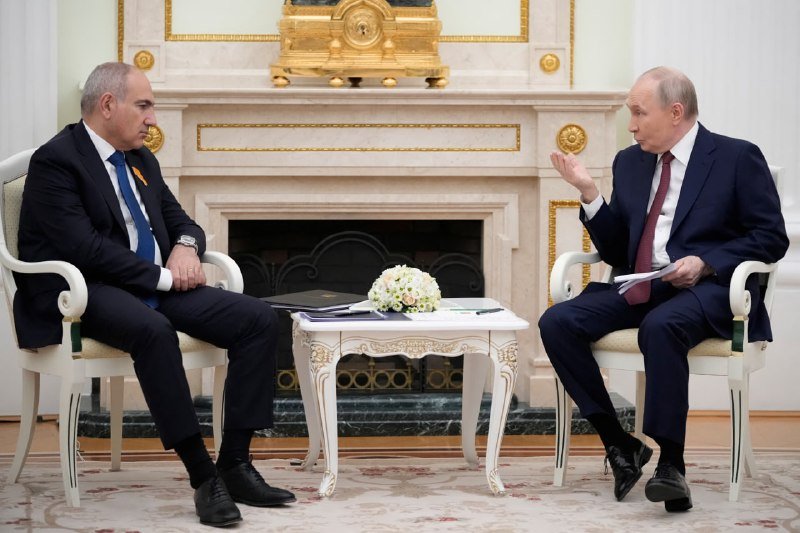
When Vladimir Putin declared on 29 May 2026 that any location from which Western forces threaten Russia is a legitimate target — specifically citing Baltic NATO infrastructure — he was not merely signaling military intent. He was executing a well-worn rhetorical device: absorbing the logic of adversary readiness while disqualifying any concern about his own intentions as fabrications. The combination of "nonsense, lies, dirty and shameless lie" directed at European politicians who warn of Russian contingency planning, alongside explicit threat articulation against facilities in NATO territory, is not incoherence. It is a calculated pressure strategy.
This publication's assessment is that Putin is systematically weaponizing the credibility gap between stated Western threat and his own declared red lines — a dynamic that has defined Russian escalation rhetoric since at least 2021.
The Impossibility Defense
The first structural move in Putin's formula is the impossibility defense. European leaders warn that Russia is preparing for potential conflict with NATO; Putin responds that such claims constitute fabrications, that Russian policy is defensive, that the real provocation lies in Western military expansion. The burden of proof is thus shifted. Because assessment of contingency planning necessarily involves intelligence streams that cannot be publicly disclosed, Western governments cannot fully rebut the "lies" framing without compromising sources and methods. Moscow appears to have calculated that opacity protects its position even when the underlying capability picture is not in dispute.
This is not a new posture. Russian strategic communication has long relied on "what we are doing is merely responsive" framing. The invasion of Ukraine — which Russia officially denotes a "special military operation" but which has produced over three years of full-scale combat — was prefaced by Moscow's characterization of any NATO posture east of Germany's border as inherently threatening. What has changed in the 29 May statement is the explicitness with which Putin is now applying that same responsive-logic to Baltic NATO facilities, not merely the abstract presence of the alliance along Russia's western border.
Threshold Manipulation in Plain Sight
The second move is threshold manipulation. By declaring that installations in Baltic NATO states — Poland, Lithuania, Latvia, Estonia — from which threats allegedly originate constitute legitimate targets, Putin is expanding the definition of what Russian doctrine terms defensive necessity. The logical structure is circular: if anything Russia perceives as threatening is definitionally an attack, then any counter-thrust against that threat is defensive by construction. This framing allows Moscow to assert strike capability against sovereign NATO territory while maintaining the rhetorical posture of reaction rather than initiation.
The third element is the threat-of-force posture itself. "Russia has all the means to raze to the ground anyone who attempts to destroy Russian air defense bases." This statement, preceding the Baltic target articulation, functions as a baseline威慑. It does not say Russia will strike first; it says the costs of interference are unacceptable. Western policymakers have encountered this formulation repeatedly since 2022 — the implicit promise that any direct NATO-Russia confrontation would be catastrophic for both sides, implying restraint on NATO's part is therefore rational.
What This Means for Deterrence Architecture
The combined effect of these three elements — impossibility defense, threshold manipulation, and catastrophic threat posturing — is a pressure campaign that operates below the threshold of direct kinetic engagement while steadily degrading the practical credibility of Article 5 commitments. Baltic NATO states, particularly the three Baltic republics, have long understood their forward positioning as the alliance's most exposed flank. They have also been among the loudest voices pushing for enhanced deterrence, heavier rotations of allied forces, and higher-readiness postures.
Putin's articulation of Baltic facilities as legitimate targets does not change NATO's Article 5 obligation. It does, however, complicate political will calculations in capitals where domestic audiences weigh the risks of direct confrontation against commitments to nations some Europeans perceive as peripheral. Moscow's strategic communication is partly aimed at those calculations — not through diplomatic channels, but through public statements that enter the information space of Western democracies.
The Stakes and What Remains Uncertain
This publication's reading of the 29 May statements is that they represent an escalation of rhetorical posture, not a new strategic reality. Russian forces are under significant material constraint in Ukraine; the notion that Moscow could simultaneously sustain offensive operations there and open a second front against NATO is inconsistent with available evidence. What Russia can do, however, is maintain a posture of implicit threat that constrains Western political options — particularly around weapons delivery, alliance exercises in Baltic airspace, and the disposition of advanced air defense systems in the region.
What remains genuinely uncertain is whether Putin's public calibration of threat articulation reflects a calculated attempt to fracture alliance unity before any potential military contingency arises, or whether these statements represent a genuine operational conception of expanded target sets. Western intelligence assessments on this question are not publicly available. The pattern, however — repeated invocations of legitimate target status for NATO infrastructure, paired with simultaneous dismissal of Western threat warnings as fabrications — suggests a deliberate strategy of ambiguity management rather than accidental rhetoric.
The core question is not whether Russia can execute strikes against Baltic NATO territory. In a headlong escalation scenario, Russia's aerospace and naval capabilities could strike targets at considerable distance. The core question is whether Moscow's public posture is designed to ensure it never has to. By declaring Baltic facilities legitimate targets while simultaneously characterizing European warning as lies, Putin is constructing a narrative in which Western deterrence is itself provocation — and Russian strike capability is the rational response. That framing deserves scrutiny, not deference.
This publication has covered Russian strategic communication since the 2021 buildup surrounding Ukraine. The pattern of simultaneous denial and threat articulation has been consistent across multiple years; the vocabulary has grown more explicit as material constraints have grown more acute.