The quarantine calculus: how the world treats disease outbreaks that start in the wrong place
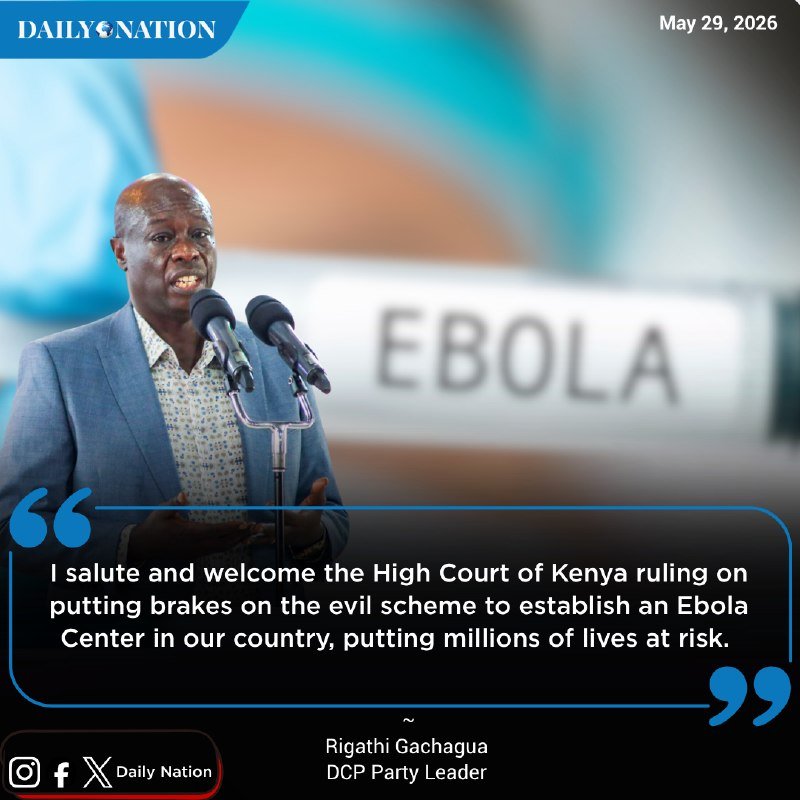
The United States will quarantine American citizens exposed to Ebola in Kenya rather than repatriate them. The decision, confirmed by US health officials on 28 May 2026, reflects a protocol that is clinically coherent and diplomatically unremarkable. It also says something uncomfortable about how global health architecture functions when the next crisis begins in Goma rather than Geneva.
Kenya approved the quarantine request. WHO director-general Tedros Adhanom Ghebreyesus was en route to the Democratic Republic of Congo. Testing is being scaled up. Vaccine candidates and therapeutic agents have been identified for trials. By any operational measure, the system is functioning. And that is precisely the problem with how the system is designed.
The quarantine arrangement is not a failure of response. It is a design feature. When the question of who bears the cost of managing a dangerous pathogen arises, wealthy states have consistently chosen to keep the risk and the response infrastructure outside their borders rather than absorb either. The Americans in Kenya will be monitored under conditions that protect them from the infection and protect the United States from the infection's spread. That calculus is self-consistent. What it does not do is invest in the kind of durable clinical capacity in the DRC itself that would reduce the probability that the next outbreak becomes a geopolitical event.
The Ebola strain circulating has documented therapeutic options. Trials have moved from theoretical to practical within days. WHO has the protocols, the institutional memory, and the relationships with the DRC Ministry of Health to mount a response at a speed that would have seemed impossible during the catastrophic 2014–2016 West Africa outbreak, when the international system was caught flat-footed and lost more than 11,000 lives before a vaccine existed. Progress is real. But progress is uneven, and the unevenness follows a geography that global health discourse rarely names directly.
The structural pattern is not new. Pandemic preparedness frameworks have for years identified the central weakness as inadequate investment in frontline health systems in lower-income countries — precisely the environments where novel pathogens tend to emerge and where the window for containment is shortest. The financial architecture to address this has never materialized at the scale the problem demands. The Ebola outbreak currently unfolding in the DRC is not an exception to that pattern. It is a fresh instance of it. The United States can quarantine its citizens because it has the logistical capacity and the diplomatic relationship with Kenya to do so. The DRC cannot vaccinate its own population at speed because the clinical infrastructure required to do that has never been built at the level the evidence demands.
The political economy of disease containment has its own internal logic. Quarantine is cheap relative to the cost of a single imported case in a high-income health system. Keeping exposed Americans in Kenya costs less than running the gauntlet of evacuation and the scrutiny that would follow a domestic infection cluster. US officials made the rational choice. What the sources do not indicate is any parallel investment in the DRC response infrastructure — no announced surge in clinical support, no visible augmentation of the treatment capacity that would determine how many Congolese patients survive and how quickly the outbreak burns out. The quarantine protects Americans. It does not treat Congolese patients. The two facts coexist without contradiction, which is the real structural statement.
Kenya's agreement to host a US quarantine facility on its territory is not without significance. Nairobi has positioned itself as a diplomatic partner with sufficient health infrastructure to absorb a high-stakes request. That standing has real value — it generates goodwill with Washington and demonstrates regional leadership. But the arrangement also places Kenya in a particular category: a country capable of managing the periphery of a crisis without being the centre of it. The outbreak is in the DRC. The quarantine is in Kenya. The diagnostics and clinical expertise are in a distributed network that includes Geneva and Atlanta and Nairobi. The patient, in the DRC, is the least sovereign actor in the system.
What remains genuinely uncertain is the transmissibility profile of the current strain and whether the therapeutic agents identified will demonstrate sufficient efficacy in the field conditions of an active outbreak. WHO officials have not released case-fatality data or attack-rate estimates. The sources specify that trials are being scaled up, not that they have concluded. That uncertainty is real and should temper the confidence of any narrative — including this one — that draws clean lessons too quickly. The situation is in motion. The protocols are being tested as fast as the disease is spreading.
The quarantine calculus is sound, which makes it an imperfect mirror. It shows what global health architecture is built to do: protect those with the means to be protected, at the periphery, while the centre of the crisis continues to receive the resources its clinicians have been requesting for a decade.
This publication covered the US quarantine decision as a diplomatic and clinical arrangement rather than a public health crisis narrative. Reuters led with the quarantine protocol; Monexus foregrounded the structural hierarchy that makes that protocol the rational choice for Washington and an incomplete one for the DRC.
Wire provenance
This editorial synthesis draws on the following public wire/social posts:
- http://reut.rs/3RAismq
- http://reut.rs/4veziFR
- http://reut.rs/4ahGf0K
- http://reut.rs/4uOrpXK