Romania Confirms First Drone Strike on NATO Territory as France Summons Russian Ambassador
Bucharest confirms a Russian drone landed in a southeastern Romanian city, injuring two civilians in the first confirmed strike on NATO soil since Russia's full-scale invasion of Ukraine began.
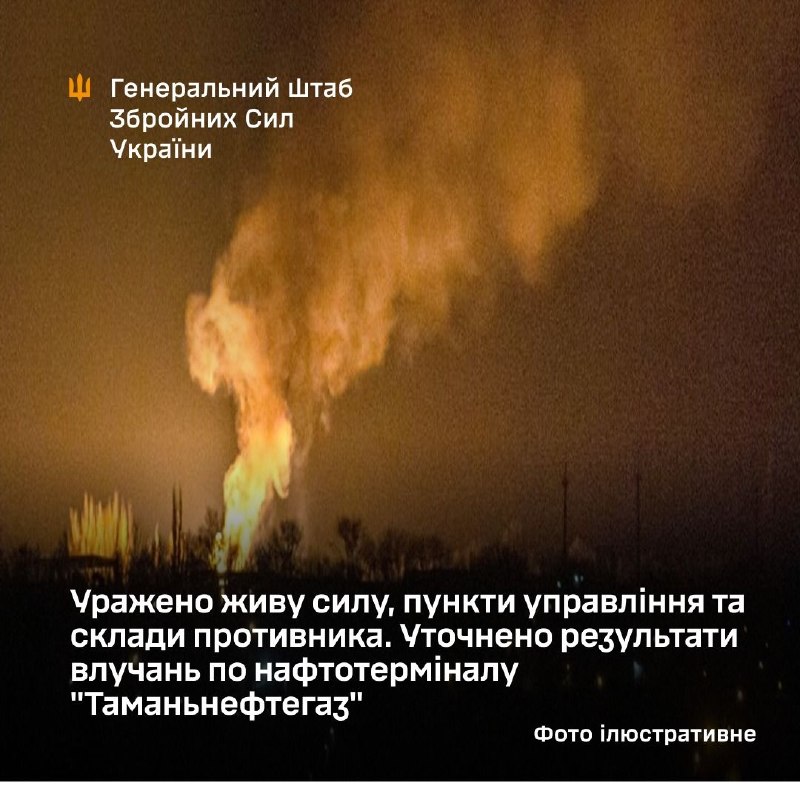
Romanian authorities confirmed on May 29, 2026, that a Russian drone struck a southeastern city during an overnight attack on neighboring Ukraine, injuring two civilians in what Bucharest described as the first confirmed impact of an unmanned aerial vehicle on NATO territory since Russia's full-scale invasion began in February 2022.
The strike, which occurred in the early hours of May 29 in a populated area of the southeastern city, prompted immediate diplomatic action. France summoned the Russian ambassador to Paris later that same day to address the incident, according to reporting from Middle East Eye. Romanian officials, speaking on condition of anonymity pending a formal government statement, confirmed the casualties and the origin of the device.
The Strike and Its Immediate Aftermath
Romania's president and defense ministry issued a joint statement classifying the incident as a "serious violation of NATO airspace and Romanian sovereignty." The statement, carried by state broadcaster Digi24 and confirmed by multiple international wires, said air defense systems had tracked the incoming drone but were unable to intercept it before impact. Two people sustained injuries described as non-life-threatening; both were treated at the scene and released.
Romanian President Klaus Iohannis convened an emergency session of the Supreme Defense Council within hours of the confirmation. The body, which includes the prime minister, defense minister, and chief of general staff, reviewed options for reinforcing air defense coverage along the approximately 650-kilometer border Romania shares with Ukraine. Romania has hosted Patriot battery systems provided by Germany and the Netherlands, though their exact disposition is classified.
The strike targeted an area proximate to the port city of Constanta and the Danube Delta region, a zone that has seen increased Russian activity over the past eighteen months as Moscow has targeted Ukrainian grain infrastructure along the Black Sea coast. Romanian officials noted that drones recovered from previous incidents in the Black Sea had bore Cyrillic serial numbers consistent with Iranian-designed Shahed-136 platforms assembled under Russian license.
The Diplomatic Response
France's decision to summon the Russian ambassador represents an escalation in the formal diplomatic response to strikes affecting NATO's eastern flank. The French foreign ministry issued a statement calling the incident "unacceptable" and demanding assurances that Russia would prevent further violations of allied airspace. The summons followed a coordinated response from NATO's North Atlantic Council, which convened in emergency session on May 29 to receive a briefing from Romanian Ambassador Ionut Alexandru.
Russia has not issued a formal acknowledgment of the strike. The Russian defense ministry's daily briefing, published on its official Telegram channel, made no mention of operations targeting Romanian territory. Russian state media initially described the incident as a Ukrainian provocation designed to implicate Moscow in an attack on NATO, before the framing was quietly dropped following Bucharest's formal confirmation.
This pattern — denial followed by reframing — mirrors Moscow's handling of previous incidents along NATO's periphery, including strikes on Polish territory in November 2022 and March 2023, both of which Russia initially disputed before Western intelligence assessments forced a reluctant acknowledgment.
Structural Context: NATO's Eastern Flank and the Drone Problem
The Romanian strike illustrates a structural vulnerability in NATO's air defense architecture that alliance planners have flagged repeatedly since 2022. Short-range and medium-range air defense systems, optimized for aircraft and cruise missiles, were not designed to counter swarms of low-altitude, slow-moving unmanned platforms flying at treetop level. Shahed-136 drones, which cruise at approximately 180 kilometers per hour at altitudes between 50 and 400 meters, are difficult to acquire with radar systems designed for higher-altitude threats.
Romania has spent approximately 2.3 billion euros on air defense modernization since 2022, acquiring F-35 aircraft, HIMARS rocket systems, and Patriot batteries. Yet the strike demonstrates the persistent gap between investment and operational coverage, particularly along the Black Sea coast where terrain limits radar line-of-sight.
The incident also exposes a legal ambiguity that NATO has deliberately avoided resolving. Article 5 of the North Atlantic Treaty, which obligates members to consider an armed attack on one ally as an attack on all, has never been formally invoked in response to drone incursions. The alliance's position has been that each incident is assessed individually, taking into account whether the strike was intentional, the scale of damage, and the evidence of state responsibility. This deliberately vague standard gives political leaders room to calibrate responses without triggering automatic escalation — but it also signals to Moscow that incursions below a certain threshold will not trigger the article 5 machinery.
Stakes and Forward View
If the Romanian strike is confirmed as an intentional rather than accidental incursion, it would represent a qualitative shift in Moscow's calculus about the boundaries of its Ukraine campaign. Russia's strike campaigns against Ukrainian civilian infrastructure, including energy grids and port facilities, have frequently sent debris and debris fields across the border into Poland, Romania, and Moldova — but the deliberate targeting of Romanian territory would cross a line the Kremlin has, until now, been careful not to breach.
Several outcomes are now on the table. Romania may request the permanent deployment of additional NATO air defense assets, a decision that would require unanimous approval from the alliance's 32 members. Poland and the Baltic states, which have long argued for a more robust forward presence, are expected to support such a request. Germany, which currently provides the Patriot battery based in Romania, would face pressure to expand its contribution.
At the diplomatic level, the French summons represents the opening move in what European officials describe as a coordinated pressure campaign. Paris, Berlin, and London are expected to raise the issue at the NATO foreign ministers' meeting scheduled for early June in Brussels, where a joint statement condemning Russia's "escalatory pattern" along NATO's borders is considered likely.
What remains uncertain is whether Moscow intends to test the alliance's red lines further. Russian military doctrine has long distinguished between operations targeting NATO as an institution and operations targeting individual member states acting in support of Ukraine — a distinction that gives the Kremlin room to maintain diplomatic and economic channels with individual European governments even as it conducts operations that formally threaten alliance security. The Romanian strike, if it represents a deliberate probe rather than a navigational error, suggests that distinction is eroding.
This publication's wire coverage led with Bucharest's confirmation of civilian injuries and France's diplomatic response, rather than leading with Moscow's framing of Ukrainian provocation — a deliberate editorial choice to centre the perspective of the directly affected NATO member state.