Trump announced a Iran deal. Tehran turned on the prayer call
Washington declared a breakthrough on Iran. Tehran's state media called it a lie. Neither side seems to be talking about the same thing — and that itself is the story.
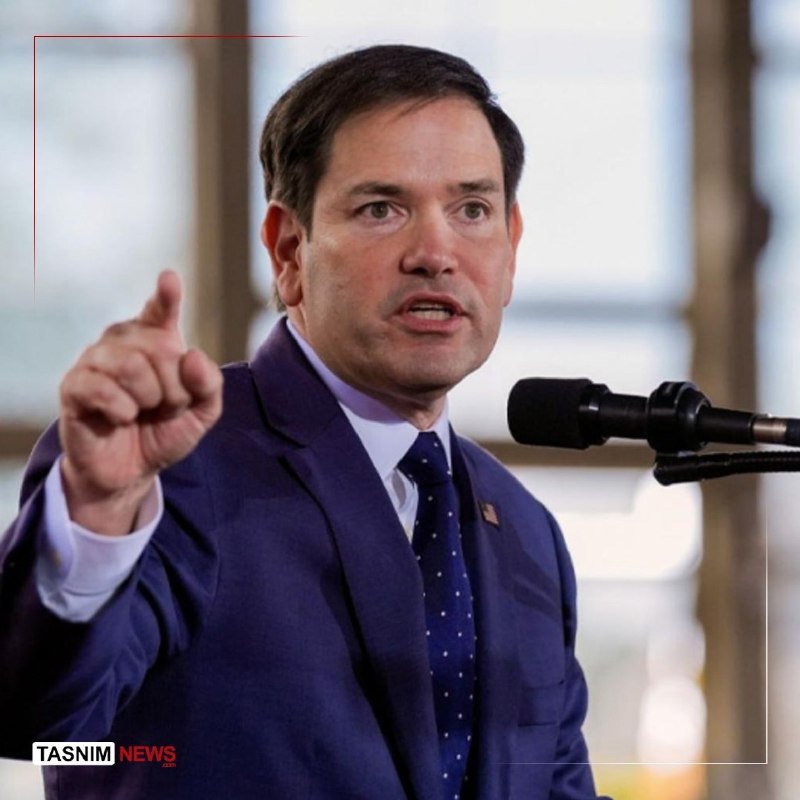
Trump's declaration that he would lift America's naval stranglehold on Iran carried the cadence of a tweet firing a starting pistol: "starting right now." By Thursday evening in Tehran, state television had found something more pressing. The prayer call played as it does every evening. Trump's post was not mentioned on the 7:30 PM broadcast, per the Middle East Spectator monitoring feed. By Friday morning, Iranian state media had issued a fuller rejection: Trump's claim that Iran had "agreed to give up and destroy its uranium enrichment" was a lie, per BRICSNews. One side declared détente. The other denied the premise of the conversation.
That gap — between an American President's celebratory post and an Iranian state's flat denial — is the actual story. Not a deal in prospect, but the evidence that no shared reality exists yet about what a deal would require.
The announcement and the gap between framing and reality
The facts, stripped to their minimum: Trump announced on 29 May 2026 that the US naval blockade around Iran would be lifted immediately. He separately claimed Iran had agreed to dismantle its uranium enrichment programme. Iranian state media rejected both characterisations. The prayer call kept playing.
This is how adversaries communicate in the age of social media: in separate monologues, each designed for a domestic audience. When an American outlet carries the White House framing on its front page and Tasnim dismisses it from Tehran, readers are effectively watching two different newspapers that happen to cover the same geography. The disinformation is not in the facts — both sides agree something was said — but in the meaning attached to it.
Trump's version assigns himself the role of benefactor granting relief. Iran's version assigns him the role of aggressor demanding capitulation. Neither assignment is accidental.
What a deal looks like when nobody agrees on the terms
The structural question the 29 May exchange raises is not about negotiating posture. It is about framing — specifically, who owns the language of what just happened.
In Washington, the blockade lift is a concession. Iran's renunciation of enrichment would be the price. In Tehran, enrichment is a sovereign capability, not a bargaining chip. State media in Iran called Trump "the president of the terrorist state of America" in its own coverage of the blockade announcement, per Jahan Tasnim. That phrasing is not inflammatory rhetoric aimed at a negotiating partner — it is performance for an internal audience that has spent years hearing that America is the source of economic suffering.
The gap between those two audiences is not a communications failure. It is the structural condition under which Iran policy has operated since 2018, when the United States withdrew from the Joint Comprehensive Plan of Action. The JCPOA's architecture depended on a slow, reciprocal unwinding of sanctions and nuclear activity built over years. Trump operates on different logic: the headline comes first, the follow-through second.
The geopolitical pattern beneath the headline
The wider frame is not new. American presidents have periodically attempted to reset Iran relations — Obama by negotiation, Trump by maximum pressure in his first term, Biden by quiet diplomacy — and each approach has run into the same structural friction: the Islamic Republic's survival depends in part on maintaining external threat perception. The enrichment programme is both a strategic asset and a domestic legitimising instrument. Dismantling it for sanctions relief is not a deal Iran has ever been willing to sell at any price Western buyers have offered.
What is newer is the speed and tone of the current approach. The announcement came before Iranian state institutions had any visible opportunity to respond through official channels. Middle East Eye reported on the afternoon of 29 May that Trump was still "preparing to make a final decision" — which suggests the announcement may have preceded the internal deliberation rather than following it. The prayer call, in that reading, was not simply dismissive; it was institutional normality asserting itself against an externally imposed timeline.
Who wins and loses if this trajectory holds
The lift of the maritime restriction, if it holds, matters significantly for Iran's oil export capabilities. The insurance and shipping cost premium caused by the US naval presence has been a quiet but persistent drag on Iranian trade. That alone is worth tens of millions of dollars in foreign exchange — a real relief for a sanctions-stressed economy.
The demand for full uranium enrichment dismantlement is, on current Iranian terms, a non-starter. Tehran has made enrichment its irreducible baseline across successive negotiating cycles. Without it, negotiators from Tehran would be selling a domestically indefensible position.
Trump's method — transactional, public, headline-driven — may extract limited concessions from an Iran that needs sanctions relief more than it needs American respect. But it also risks teaching both audiences that American commitments are reversible on an electoral cycle. The institutional memory of the 2018 withdrawal from the JCPOA is not gone. It shapes every Iranian calculation of what a new commitment is worth.
What is certain is that Thursday's exchange did not close a deal. It exposed the distance that remains. The prayer call on Tehran's television, playing on as usual while Washington declared a breakthrough, was not a breakdown of diplomacy. It was diplomacy's actual condition — two monologues looking for a dialogue that neither side has yet agreed to enter.
Wire provenance
This editorial synthesis draws on the following public wire/social posts:
- https://t.me/Middle_East_Spectator
- https://t.me/bricsnews
- https://t.me/JahanTasnim