Trump Announces End of Iran Naval Blockade, Terms Remain Unclear
President Trump declared on 29 May 2026 that the United States would lift its naval blockade on Iran and stated that Tehran had agreed to dilute its enriched uranium stockpile — but the precise terms, scope, and verification mechanisms of any deal remain unconfirmed as this publication went to press.
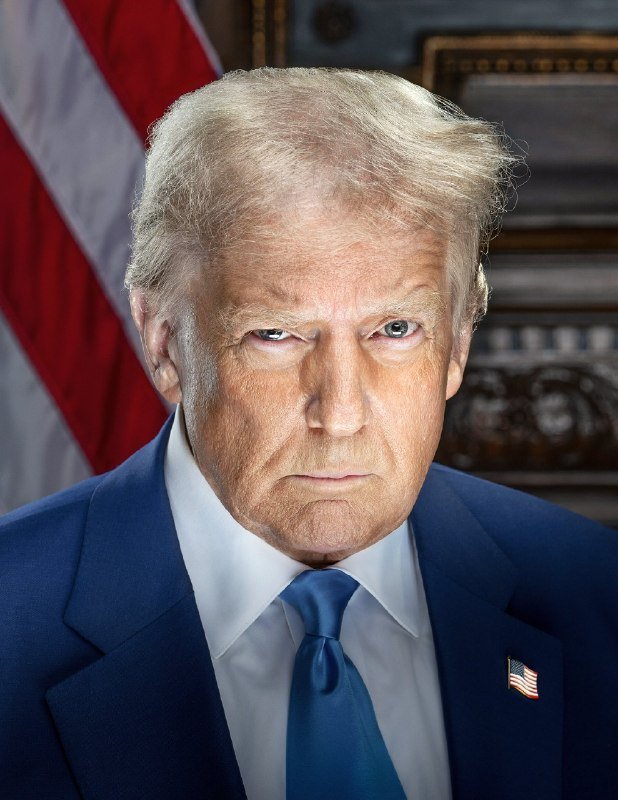
President Trump announced on 29 May 2026 that the United States Would remove the naval blockade currently operating Near the Iranian coastline, according to multiple concurrent reports from intelligence-adjacent wire services. The President stated that Iran had agreed to open the Strait of Hormuz — through which roughly a fifth of the world's oil passes — and to allow for the dilution of its stockpile of enriched uranium. The announcement came after a meeting in the Situation Room, which Trump described as producing a final determination on the terms.
The announcement was notable for its brevity and lack of accompanying documentation. No formal text of an agreement, no joint statement from Tehran, and no verification mechanism had been published by the time this article was filed. What the administration presented as a done deal rest on a few minutes of presidential remarks from a closed-door session.
Tehran has not publicly confirmed the terms as the White House characterised them. Iranian state media had not, as of filing, issued a statement accepting that an agreement had been reached on the specific conditions Trump described. That gap is not incidental. Previous rounds of US-Iranian diplomacy have repeatedly broken down over precisely this axis: Washington announcing conditions met, Tehran disputing the accuracy of the characterisation. The wire services reporting this story are, by their own notation, relaying what the administration said rather than what Tehran has confirmed.
The immediate diplomatic context matters. The Trump administration had pursued a campaign of "maximum pressure" against Iran since its return to office. The naval blockade — conducted under the legal fiction of enhanced sanctions enforcement — had significantly disrupted Iranian oil exports and added pressure on a government already navigating severe economic strain. Lifting that measure represents a substantial concession from Washington. The question is whether what Tehran is offering in return is commensurate.
The enriched uranium question in particular requires scrutiny. Iran's civilian nuclear programme has been a persistent source of Western concern, and any agreement that genuinely constrains proliferation would represent a significant diplomatic achievement. But Trump also indicated that Iran would need to address a broad set of demands — many of which, he said, had not been agreed to by Tehran. That phrasing is telling. A negotiation in which one party claims the other has not agreed to core terms is not a concluded deal; it is an announcement that talks are ongoing.
The structural frame here is worth spelling out plainly. Dollar-denominated sanctions enforcement — the mechanism by which the blockade was sustained — functions as a tool of last resort because it compels third-country banks, shipping insurers, and port operators to enforce Western unilaterally imposed restrictions. The Strait of Hormuz is not merely a shipping lane; it is a pressure point. Tehran has historically used threats to close the waterway as leverage against US military presence in the Gulf. If this announcement holds, it represents a mutual de-escalation calibrated by both sides to relieve economic pressure they can no longer sustain at current levels.
The verification problem is where serious analysis must start, not end. The administration has a record of announcing deals that subsequent reporting revealed to be less settled than presented. Without an International Atomic Energy Agency inspection protocol, without a published text, and without Tehran's explicit endorsement, the practical substance of what was announced on 29 May remains uncertain. The blocking of Iranian oil exports and the dilution of enriched uranium are categorically different measures with categorically different timelines; conflating them under a single headline does not make them simultaneous.
The broader implication, if any deal does endure, is a recalibration of Gulf security architecture. An Iran that can export oil freely through the Strait of Hormuz, freed from naval interdiction, is an Iran with more leverage — not less — in its relationship with regional rivals. Saudi Arabia, the UAE, and Israel's positions on this development have not been reported. Gulf states have historically been deeply sensitive to any US willingness to ease pressure on Tehran, viewing it as a potential prelude to a regional power shift they cannot control. Those capitals will be watching the fine print more carefully than the headline.
What remains unclear is everything that will define whether this announcement becomes a durable agreement or another instance of diplomatic theatre. We do not know the timeline for uranium dilution. We do not know what Iran received in exchange beyond the removal of the blockade. We do not know whether Tehran will acknowledge the terms publicly, or whether it will allow IAEA inspectors conditional access. The Strait of Hormuz has been open throughout the confrontation; it is not clear what Iranian action Trump was referring to when he cited the need to open it. The sources reporting this development do not answer those questions, and this publication will not invent answers that are not in evidence.
Monexus covered this development as a breaking diplomatic claim requiring independent confirmation, rather than as a concluded agreement. The wire framing presented the announcement as settled; we treated it as a press release awaiting corroboration.
Wire provenance
This editorial synthesis draws on the following public wire/social posts:
- https://t.me/Middle_East_Spectator
- https://t.me/bricsnews
- https://t.me/rnintel
- https://t.me/insiderpaper