Trump's Iran Deal Announcement Collides With Tehran's Counter-Claims
The US president declared an end to the naval blockade on Iran on May 29, 2026, but Tehran immediately pushed back, raising fundamental questions about whether both sides are describing the same memorandum of understanding.
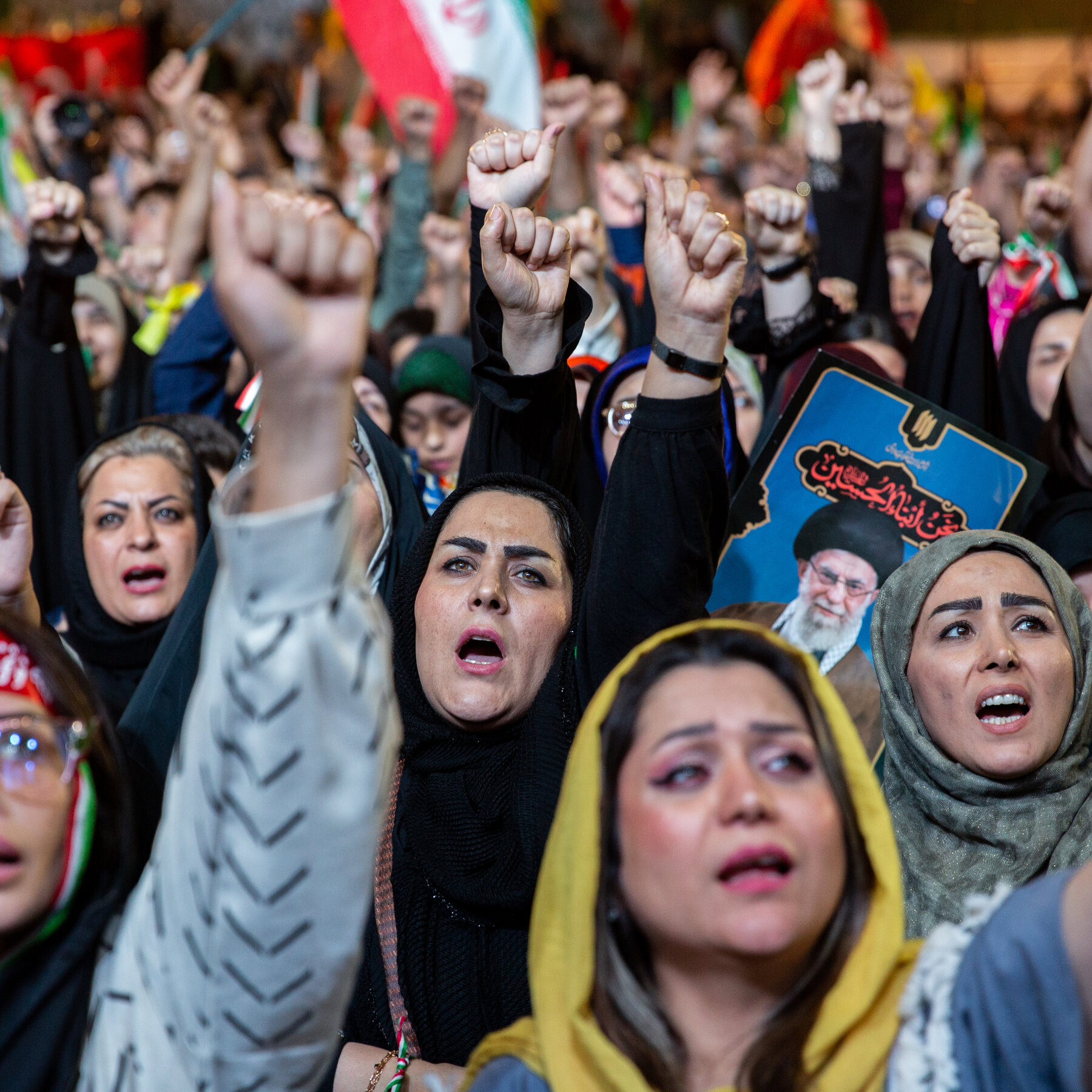
On May 29, 2026, President Donald Trump announced that the United States was lifting its naval blockade of Iran, framing the move as the culmination of negotiations toward what he called a historic memorandum of understanding. The announcement, posted to Truth Social in the early afternoon, drew immediate pushback from Tehran. Within hours, Iranian state media had published detailed denials, arguing that Trump was misrepresenting the terms of what had actually been agreed upon. The disconnect between the two accounts — one Washington-centric, one Tehran-sourced — raises immediate questions about whether the two sides share even a basic understanding of what the other has committed to.
The sequence of events matters. Trump described an agreement in which Iran would commit never to possess nuclear weapons, open the Strait of Hormuz, and submit to renewed negotiations on its nuclear programme. Iranian outlets, citing what they described as informed sources close to the dossier, told Al Jazeera's Iran correspondent Ali Hashem that the post about lifting the blockade was, in their words, an Iranian precondition before any further steps under the MoU could proceed. That framing — a precondition, not a concluded deal — sits uncomfortably alongside the Trump administration's presentation of the move as a diplomatic triumph earned through pressure.
What this publication finds, reviewing the competing accounts carefully, is a situation where neither side's narrative can be accepted at face value — and where the gap between them is not a matter of spin but of substance. The claim elements differ. The sequencing differs. The financial provisions differ. And at the centre of that divergence sits roughly twelve billion dollars in frozen Iranian sovereign assets, whose release appears to be either the cornerstone of the agreement or a still-unaddressed American bypass, depending on which readout you believe.
What Trump Announced
The American president's Truth Social post on May 29 laid out a series of demands that Iran had, in his telling, agreed to meet. The core conditions, as Trump presented them, were that Iran would accept it would never possess nuclear weapons or nuclear bombs, that the Strait of Hormuz would be reopened immediately, and that Iran would negotiate on its nuclear programme going forward.
Trump also claimed, in a separate passage, that ships that had been stranded in the Strait due to the American naval blockade had been sitting idle — a formulation that drew particular criticism from Iranian state media, which noted the ambiguity of whether Trump was acknowledging the disruption his own blockade had caused or simply lamenting the logistical consequences.
The broader context is bleakly familiar. The naval blockade, imposed in early 2025 following the collapse of the original JCPOA and a series of escalatory incidents involving Iranian proxies in the Gulf, effectively choked off a significant portion of Iran's legitimate trade revenue. The Strait of Hormuz handles roughly a fifth of the world's oil throughput. Any sustained disruption reverberates across global energy markets, and the blockade had done exactly that — creating a slow-burning economic crisis inside Iran that the Rouhani administration had no tools to address short of capitulation or external intervention.
Trump's announcement, therefore, carried real weight regardless of what Tehran said next. Lifting the blockade is a significant act, and even a contested agreement is better than a functioning blockade. The question worth asking is whether the conditions Trump described as agreed were, in fact, agreed — or whether they represent a maximalist opening position being dressed up as a concluded deal.
Tehran's Counter-Narrative
Within hours of the Trump announcement, Iran's Fars News Agency had published a detailed rebuttal. The outlet's reporting, sourced to what it described as official or near-official channels, argued that Trump was misrepresenting the terms of the MoU. Specifically, Fars stated that the text as negotiated did not include an agreement by Iran to open the Strait of Hormuz for free, nor did it contain any commitment to dismantle its nuclear materials — two claims Trump had included in his Truth Social post.
The Axios reporting from earlier on May 29, delivered by correspondent Barak Ravid, provided additional texture on what the MoU actually contained. According to Axios, the memorandum of understanding includes a sixty-day ceasefire extension, the reopening of the Strait of Hormuz, and a commitment by Iran to negotiate on its nuclear programme. That three-point summary maps partially onto Trump's claims but diverges significantly on the specific language around openness and dismantlement.
The $12 billion figure surfaced in parallel reporting from open-source intelligence monitoring channels, which described that sum as the linchpin of the agreement: the immediate payment of Iran's frozen assets and a complete ceasefire in Lebanon, with the implication that this element had been bypassed by the American side in Washington's announcement. If accurate, this would mean the Trump administration had announced the diplomatic win — lifting the blockade — while declining to confirm the financial counterpart Iran explicitly conditioned on its cooperation.
This publication cannot independently verify the precise contents of the MoU text. No authenticated version of the memorandum has been made public by either government as of this writing. What can be said is that the two readouts — the Trump readout and the Tehran readout — are not reconcilable as two versions of the same document. They have different centre points. The American side places the nuclear commitment and Hormuz reopening at the heart of the arrangement. The Iranian side is placing the financial transfer at the heart of it and contesting whether the other elements constitute agreed terms rather than American demands.
What the MoU Actually Contains — and Why It Matters
The Axios reporting remains the most specific public account of the MoU's provisions. According to that report, the memorandum covers four broad areas: a sixty-day extensions of the existing ceasefire, the reopening of the Strait of Hormuz, Iran's commitment to engage in nuclear negotiations, and implicit provision for the release of frozen assets — though the $12 billion figure cited in the intelligence reporting suggests this last element was contested or was a precondition rather than an automatic concession.
The Strait of Hormuz is the narrowest point in the Persian Gulf, a chokepoint through which approximately one-fifth of global oil production transits. For Iran, the waterway is both a strategic asset and a diplomatic lever. The country's Islamic Revolutionary Guard Corps Navy has historically used the strait's geography as a negotiating chip — able to threaten disruption of global energy supplies in ways that concentrate minds in Western capitals. A naval blockade therefore represented not merely commercial inconvenience but a direct challenge to that lever.
The ceasefire in Lebanon — presumably referencing the ongoing Hezbollah ceasefire architecture from earlier rounds of Israel-Hezbollah hostilities — appears to have been a bilateral prerequisite for Iran's part of the MoU. Trump's announcement gave no indication that the Lebanon ceasefire had been formally addressed, which Iranian sources cited as evidence that their side had not received reciprocal concessions alongside the American announcement. The blockade being lifted without apparent linkage to the Lebanon question suggests either that Trump's team treated the ceasefire as settled separately, or that it chose to treat the blockade lift as an independent act of goodwill rather than a component of a broader exchange.
The nuclear programme element is where the MoU has the highest stakes and the least specificity. Iran's enrichment activities have advanced considerably since the JCPOA's collapse, with uranium enrichment levels that, while shy of weapons-grade, have alarmed Western capitals. Any renewed negotiation would confront a fundamentally different starting position than the one that produced the 2015 agreement. The previous deal was premised on freezes and limits; the post-collapse reality involves a more advanced programme that any renewed restrictions would have to address retroactively. Iran's negotiating posture on this point has historically been to demand sanctions relief as a condition for any limits, not programmatic dismantlement.
The Structural Frame: Framing, Leverage, and the Post-Western Diplomatic Moment
What is happening here is not merely a negotiation going off-script. It is a negotiation in which each side appears to be using public announcement as a tool of leverage rather than communication. Trump announcing the blockade lift before Iran confirms acceptance serves an American audience already primed to see diplomatic deals as presidential victories. Tehran's immediate rebuttal serves its own constituency, presenting any concession as resisted rather than welcomed.
The financial dimension underscores the structural problem. Twelve billion dollars in frozen sovereign assets represents capital that Iran cannot deploy in international markets without Treasury license — a restriction imposed as part of the sanctions architecture that has defined Iran-West relations for forty years. Release of those funds was a consistent Iranian demand through multiple rounds of nuclear diplomacy and will have been central in whatever informal talks preceded the MoU. If that release was condition precedent in Tehran's understanding, and it was not delivered in the US announcement, then the announcement mischaracterises the exchange as one-sided when it was, by Iranian reckoning, conditional.
This dynamic — where a powerful state announces terms its counterpart disputes — is not unprecedented. It has become, in fact, a recognisable feature of a diplomatic landscape where negotiation happens through unilateral statements as much as bilateral memoranda. The Suez Crisis of 1956 had a version of this: Anglo-French decisions announced as fait accompli in ways that turned out to lack the American backing needed to sustain them. The parallel is not exact, but the mechanism is familiar — the domestic political logic of the announcement can outpace the actual diplomatic reality on the page.
For Iran, the stakes are existential in the narrow economic sense. Twelve billion dollars in unfrozen assets would provide meaningful fiscal headroom for a government under sustained pressure from both sanctions and regional obligations. The blockade lift alone does something different — it removes a lever, not the constraint. Iran's economy could resume something closer to normal transit patterns, but without the asset release, it does so without the cash infusion Tehran appears to have considered the centrepiece of the arrangement.
What Comes Next
The immediate question is whether the $12 billion tranche will be released and, if so, on what timeline. If it is not, the MoU collapses into the familiar pattern of Western demands wrapped in diplomatic language. If it is, the United States will have paid a concrete price — in practice, not just in rhetoric — for the Hormuz reopening and ceasefire extension.
The nuclear negotiations, when they resume, will face the same impasse that has defined Iran-West talks for fifteen years: the gap between Iran's position (sanctions relief and security guarantees in exchange for civilian-level enrichment) and the Western demand (dismantlement, not merely limits, as the non-proliferation price). Trump's stated demand that Iran accept never possessing a nuclear weapon maps poorly onto Tehran's longstanding position that it does not seek weapons and that its programme is entirely peaceful. That stated equivalence — between accepting never to possess and actually not seeking — is the diplomatic sleight of hand that Iran's pushback is targeting.
What remains genuinely uncertain is whether this MoU represents the beginning of a sustained diplomatic track or a brief interlude before escalation. The sixty-day ceasefire window gives both sides time to test each other's commitments without the blockade in place. It also gives regional actors — Israel, Saudi Arabia, the UAE — opportunity to press their own concerns about a US-Iran détente. Those actors have their own interests in the shape of any Hormuz arrangement, and their silence in the immediate hours after the announcement should not be read as acquiescence.
The broader signal is of a negotiation conducted at cross-purposes: Washington announcing what it wants, Tehran responding with what it received, and a $12 billion gap between the two accounts. Whether the MoU survives that gap is the central diplomatic question of the summer.
This publication's coverage of US-Iran negotiations has consistently prioritised Iranian-state-sourced counter-framings alongside Western wire reporting — a balance the dominant international media architecture often does not maintain, particularly when the American source is a sitting president.
Wire provenance
This editorial synthesis draws on the following public wire/social posts:
- https://t.me/Middle_East_Spectator/18933
- https://t.me/ClashReport/112233
- https://t.me/abualiexpress/4455
- https://t.me/GeoPWatch/2033
- https://t.me/rnintel/18445
- https://t.me/FotrosResistancee/9822
- https://t.me/FarsNewsInt/7734
- https://t.me/farsna/8901