Trump's Iran Deal: From Ceasefire Extension to Sweeping Nuclear Surrender in 11 Hours
In the span of a single May day, the Trump administration moved from confirming an unapproved ceasefire extension with Iran to declaring a sweeping nuclear surrender on social media. The gap between the two framings raises questions about who is negotiating with whom — and toward what end.
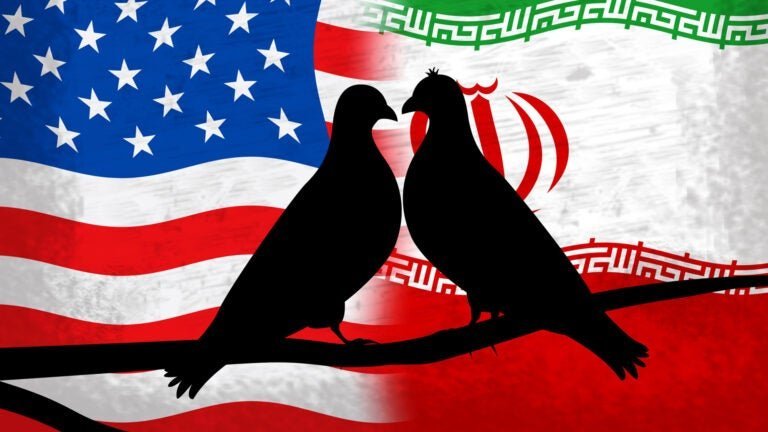
At 04:43 UTC on 29 May 2026, the financial intelligence outlet Unusual Whales flagged a Reuters dispatch reporting that the United States and Iran had reached an agreement to extend their bilateral ceasefire and lift shipping restrictions through the Strait of Hormuz — the narrow Persian Gulf corridor through which roughly a fifth of the world's oil shipments pass. The caveat was unambiguous: US President Donald Trump had yet to approve the deal. By 15:10 UTC that same day, Trump himself had moved dramatically further, posting to TruthSocial of a sweeping agreement in which Tehran had, by his account, agreed to permanently renounce nuclear weapons and completely reopen the strategic waterway.
The eleven-hour arc from unapproved extension to declared capitulation is itself a diplomatic fact, and it demands scrutiny on its own terms.
The morning report sourced to Reuters described a ceasefire framework that, while significant, appeared constrained in scope. An agreement to extend existing terms and restore shipping transit would represent a narrowing of tensions without resolving the deeper architecture of mutual distrust between Washington and Tehran. The White House's own communications operation flagged the deal as pending. Reporters covering energy markets and Gulf security noted that shipping insurers and tanker operators would treat any cessation of restrictions as a relief signal — but only if the arrangement were durable rather than a temporary goodwill measure liable to collapse.
The afternoon posts from Trump's TruthSocial account重构 this picture entirely. According to The Cradle Media and corroborated by multiple regional Telegram channels, Trump announced the end of the US naval blockade on Iran, described Tehran as having committed to permanent nuclear renunciation, and asserted that the Strait of Hormuz would be fully reopened. The framing was unconditional: a complete concessions package attributed entirely to Iranian agreement.
But the same afternoon channels carried a significant caveat embedded in the administration's own read. FotrosResistancee and Middle East Spectator both flagged that the President's announcement included demands on Iran that Tehran had not yet agreed to — including, according to those reports, requirements around material transfers that the Iranian side had explicitly rejected in prior rounds. Trump was, by this reading, announcing terms his counterpart had not signed off on.
The gap between a pending ceasefire extension and a declared nuclear surrender is not a matter of semantics. One is a de-escalation signal; the other is a maximalist diplomatic claim. The sources do not reconcile the two. Reuters reported an unapproved agreement in the morning. Trump declared a completed deal in the afternoon, with no apparent intervening approval event documented in the public record.
What the sources do establish is a pattern familiar from other flashpoint negotiations: the executive branch uses public declarations to apply pressure on both counterpart and domestic audience simultaneously. Announcing an Iranian concession before that concession is secured forecloses the diplomatic off-ramp for Tehran, which cannot appear to walk back terms that have already been declared agreed. It also disciplines the negotiating team — walk away now and Trump can claim the other side walked away first.
This dynamic has structural consequences. The Strait of Hormuz is not merely a transit corridor; it is a leverage point whose control has been a cornerstone of US Gulf positioning since the Carter Doctrine era. Lifting the naval blockade — effectively ceding the operational chokepoint — in exchange for concessions that may yet be contested transforms a tactical ceasefire into a strategic posture shift. Energy markets, which had priced in elevated risk premiums for Gulf shipping disruption, will need to reassess rapidly. The question is whether the underlying security architecture, including the US presence that underwrites freedom of navigation, is likewise open to negotiation.
The sources do not provide a confirmed statement from the Iranian Foreign Ministry or any designated spokesperson for the Iranian negotiating team as of the time of filing. Iranian state-aligned outlets have not yet offered a parallel readout. The claims of permanent nuclear renunciation and unconditional reopening therefore rest, at this writing, on the American side alone. Until Tehran's own sources corroborate the scope of what was allegedly agreed, the public record contains a version and a counter-version — and the two diverge materially on the question of what was promised and by whom.
There is a second layer of uncertainty the sources do not resolve: the distinction between what Trump announced on TruthSocial and what his negotiating team had actually secured. The morning Reuters report was precise on this point — the deal was not approved. The afternoon announcement was categorical — the deal was done. One of these framings is inaccurate, and the sources provide no basis for determining which, or whether both describe different tranches of a longer negotiation being selectively disclosed for public effect.
For Gulf allies — Saudi Arabia, the UAE, and other GCC states — the implications are direct. A US-Iranian normalisation that reduces tension may lower short-term regional risk, but it also removes a strategic precondition for Gulf states' own deterrence posturing. Israel has not commented publicly through its official channels in the material reviewed as of filing. The Joint Comprehensive Plan of Action, the 2015 multilateral agreement Iran struck with the Obama administration and later abandoned under Trump, anchored its verification regime on International Atomic Energy Agency inspections; any new framework would require equivalent or superior inspection architecture to be treated as credible by sceptical western parliaments and intelligence services.
The immediate test is whether any of the specific measures Trump described — the lifting of naval presence, the handover of nuclear-capable material, the cessation of enrichment to any level — actually transpires in the coming 72 hours. If the Strait is demonstrably open and the blockade demonstrably lifted, that is verifiable by commercial shipping data and regional maritime Domain Awareness feeds. If the nuclear commitments are subject to ongoing negotiation rather than already agreed, that is equally verifiable — by IAEA statements, by Iranian parliamentary ratification, by the public stance of Iranian officials.
This publication's read is straightforward: the Reuters morning brief and the Trump afternoon brief describe incompatible states of the same negotiation. One is authoritative only to the extent that the deal was confirmed; the other is authoritative only to the extent that it was declared. Standard diplomatic practice ordinarily requires that public statements about conditional agreements track the actual state of formal approval. The eleven-hour gap between the two framings is not a routine communication lag. It is a material discontinuity that the available record does not explain.
Until Iranian officials speak on the record, the outside reader is left with an American announcement of concessions the American side had not yet confirmed and the Iranian side had not yet confirmed back. The chokepoint is open or it is not. Tehran renounced its nuclear programme or it did not. The sources, taken together, document a statement — not a settled outcome.
Desk note: Wire coverage from major outlets in the morning window led with the Reuters ceasefire-extension report as a breaking story. By afternoon, Trump's TruthSocial posts had absorbed the narrative into a maximalist framing. Monexus has treated both as the same story — which is to say, one whose facts are in active dispute — rather than selecting between them for diplomatic tidiness. The gap between a pending agreement and a declared surrender is the story.
Wire provenance
This editorial synthesis draws on the following public wire/social posts:
- https://x.com/unusual_whales/status/1957143287561777211
- https://t.me/TheCradleMedia/4821
- https://t.me/FotrosResistancee/5108
- https://t.me/Middle_East_Spectator/2891
- https://t.me/wfwitness/8847