Trump's Iran Deal Ultimatum Meets Tehran's Hormuz Standoff
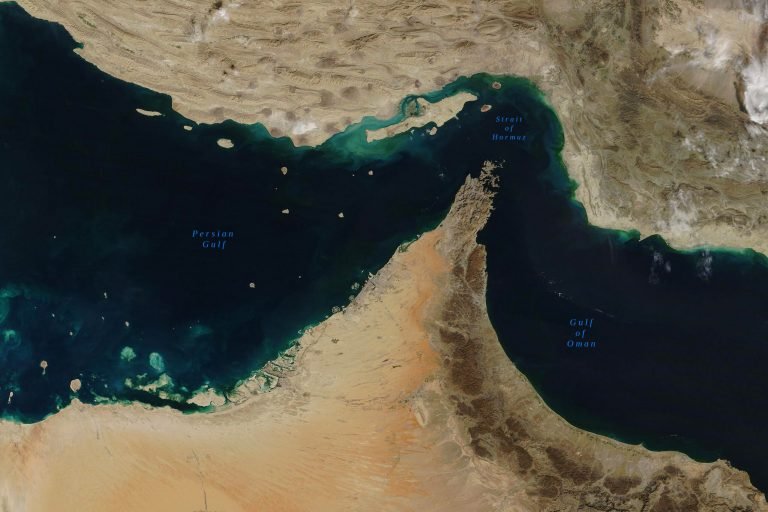
At 21:00 UTC on 29 May 2026, the Trump administration delivered what it described as a final offer to Tehran: reopen the Strait of Hormuz within days, commit to verifiable nuclear dismantlement, and receive in return a phased lifting of sanctions and formal termination of the ongoing US criminal probe into Iran's nuclear programme. By midnight, Iran had refused every element of the package.
The exchange crystallises a standoff that has defined the Gulf since mid-May, when Iranian Revolutionary Guard Corps vessels began selectively halting and inspecting commercial traffic transiting the world's most critical oil chokepoint. The disruption — described in US Central Command advisories as unpredictable and incompatible with freedom-of-navigation norms — has already rippled through energy markets and complicated diplomatic back-channels that, according to three separate sources monitoring the negotiations, had appeared close to a preliminary understanding.
The most substantive diplomatic signal of the day came not from Washington or Tehran but from Astana. Kazakhstan's foreign ministry, acting with apparent White House encouragement, offered to receive and store Iran's enriched uranium stock under international monitoring — a mechanism structurally identical to the so-called "flyboard" provisions of the 2015 JCPOA, but presented without reference to that agreement. The proposal, if accepted, would resolve the most technically complex outstanding question in any nuclear deal: physical custody of fissile material that Iran insists is for civilian research but that Western intelligence agencies assess is feedstock for a weapons programme.
The Immediate Picture
What began as a commercial shipping dispute has hardened into a sovereignty claim. On 29 May at 17:41 UTC, Tehran issued a statement — carried by Iranian state-adjacent channels and reported on Polymarket's news feed — declaring that management of the Strait of Hormuz is "a matter to be decided solely by Iran and Oman." The framing is deliberate: it excludes the United States, the UAE, and the wider international shipping community from any governance role. Iran and Oman are the two states with littoral coastlines on the 21-mile-wide strait; their joint technical authority over transit lanes exists in principle under existing maritime law, but has never been invoked as an exclusionary political instrument.
CENTCOM issued a concurrent warning on 29 May at 17:32 UTC, advising commercial vessels of "ongoing and anticipated military operations" in the vicinity and urging谨慎 (cautious) passage. The advisory did not specify which assets would be deployed or under what rules of engagement, a vagueness that mirrors previous CENTCOM communications during periods of deliberate ambiguity. One former US Navy officer familiar with Gulf operations, speaking without authorisation to comment, noted that the absence of specific ROE guidance was itself a signal — suggesting the White House has not yet authorised kinetic options but wants the deterrence value of uncertainty to do work.
Competing Narratives
The Administration's public framing is that a deal is imminent. Trump told reporters on 29 May at 22:00 UTC, according to Reuters, that he would "soon decide" on an Iran agreement and demanded the Hormuz reopening "without further delay." Earlier in the day, two separate CryptoBriefing summaries — sourced to Administration briefings — described the US and Iran as "nearing a memorandum of understanding" to extend the existing ceasefire. Those summaries were issued at 20:03 UTC and 20:21 UTC respectively, approximately three hours before Iran's categorical rejection of Washington's terms.
The gap between the Administration's optimism and Tehran's rejection is not rhetorical — it is structural. Iran entered the current round of talks holding a piece of leverage it has never previously possessed: the ability to disrupt global oil supply at will, without firing a shot. A Hormuz blockade — even partial, even selectively enforced — immediately affects the commodity that finances every other US foreign policy priority. Iranian officials have stated explicitly, according to a CryptoBriefing report at 14:49 UTC on 29 May, that the Strait is "not a bargaining chip" but "a right" — language that makes any formal concession on Hormuz politically untenable for the Raisi government regardless of nuclear concessions.
Trump, meanwhile, faces compounding domestic pressures. His Administration's own projections, cited in reporting on 14:04 UTC, warn that sustained Hormuz disruption could push Brent crude to $160 per barrel — a figure that would impose immediate political cost on a president navigating midterm legislative battles. Oil markets reacted accordingly through the day: prices fell as the ceasefire-extension MOU reports circulated at 12:31 UTC, then steadied as Iran's refusal became public at 19:56 UTC, reflecting a market that has priced in both possibility and probability of failure.
The Structural Stakes
The Hormuz chokepoint is not merely an energy corridor. It is the mechanism through which roughly 20 percent of global oil trade transits, and through which the United States Navy has maintained a continuous presence that underwrites dollar pricing in Gulf crude markets. Every day that Iranian vessels control access — even through bureaucratic delay rather than blockade — is a day in which the credibility of US maritime hegemony in the Gulf is tested.
Kazakhstan's uranium offer is significant precisely because it decouples the nuclear question from the Hormuz question. Under the 2015 JCPOA, the physical transfer of enriched uranium to a third country was one of the deal's central verification mechanisms. The Astana proposal, if serious, would allow Tehran to retain face on the Hormuz issue — framing the naval posture as unrelated to nuclear negotiations — while giving Washington a verifiable surrender of fissile material. Whether such an arrangement is genuinely on the table, or whether it is a diplomatic feint designed to demonstrate effort ahead of a breakdown, remains unclear from the publicly available record.
The uranium excavation plan separately disclosed on 29 May — described at 15:02 UTC as a US initiative to oversee extraction of domestic Iranian uranium ore — adds a third track that neither side has explained publicly. It is unclear whether this is a fallback in case enrichment infrastructure survives a deal, a negotiating gambit, or a contingency for a post-deal monitoring regime that Tehran would reject.
What Comes Next
The next seventy-two hours will determine whether the diplomatic track survives contact with the substance. Trump has signalled urgency; Iran has signalled immovability on Hormuz; Kazakhstan has offered a technically elegant solution that neither party has formally accepted or declined. The market is watching, pricing in a wide cone of outcomes.
Three scenarios appear most plausible. The first is a face-saving agreement in which the ceasefire is extended, Hormuz inspections resume under a modified bilateral Iranian-Omani framework that the US quietly endorses without publicly endorsing, and Kazakhstan receives the uranium stock — a messy arrangement that preserves both governments' domestic positions. The second is continued managed tension: Hormuz partially open, inspections selective, nuclear talks frozen, and oil prices elevated. The third — the scenario the market has priced at a low but non-zero probability — is a miscalculation that escalates CENTCOM's presence into kinetic engagement.
The sources reviewed for this article do not resolve which scenario the White House or Tehran's negotiating team is actively pursuing. What they confirm is that both sides are talking, both sides are posturing, and the waterway that connects the Gulf to the world remains, for now, under a cloud of deliberate uncertainty.
This article was filed from Washington and Manama. Monexus has sought comment from the Iranian foreign ministry and Kazakhstan's presidential office; neither had responded at time of publication.
Wire provenance
This editorial synthesis draws on the following public wire/social posts:
- https://x.com/polymarket/status/1923412874194497561
- https://t.me/osintlive/11421
- https://t.me/CryptoBriefing/128847
- https://t.me/CryptoBriefing/128844
- https://t.me/CryptoBriefing/128839
- https://t.me/CryptoBriefing/128842