Trump's Iran Deal: The Art of Winning Everything and Settling for Less
Both Tehran and Washington are declaring victory in the latest nuclear talks. Only one of them is probably right — and the gap between the two narratives tells us more about the limits of maximum pressure than any signed piece of paper.
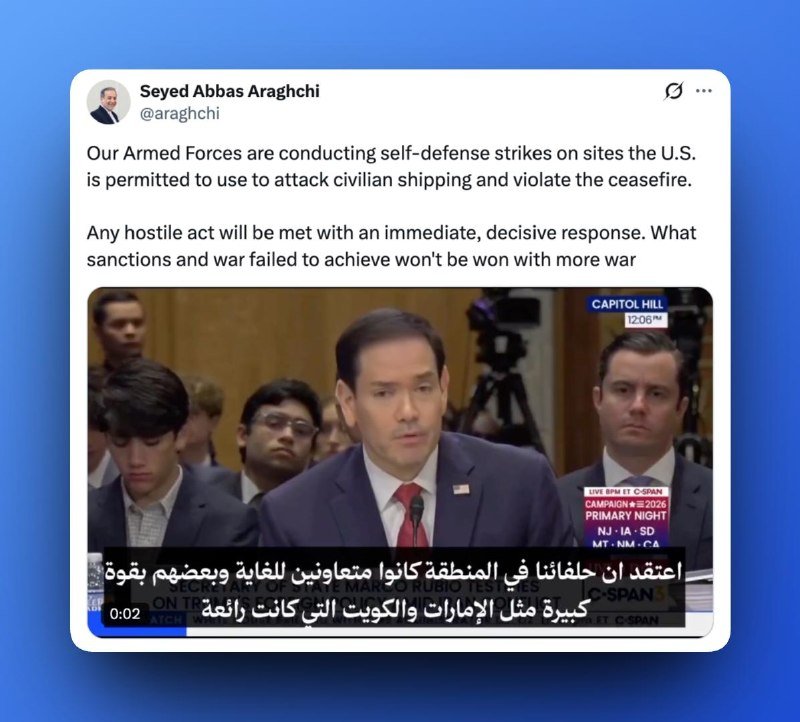
There is a particular skill in making a retreat look like a triumph. Donald Trump appears to have mastered it on Iran. On 29 May 2026, he posted that the United States had lifted Iran's maritime blockade — language that positioned the administration as granting a concession. Iran's response, delivered through Kian Abdullahi, the editor-in-chief of Tasnim news agency, was to note flatly that Tehran had not yet announced any final agreement, and that the final provisions remain under negotiation. Two governments, one photograph of a tanker, and two radically different readings of who blinked first.
The gap between these framings is not merely rhetorical. It gets to something structural about how sanctions diplomacy actually works — and why both sides have an interest in talking up their own position even when the underlying deal may represent a genuine compromise on each side's initial demands.
The maximum pressure mirage
Trump's original framing of Iran policy was maximalist: total sanctions until capitulation, zero enrichment, no civilian nuclear programme of any sophistication. That was the publicly stated goal. The reality on the ground, five years into what the administration called a maximum pressure campaign, looks different. Iran's oil exports, while reduced, did not collapse. Its regional proxy network — from Lebanese Hezbollah to Iraqi Popular Mobilization Forces — did not dissolve. Iran's nuclear programme, according to International Atomic Energy Agency reporting, continued advancing to thresholds that pre-2018 deal-makers had explicitly sought to prevent.
What the Tasnim editor's question implicitly surfaces is this: if a negotiated outcome is reached, does that represent a failure of the pressure strategy or its logical endpoint? Trump's preferred answer, publicly, is that the pressure worked. Iran's preferred answer is that the sanctions caused economic pain but failed to alter Iranian strategic calculation. Both contain partial truth. What the data shows is that economic pressure pushed Iran into serious negotiating but did not deliver the unconditional submission the White House once implied was achievable.
What a deal actually looks like
The structure of the talks, mediated through Omani intermediaries and following the shuttle diplomacy model that produced the 2015 JCPOA, suggests a familiar rhythm: both sides give ground on things they were never going to hold, and claim the things they actually wanted as the headline prize.
For Iran, the core prize is sanctions relief — the removal of designations that prevent Iranian banks from accessing global clearing systems, and the unblocking of oil revenue streams frozen in third-country accounts. The Tasnim commentary makes clear that from Tehran's perspective, the maritime framework is a technical step, not a headline concession. "Iran has not yet announced the final agreement and the final provisions," Abdullahi noted on 29 May 2026. That line is significant: it preserves Iranian leverage right up to the point of signing, and keeps the domestic political audience alert to the possibility of a better deal.
For the United States, the headline is verification: intrusive IAEA inspections, a real-time break-out timeline of at least twelve months, and the cessation of uranium enrichment above five percent. Whether those conditions are achievable in a negotiated text is a separate question from whether they are achievable in practice. History — the 2015 experience — suggests the gap between a document and its implementation can be significant.
The historical parallel that nobody wants to name
The Tasnim editor's reference to the Iraq war outcome and the assassination of Iranian officials — framed as "the opinion of the American people and media regarding the outcome of the war" — is not accidental. The comparison is doing significant work in the Iranian framing: the United States has a documented history of beginning conflicts with maximalist rhetoric and concluding them with negotiated settlements that its own domestic audience struggles to process as anything other than defeat disguised as success.
The parallel is uncomfortable for Washington for a specific reason. The 2015 nuclear deal, which Trump abandoned in 2018, was itself a negotiated outcome that Iran held up as proof that engagement worked and that maximum pressure was unnecessary. The current talks, if they produce an agreement, will look structurally similar to what Obama achieved: sanctions easing in exchange for nuclear constraints, with Iranian regional behaviour left largely unaddressed. Whether that is a defeat for Trump's stated goals depends entirely on what those goals actually were — and whether they were ever achievable in the first place.
The structural reality
Here is what the headline confrontation obscures: both sides may be getting roughly what they needed. Iran needed sanctions relief to stabilize an economy that has been under sustained pressure for seven years; it did not need to give up its nuclear programme entirely. The United States needed a verifiable freeze on further nuclear advancement; it did not achieve the complete rollback that the original maximum pressure campaign implied. A deal that gives each side its minimum viable outcome is not necessarily a defeat for either — it is the structure of diplomacy in a world without a global arbiter.
The danger is not that a deal fails to achieve every stated goal. It is that both governments are so invested in the narrative of total victory that they cannot acknowledge the compromises embedded in any real agreement. Iranian hardliners will frame any sanctions relief as an Iranian triumph; American hawks will frame any enrichment limits as an American capitulation. The deal itself will live somewhere in the middle, unremarked, doing its work quietly — until it doesn't, and then the arguments begin again.
What Kian Abdullahi's framing, drawn from Tasnim on 29 May, reveals is that the real negotiation is not only between diplomats in Muscat. It is between each government's domestic political needs and the structural reality of what a negotiated outcome actually contains. In that negotiation, the facts on the ground tend to matter more than the headlines. Both sides know it. Neither wants to say so out loud.
Wire provenance
This editorial synthesis draws on the following public wire/social posts:
- https://t.me/tasnimnews_en/38456
- https://t.me/tasnimnews_en/38458
- https://t.me/tasnimnews_en/38461