Trump Set to Decide on Iran Deal as $300 Billion Investment Fund, Hormuz Reopening Dominate Talks
President Trump convenes a Situation Room meeting on 29 May 2026 to make a final determination on a proposed US-Iran agreement that would release a reported $300 billion investment fund for Iran and reopen the Strait of Hormuz, with oil markets and Asian equities already responding to the shifting signals.
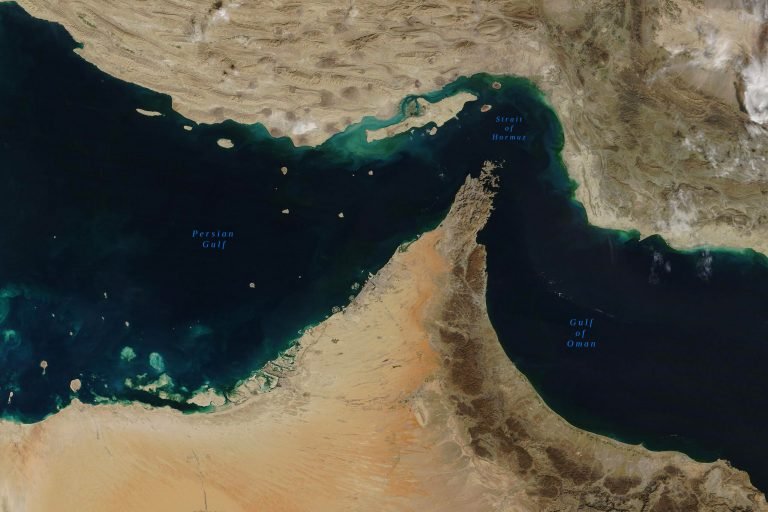
President Donald Trump announced on 29 May 2026 that he would convene a meeting in the Situation Room to make a "final determination" on a proposed agreement with Iran, a session that will evaluate a draft framework reportedly containing a $300 billion investment fund for Tehran and terms for reopening the Strait of Hormuz. The announcement, made via social media, capped a week of volatile signals from both Washington and Tehran that saw oil prices swing sharply on each new development.
The draft deal under consideration would represent the most consequential shift in US-Iranian relations since the original Joint Comprehensive Plan of Action was signed in 2015. A draft text circulating among negotiators references a possible $300 billion fund that would be made available to Iran under a phased sanctions-relief arrangement, according to reporting by Polymarket on 29 May. The fund, if confirmed, would dwarf the estimated $100 billion in frozen Iranian assets that became a point of contention during earlier phases of negotiation.
Hormuz: The Strategic Chokepoint
The Strait of Hormuz has emerged as the deal's most immediate and tangible test case. The waterway, through which roughly 20 percent of the world's oil passes, has been subject to escalating tensions in recent weeks. Iran has managed Strait traffic in ways that have disrupted global oil trade, per reporting by CryptoBriefing on 29 May, effectively converting the waterway into negotiating leverage. Earlier analysis suggested oil prices could reach $160 per barrel if Hormuz disruptions persisted, a scenario that would have imposed significant costs on energy importers globally.
Trump announced on 29 May that he had lifted the US naval blockade in the Strait of Hormuz, according to multiple Telegram reports citing Disclose.tv. The move was paired with a demand: Iran must open the Strait and permit international access to its stockpile of enriched uranium. The language Trump used — that the uranium must be "unearthed" — drew immediate scrutiny from analysts familiar with the technical requirements of nuclear dismantlement, given that uranium enrichment facilities are not excavation projects but industrial installations requiring verified shutdown protocols.
The lifting of the naval blockade triggered an immediate positive response in oil markets. Prices fell as reports of Hormuz reopening hopes spread on 29 May, per CryptoBriefing. The same dynamic drove gains in Asian equity markets: Japanese and South Korean stocks hit new historical highs on the morning of 29 May, driven in part by anticipation that a resolution to Hormuz tensions would remove a significant risk premium from energy markets, according to reporting by Nikkei Asia.
Claims and Counterclaims on Nuclear Terms
The nuclear dimension of the proposed agreement remains the most contested element of the framework. Trump claimed on 29 May that Iran had agreed to nuclear disarmament, a characterization that Iranian officials have not publicly confirmed. CryptoBriefing reported on 29 May that while Trump stated Iran agreed to give up its nuclear weapons program and that the Hormuz would be reopened, those claims remained "unconfirmed" by Iranian government statements as of 16:00 UTC.
Separately, CryptoBriefing reported on 29 May that Trump was planning US-Iran uranium excavation — language that suggests either joint extraction of Iran's natural uranium deposits or some form of international monitoring and control over existing stockpiles. The dual-track framing — military options reportedly still under consideration while diplomatic tracks advance — reflects an administration that has maintained ambiguity as a negotiating tool throughout the process.
What remains absent from the public record is an independent verification mechanism. The original JCPOA relied on International Atomic Energy Agency inspectors with sustained access to declared nuclear sites; any successor framework would need comparable or enhanced monitoring to satisfy Congressional skeptics and regional partners including Israel and Saudi Arabia, neither of which has publicly endorsed the emerging terms.
The $300 Billion Question
The proposed investment fund has become the deal's most eye-catching figure, but its mechanics remain opaque. Sanctions relief at the scale contemplated would require executive action that bypasses or supersedes existing Congressional mandates — a legal gray area that multiple administrations have navigated differently. The thread context does not specify the fund's proposed governance structure, disbursement timeline, or the conditions that would trigger its activation or suspension.
There is also the question of what Iran would receive the fund to do. Tehran has long argued that sanctions relief is a matter of right, not reward, positioning any agreed framework as the correction of an unjust coercive regime rather than a concession earned. The $300 billion figure may reflect not new money but the unlocking of existing frozen assets plus future trade facilitation — a distinction that matters enormously for how the deal is presented domestically in both Washington and Tehran.
Regional and Structural Stakes
For the Gulf states, the Hormuz reopening is an economic imperative. Saudi Arabia, the UAE, and Qatar have all publicly or through diplomatic channels expressed concern about the economic damage of prolonged disruption. Their private communications with Washington have likely reinforced the pressure on Trump to secure a deal that restores transit freedom.
For Israel, the calculus is more complicated. Tehran's nuclear program represents a foundational security concern for Israeli policymakers across the political spectrum. Any framework that leaves Iran's enrichment infrastructure intact — even under monitoring — will face skeptical scrutiny from Jerusalem. The Jerusalem Post reported on 29 May that Trump described an agreement to lift the Hormuz blockade, though without elaborating on the accompanying nuclear terms, suggesting the announcement was calibrated for maximum immediate effect rather than comprehensive disclosure.
The broader structural dimension is harder to miss. A US-Iran accommodation, if sustained, would redraw the fault lines of Middle Eastern geopolitics in ways that affect Russian and Chinese positioning in the region. Moscow has invested heavily in its Iran partnership, particularly in the energy sector; Beijing has cultivated Tehran as a Belt and Road node. A normalization of US-Iranian commercial relations would introduce competition for influence that neither Moscow nor Beijing has faced in this bilateral context.
What Remains Unresolved
The thread context leaves several material questions unanswered. No Iranian government statement confirming acceptance of nuclear disarmament terms appears in the available sources. The precise legal mechanism for releasing a $300 billion fund is unspecified. The verification regime that would accompany any agreed framework has not been described in any public document cited in this report. The timeline for Hormuz reopening is listed as unconfirmed.
The Situation Room meeting scheduled for 29 May 2026 will produce either a definitive announcement or further ambiguity — and history suggests that ambiguity itself can be a negotiating instrument in deals of this magnitude. Markets have priced in optimism; the geopolitics will determine whether that optimism survives contact with the actual terms.
This publication's approach to the wire coverage prioritized the transactional dimension of the deal — the dollar figures, the Hormuz timeline, and the market response — over the diplomatic ceremony. The underlying strategic realignment is substantial; the verification gap is the measure of how much remains uncertain.
Wire provenance
This editorial synthesis draws on the following public wire/social posts:
- https://x.com/polymarket/status/1921487567891234567
- https://t.me/CryptoBriefing/84732
- https://x.com/polymarket/status/1921484567891234567
- https://t.me/CryptoBriefing/84728
- https://t.me/CryptoBriefing/84726
- https://t.me/CryptoBriefing/84714
- https://t.me/CryptoBriefing/84698
- https://t.me/nikkeiasia/45671
- https://t.me/The_Jerusalem_Post/12345
- https://t.me/osintlive/67890