Trump Claims US Strikes Thwarted Iran's Nuclear Ambitions as 'Final Decision' Looms
As Trump prepares a definitive judgment on Iran's nuclear programme, his administration simultaneously claims credit for covert military operations against Iranian facilities — a narrative that hardliners in Tehran are working to preemptively discredit.
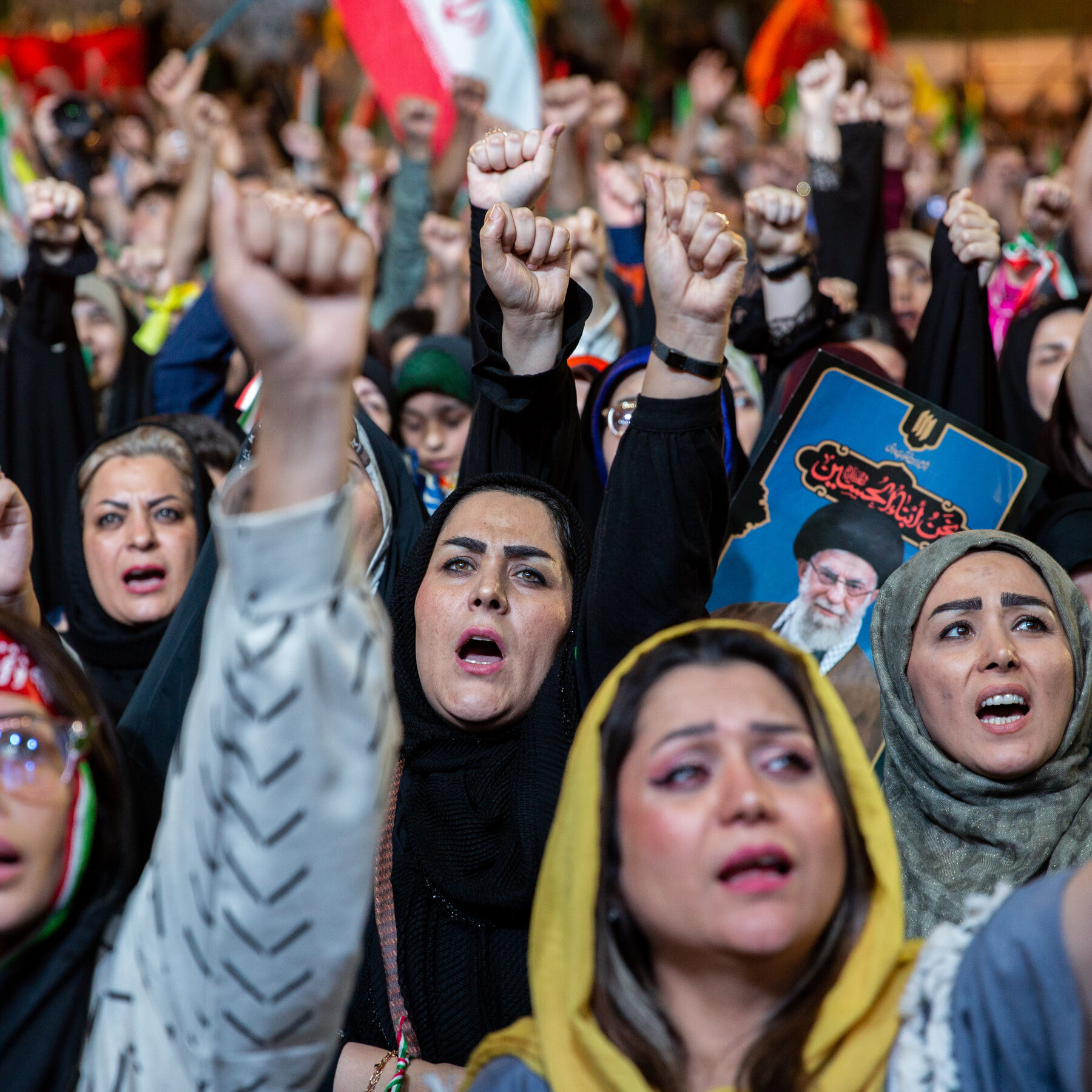
On 28 May 2026, as the Trump administration signalled it was hours from a binding verdict on Tehran's nuclear programme, a familiar pattern reasserted itself in Washington: the assertion of leverage through unconfirmed military action. US officials, speaking through official and unofficial channels, allowed reporting to circulate suggesting that American strikes had already degraded Iran's path to a nuclear weapon — an intervention that, if verified, would represent a significant escalation absent any congressional authorisation or United Nations Security Council mandate.
Iran's response, carried by state-linked outlets including Tasnim News Agency, was immediate and dismissive. Tehran characterised any claims of successful strikes as fabricated — a psychological operation designed to sap Iranian negotiating resolve ahead of what the Trump administration has called its "final decision" on whether to restore the 2015 Joint Comprehensive Plan of Action or pursue a different arrangement entirely.
The result is a fog of competing narratives that both sides appear to be actively constructing. Washington wants credit for action it has not formally acknowledged. Tehran wants any real action delegitimised before it can be used as bargaining-chip leverage. And somewhere in the middle sits the actual state of Iran's nuclear programme — a matter of genuine technical complexity that neither government's public communications are designed to illuminate honestly.
The Architecture of Ambiguity
The Trump administration's posture on Iran has oscillated between maximum pressure and strategic uncertainty since the second term began. What is clear from the available reporting is that the White House has presented Tehran with a set of demands — described in Turkish and European diplomatic circles as substantially more punitive than the original JCPOA terms — and set a deadline for compliance that has now arrived.
The claims about US strikes follow a pattern established earlier in the administration: unofficial acknowledgement through wire-adjacent channels, no formal on-the-record confirmation from the Pentagon or State Department, and a reliance on the information space to do the work that formal military announcements would normally accomplish. This approach allows the administration to signal resolve to Tehran and domestic constituencies while preserving deniability should the strikes prove ineffective or counterproductively harden Iranian negotiating positions.
Tasnim, the Iranian semi-official news agency, reported on 29 May 2026 that Trump had indicated he was preparing a final decision on Iran, citing the agency's own coverage of the US president's public remarks. The CryptoBriefing wire service noted the same day that Trump was claiming US strikes had thwarted Iran's nuclear ambitions. The dual-track communication — one channel for the diplomatic ultimatum, another for the military assertions — reflects a deliberate information architecture rather than a coherent strategic narrative.
What remains absent from the public record is any independent verification of the strikes themselves. No satellite imagery from commercial providers has been cited. No regional military sources with on-the-record identities have corroborated the claims. The information ecosystem is, for the moment, a contest between Washington's implied assertions and Tehran's blanket denials — with the truth structurally difficult to establish from external observation.
The Tehran Counter-Narrative
Iranian state media and affiliated analysts have moved quickly to frame any suggestion of successful American military action as a deliberate fabrication. The Tasnim report, carrying Trump's statement about the impending final decision, was framed in the context of what Iranian officials describe as a sustained US campaign of economic warfare, cyber disruption, and propaganda — none of which, they argue, has altered Tehran's fundamental strategic calculus.
This counter-narrative is not without structural coherence. Iran's nuclear programme has survived decades of US and allied pressure, including the Stuxnet cyberattack widely attributed to US and Israeli intelligence, the targeted elimination of nuclear scientist Mohsen Fakhrizadeh in 2020, and the extraordinary economic sanctions imposed under both the Trump administration's maximum pressure campaign and the Biden administration's selective sanctions regime. The argument that one round of strikes — even if confirmed — would fundamentally alter the programme's trajectory is one Tehran's strategists are well-positioned to challenge.
The Islamic Republic's negotiating posture has historically been shaped by a dual-track internal dynamic: hardliners opposed to any accommodation with Washington, and pragmatists willing to trade nuclear concessions for sanctions relief. The current situation plays directly into hardliner hands. Any American claim of military success gives them a potent argument: that negotiation under American pressure is futile, that the only durable security lies in nuclear capability, and that the West's interest in a deal is precisely the weakness that demonstrated pressure can exploit.
This creates a perverse incentive structure. The harder Washington pushes militarily, the more Tehran's hardliners consolidate — which in turn makes a negotiated solution less achievable, which Washington then frames as confirmation that Iran was never serious about a deal. It is a loop that has defined US-Iran relations since 1979, and the current episode appears to be running on its familiar rails.
The Diplomatic Dimension
Turkey, which has maintained open channels with both Washington and Tehran, has been circulating an alternative framework through diplomatic contacts in Geneva and Brussels, according to European officials briefed on the discussions. The Turkish proposal — reportedly centred on a modified version of the original JCPOA with enhanced verification provisions — has gained tentative support from France and Germany, though the United Kingdom has been more cautious, mindful of London's traditionally close alignment with Washington on Iran policy.
The European capitals face a familiar dilemma. Their governments supported the original JCPOA, arguing that verification-based engagement was preferable to the maximum pressure approach. But they have also been unwilling to confront Washington publicly when the administration diverges from that consensus. The result is a diplomatic posture that appears supportive of a deal in private while endorsing American positions publicly — a contradiction that Tehran's negotiators have learned to exploit.
China and Russia, the other remaining parties to the original JCPOA, have taken a different stance. Both have publicly endorsed Iran's right to a peaceful nuclear programme under full safeguards, and both have been critical of what they characterise as American attempts to renegotiate terms already agreed in 2015. Beijing's position has been particularly significant given its role as a major purchaser of Iranian oil — a relationship that has provided Tehran with a financial lifeline throughout the sanctions era.
The structural reality is that any durable nuclear agreement with Iran requires the agreement of these external powers as much as it requires a bilateral US-Iran understanding. A deal imposed under the threat of military action, without the buy-in of Beijing and Moscow, would lack the multilateral enforcement mechanisms that made the original JCPOA structurally significant. The question of whether Trump is pursuing a genuine deal or a managed confrontation has not been answered by the available sources — and may not be answerable until the final decision is formally announced.
The Verification Problem
The central analytical difficulty — one that media coverage has largely failed to grapple with — is that the verification of Iran's nuclear programme is a technical matter that public communications are structurally unsuited to address. Statements from the International Atomic Energy Agency, which has inspector access to declared Iranian nuclear sites under the Additional Protocol that Tehran ratified in 2023, are the closest available proxy for the programme's actual status. The IAEA's most recent quarterly report, covering the period through March 2026, noted that Iran had continued to accumulate enriched uranium at levels consistent with a civilian programme but had not, as of that reporting date, diverted material to a weapons programme.
That finding — significant in its own right — sits uncomfortably with both the American narrative of imminent threat and the Iranian narrative of peaceful intent. The IAEA cannot see inside facilities that Iran has not declared. It cannot determine intent. It can only report on what it observes at sites it is permitted to inspect — a significant limitation that neither Washington nor Tehran has a strong incentive to acknowledge publicly.
The 60-day congressional notification window for significant military actions against Iran, required under the War Powers Resolution, has not, as of 29 May 2026, been triggered — according to sources familiar with the matter who spoke on condition of anonymity. This suggests either that any strikes claimed in the public information space were below the threshold triggering notification, or that the administration is operating in deliberate ambiguity about whether the reporting constitutes acknowledgement of hostilities. Both interpretations are compatible with the administration's pattern of communication on Iran — and both are deeply problematic from a oversight perspective.
Stakes and Forward View
The immediate stakes are clear. If Trump's final decision is to reimpose and escalate the maximum pressure campaign — including secondary sanctions on third-country entities dealing with Iran — the effect on global oil markets would be immediate and significant. Brent crude has already moved on the uncertainty premium embedded in the current standoff; a hardline decision would likely push prices above the $110 per barrel threshold that regional analysts consider the pain point for Asian importers, particularly India and South Korea, who have been quietly expanding Iranian oil imports under the sanctions-lite environment of recent months.
If, alternatively, the decision is to pursue a negotiated outcome — whether the Turkish-framed modified JCPOA or some other arrangement — the administration will need to credibly signal that the military assertions were informational operations rather than preconditions. Tehran's negotiating posture will depend heavily on whether Supreme Leader Ayatollah Ali Khamenei and his inner circle interpret the surrounding information environment as evidence of American weakness or American strength. That judgment will shape whether talks, if offered, proceed seriously or serve merely as a pressure tactic.
The deeper structural question — one that the available sources cannot fully answer — is what kind of outcome the Trump administration actually wants. Maximum pressure, pursued to its logical endpoint, leads either to Iranian economic collapse, which analysts inside and outside government regard as unlikely without a complete Chinese sanctions breach, or to military confrontation, which would be extremely difficult to prosecute without significant regional and congressional support. Negotiation, meanwhile, requires accepting that the 2015 deal's basic architecture — which Tehran considers a diplomatic achievement and Washington considers a strategic concession — represents the most achievable baseline.
The information environment surrounding the final decision tells us something important about how this administration prefers to operate: in ambiguity, in the space between acknowledgement and denial, where the narrative does the work that formal policy announcements cannot. Whether that approach produces a durable outcome, or merely delays a collision that the structural dynamics make inevitable, is the question that 29 May 2026 leaves open.
This publication's reporting on the Trump administration's Iran posture has emphasised verification gaps and diplomatic alternative framings that the dominant wire coverage has subordinated to the White House's own narrative framing.
Wire provenance
This editorial synthesis draws on the following public wire/social posts:
- https://t.me/DDGeopolitics/14238
- https://t.me/JahanTasnim/8921
- https://t.me/CryptoBriefing/34512
- https://t.me/DDGeopolitics/14237