Trump and Iran Locked in Public War of Words Over Nuclear Talks
Tehran and Washington are telling contradictory stories about the state of their nuclear negotiations — and both sides have strategic reasons to control what the world believes before any deal is signed.
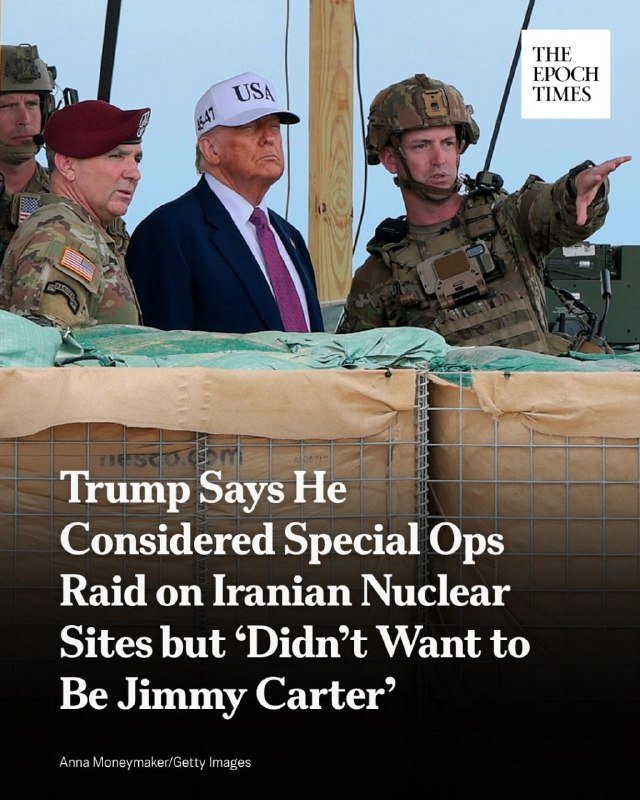
Both sides are claiming the upper hand. Neither is fully telling the truth.
On 29 May 2026, Iranian officials pushed back sharply against statements from US President Donald Trump suggesting a deal framework had been reached, insisting that negotiations remain ongoing and that no final agreement has been struck. The Iranian counter-narrative arrived within hours of Trump's public comments, reflecting a pattern in which both governments are using the media space around the talks as a diplomatic instrument in its own right.
The dispute matters because the shape of the story — who looks like they're winning, who looks desperate — shapes leverage at the negotiating table. That is not a coincidence. Both sides appear to be managing their audiences simultaneously: domestic constituencies, regional partners, and international markets watching for signs of either a breakthrough or a collapse.
What Tehran Is Saying
According to reporting by Middle East Eye on 29 May 2026, Iranian government representatives maintained that talks with Washington are still active and that comments attributed to Trump suggesting near-resolution of core disputes misrepresented the current state of play. The outlet, citing Iranian officials, reported that Tehran views the public framing of the negotiations as a separate battlefield from the technical discussions themselves.
Separately, an Iranian-aligned political commentator cited on the social media platform X argued that the Trump administration is depleting US strategic petroleum reserves while simultaneously working to suppress global oil prices — a combination, the argument holds, that prevents demand destruction and masks the depth of economic pressure building inside the United States. The claim frames the nuclear talks not as a diplomatic achievement but as a pressure campaign Iran intends to outlast, betting that structural economic vulnerabilities in Washington will eventually produce more favorable terms.
What Washington Is Saying
Trump has publicly characterized the Iran negotiations as approaching a successful conclusion, framing any emerging deal as a vindication of his administration's maximum-pressure strategy. Reporting from Iranian state media on 29 May described these remarks as a deliberate distortion of reality — a manufactured narrative designed to project strength ahead of any actual agreement.
The substance of what a US-Iran deal might look like remains contested across both capitals. The parameters being discussed reportedly include limitations on Iran's uranium enrichment activities, some degree of sanctions relief, and verification mechanisms — but the sequencing and scope of concessions on each side are where talks have consistently stalled in past rounds.
What is clear is that the Trump administration is simultaneously managing a separate legal dispute at home that intersects with its foreign policy posture. A US federal judge temporarily blocked the administration on 29 May from setting up a nearly $1.8 billion fund to compensate individuals who say they were harmed by what the administration has called government "weaponization" — a fund critics have described as a slush fund for political allies and which a court has now paused pending further review. The ruling does not directly concern Iran policy, but it underscores the legal turbulence surrounding the executive branch's use of government resources at a moment when the White House is simultaneously engaged in high-stakes nuclear diplomacy.
The Structural Problem With the Narrative
The US-Iran negotiation cycle has a consistent feature: both governments routinely brief selectively, leak strategically, and deny what is convenient to deny. This is not unique to this moment, but the stakes are higher now than at any point since the original Joint Comprehensive Plan of Action was agreed in 2015.
What distinguishes the current phase is the degree to which public statements have decoupled from the actual state of talks. When Trump signals a deal is close, he is partially talking to markets — trying to project stability and prevent oil price spikes that would complicate his economic narrative. When Tehran says no deal exists, it is partially talking to its own domestic audience, which has absorbed years of anti-American messaging and cannot easily be told that concessions were made under pressure.
The oil reserve manipulation argument circulating in Iranian-aligned commentary is worth examining on its own terms. US Strategic Petroleum Reserve releases have been a tool of administrations of both parties to manage domestic fuel prices ahead of elections or during supply disruptions. Whether the current depletion rate constitutes a deliberate market intervention is subject to competing interpretations — the administration would frame it as prudent supply management; critics argue it depletes a national security asset for short-term political gain. The underlying data on reserve levels is publicly available from the Department of Energy; the political interpretation of that data is where the disagreement lives.
What Happens Next
The immediate risk is that both governments become trapped by their own public framing. If Trump claims victory and Iran denies it, the domestic political logic of each side makes it harder to then deliver a compromise deal that neither side can sell as a win. The history of US-Iran diplomacy — including the 2015 JCPOA and its 2018 abrogation by the Trump administration — is littered with moments where the shape of the public story foreclosed the compromises that private negotiation had tentatively sketched.
The $1.8 billion legal block adds a secondary dimension: the administration is simultaneously fighting questions about how it uses executive power domestically while trying to project strength internationally. That tension is not lost on negotiators in Tehran, who are watching Washington closely for signs of institutional constraint.
A final agreement, if one materializes, will almost certainly require both sides to walk back portions of their public positioning in the coming weeks. The question is whether the gap between the two narratives is currently bridgeable — or whether the performance of strength has become the substance of the negotiation itself.
This publication's coverage of US-Iran diplomacy emphasizes reporting from Middle East Eye and Reuters as primary sources, with Iranian state media used as counterpoint context. The $1.8 billion court ruling was sourced via Reuters.
Wire provenance
This editorial synthesis draws on the following public wire/social posts:
- https://t.me/presstv/179347
- https://x.com/s_m_marandi/status/1927654320189116577