Trump's Iran Decision Leaves Markets Guessing as Deal Remains Unconfirmed
After a two-hour Situation Room session on 29 May 2026, President Trump declined to announce a decision on a new Iran framework, despite earlier claims that Tehran had agreed to nuclear disarmament and hints that Hormuz Strait reopening was imminent. Markets reacted with characteristic ambiguity.
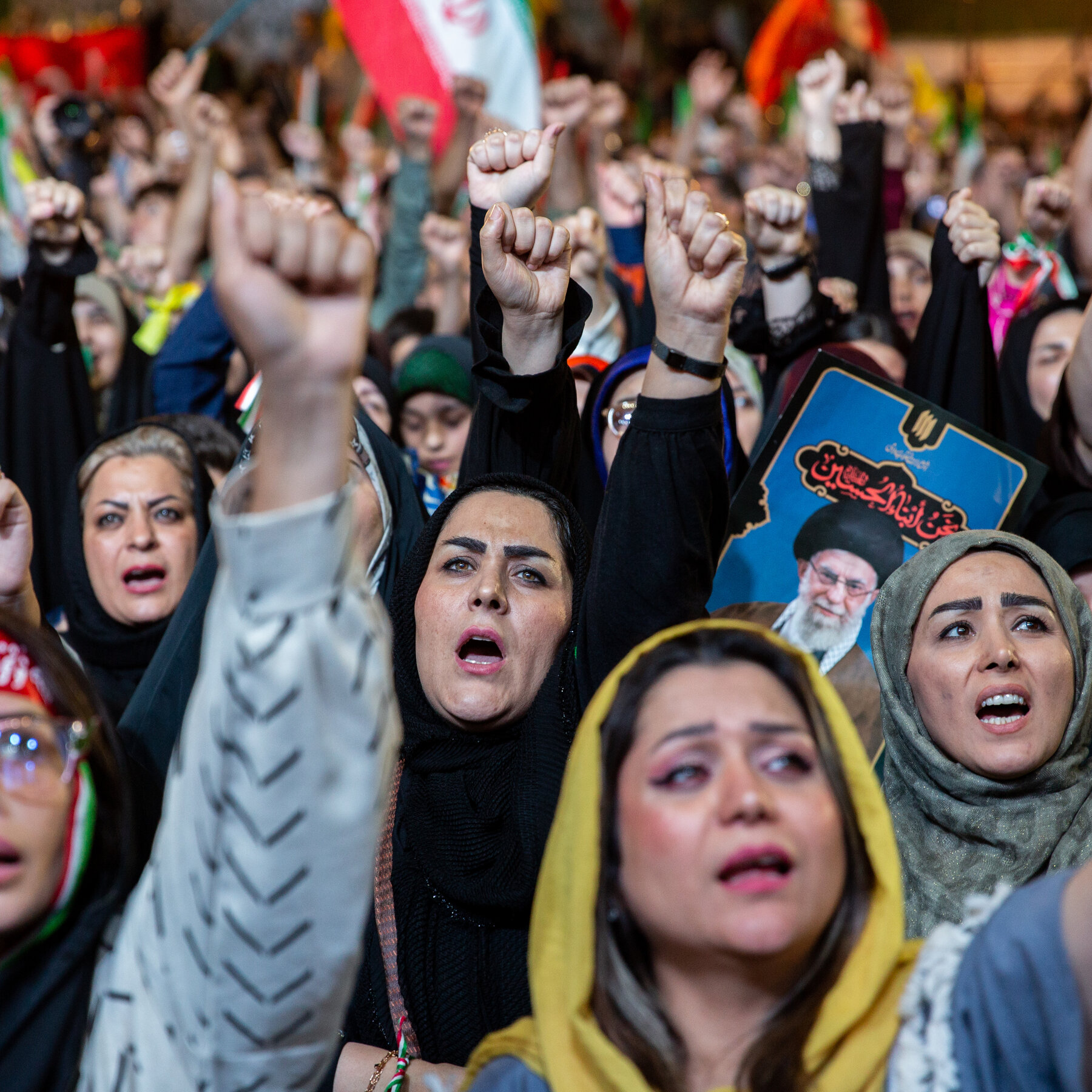
Two hours in the White House Situation Room on the afternoon of 29 May 2026 produced no announcement. President Trump, who had told reporters earlier in the day he would make a "final decision" on Iran, emerged without a deal — and without a rejection of one. The contours of what Washington was actually weighing remained, by evening, largely undisclosed.
That ambiguity itself is the story.
The Before and After of a Single Day
The morning of 29 May had carried a different charge. Trump announced on social media that he would convene officials in the Situation Room for a final determination on Iran, language that raised expectations on trading floors and in diplomatic circles alike. By midday,oil markets had begun to ease, with prices slipping as traders priced in a reduction in geopolitical risk should a framework emerge. Bitcoin held near $78,000 — not surging on deal optimism, not falling on military risk, but in the kind of suspended animation that suggests markets did not know what to price.
Then came the claims. Trump, speaking to reporters outside the White House, asserted that Iran had agreed to nuclear disarmament. He also suggested Hormuz Strait reopening — a claim that, by mid-afternoon, remained entirely unconfirmed by any Iranian or independent source. The duality was stark: a head of state publicly declaring terms that his own administration had not yet formally settled.
By the time the Situation Room session concluded shortly before 19:00 UTC, no announcement was forthcoming. The New York Times reported that the two-hour meeting produced no decision. Markets, already uncertain, absorbed the non-result without sharp movement in either direction.
What Tehran Has Not Said
The structural asymmetry of this episode is worth examining plainly. The public record on the Iranian side is, by design or default, nearly empty. Tehran has not issued a formal statement confirming any agreed framework. No Iranian official has publicly endorsed the disarmament language Trump cited. The absence of Iranian corroboration is not incidental — it is the central unresolved fact.
This is not unusual for early-stage negotiations of this sensitivity. Iran has historically maintained strict information discipline during back-channel talks, allowing the US side to claim whatever public posture serves its domestic and diplomatic purposes until terms are settled. What is less routine is the degree to which Trump has volunteered specific outcomes — disarmament, Hormuz reopening — before any Iranian counterpart has ratified them. Whether this reflects negotiating strategy, domestic political timing, or genuine misunderstanding of what was discussed in preliminary contacts is a question the available record does not resolve.
The Polymarket market-implied probability stood at 52 percent for an agreement or ceasefire extension by month's end — essentially a coin flip. That number will move, but the direction will depend entirely on what, if anything, emerges from continued contacts.
The Energy Calculus
The Strait of Hormuz is the world's most critical chokepoint for oil shipments, carrying roughly 20 percent of global oil trade. Any credible framework touching Iranian nuclear activity carries direct implications for energy markets that dwarf the usual rhetoric around US-Iran confrontation.
Oil prices falling on the day of the Situation Room meeting suggests traders were willing to price deal optimism before deal confirmation — a pattern that tends to produce volatility in both directions if talks collapse. The failure to announce did not reverse the slide, which implies markets had not fully committed to the bullish case in the first place. They were, in the way financial markets rarely are, being honest about their uncertainty.
Bitcoin's composure near $78,000 tells a related story. The cryptocurrency, often treated as a macro-risk proxy, was neither surging nor capitulating. That restraint is itself a signal: the market did not believe a deal was imminent enough to buy, and did not believe military confrontation was likely enough to sell.
Military Options Never Fully Withdrawn
It is worth noting what has not changed. Throughout the weeks of back-channel signalling, the US military posture in the Gulf has not substantially altered. Military options, as Trump himself hinted earlier in the week, remain "on the table" in the official framing. The negotiation exists simultaneously with the threat of force — a structure that is standard for US diplomatic practice but carries particular weight given the proximity of Iranian nuclear facilities to Gulf shipping lanes and allied military assets.
The question for the weeks ahead is whether the Situation Room session represents a pause in a process that will resume, or the outer limit of what was ever genuinely available. The sources do not indicate which direction the internal debate is trending, and the Polymarket odds suggest professional assessors are equally uncertain.
The Forward View
A deal, if reached, would be among the most consequential diplomatic outcomes of this administration — reshaping energy flows, easing a frontline of US-Gulf alliance management, and creating a new axis of competition with China, which has maintained its own engagement with Tehran throughout the US pressure campaign. No deal would leave the current posture of maximum pressure and intermittent military threat intact, with all the instabilities that posture contains.
What 29 May demonstrated is not the end of a process but its opacity. The Trump administration spoke publicly and confidently about what Iran had agreed to. Iran said nothing publicly at all. That gap — between Washington's narrative and Tehran's silence — defines the negotiation as it actually exists, as opposed to the version markets and commentators were briefly invited to price in.
The next data point will not come from a betting market. It will come from Tehran.
Monexus covered this as a developing diplomatic situation with material uncertainty — as the record stood at 19:00 UTC on 29 May 2026, no agreement had been confirmed by either side, and the Polymarket probability reflected that ambiguity rather than any directional conviction.
Wire provenance
This editorial synthesis draws on the following public wire/social posts:
- https://t.me/ClashReport/12456
- https://t.me/CryptoBriefing/18432
- https://twitter.com/polymarket/status/1923456789100015617
- https://t.me/CryptoBriefing/18429
- https://twitter.com/realDonaldTrump/status/1923441122334569472
- https://t.me/CryptoBriefing/18425
- https://t.me/CryptoBriefing/18424
- https://t.me/CryptoBriefing/18423