How Gold, Oil, and Asian Markets Are Pricing a US-Iran Ceasefire
Gold has climbed on ceasefire optimism while oil prices have eased, but the tentative deal reportedly reached between the US and Iran on 29 May 2026 sits between two poles that neither side fully controls: Iranian nuclear disclosures and American military enforcement that reportedly redirected 115 vessels during the blockade intensification.
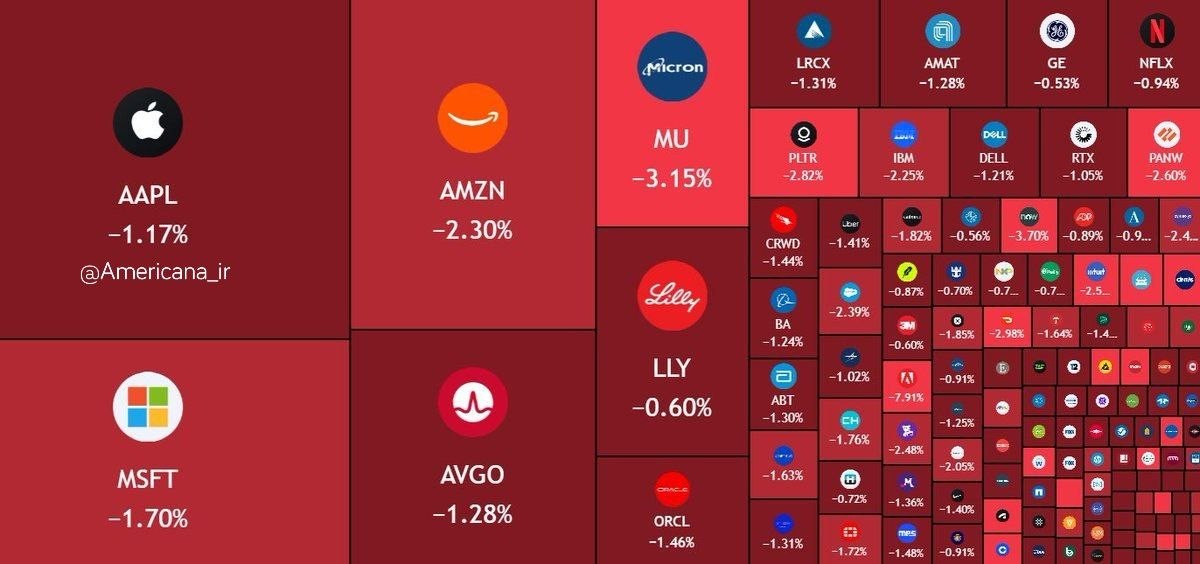
In the early hours of 29 May 2026, gold made gains on ceasefire optimism. By the time markets across Asia opened, Japanese and South Korean indices had hit fresh records on what traders were reading as a narrowing of risk in the Gulf. Hours later the mood shifted again. The mood in commodity markets on any given morning in late May has tracked — sometimes minute to minute — the shifting signals between Washington and Tehran. The tentative deal reportedly reached that day, per SBS News Australia, was less a breakthrough than a pause button: an extension of an existing ceasefire mechanism rather than a resolution of the underlying disputes that brought the two sides to the edge of wider conflict.
What makes this moment structurally unusual is that it arrives at the intersection of two dynamics that coverage typically separates. The first is diplomatic: the US-Iran nuclear talks have produced enough proximity that both sides consider a mutual operational pause worth maintaining. The second is military-escalatory: reported incidents including a US aircraft shot down over Iranian territory, a blockade intensification that saw US forces redirect at least 115 vessels, and Hormuz management by Iran that has periodically disrupted tanker traffic through the strait. Separately, each dynamic tells a familiar story. Together they form something more complex: each side using pressure to arrive at a ceiling, then treating that ceiling as the floor for the next round of talks.
The Ceasefire Calculus: Extension, Not Resolution
The deal-in-waiting described by outlets including Axios as a tentative extension reflects a pattern common in US-Iran back-channel negotiating: both governments typically prefer conditional pauses over outright collapses, because collapse forecloses options that either side may eventually need. The ceasefire mechanics reportedly under discussion centre on mutual operational restraint — a commitment from Iran not to advance enrichment activities above defined thresholds, in exchange for a partial sanctions relief window from Washington.
What neither side controls fully is domestic political read. The Iranian position, as described by Iranian state-adjacent sources, has consistently emphasised the missile programme as non-negotiable: a deterrent capability Tehran treats as existential insurance, not a bargaining chip. The American posture, as described by outlets including CryptoBriefing citing US government-adjacent sources, has set explicit military triggers — warnings that any outright ceasefire rejection would prompt action. These are negotiating positions framed as red lines, which is itself a negotiating technique.
The structural reality is simpler than the rhetoric: both sides are posturing, both sides are sustaining reservists in the field, and both sides are managing economic pressure that compounds daily. American enforcement of Iran sanctions relies on maritime interdiction capacity that cannot be sustained indefinitely at current deployment levels. Iranian oil exports remain constrained but not eliminated — alternative transit routes, opaque tanker affiliations, and third-party intermediaries have historically absorbed more volume than Western enforcement modelling projects. The ceasefire extension is less an act of goodwill than a recognition that neither side's preferred outcome is currently achievable.
Escalation, Blockade, and the Hormuz Disruption
The military dimension of the current episode centres on Hormuz — the waterway separating Oman from Iran through which roughly a fifth of globally traded oil passes. The disruption began not with a dramatic closure declaration but with enforcement intensification: US naval repositioning that reportedly redirected 115 vessels for interdiction and inspection purposes, a volume that implies a systematic rather than selective approach to traffic management.
Within hours, Iranian management of the strait's traffic became itself a reported constraint. Iran does not need to close Hormuz to produce an effect. Selective interference with tanker traffic — paperwork delays, communication jamming, selective boarding of vessels with ambiguous flag-of-convenience affiliations — can produce meaningful supply uncertainty without triggering the international reaction that an outright closure would generate. Incidents of this character have precedent: a comparable sequence of disruptions in 2019 produced a measurable spike in Asian refinery procurement costs within six weeks, without a single incident of formal blockade being declared.
The military escalation reported on 29 May — a US aircraft reportedly shot down over Iran amid what sources characterised as an intensifying conflict — elevated the risk profile sharply. American military sources have not confirmed or denied the specific incident, which makes it difficult to establish its precise character or attribution. What the immediate aftermath did produce, according to accounts citing US government-adjacent channels, was a hardening posture among American operational commanders: increased blockade enforcement, explicit warnings to Tehran that a rejected ceasefire would trigger consequences.
This dynamic — pressure, response, counter-escalation — is not new to the Gulf. What is relatively novel is the speed at which markets are now discounting it. Oil prices fell on 29 May as reports of a ceasefire extension emerged, suggesting traders assign high probability to a resolution of Hormuz disruption even at a low threshold of agreement. Gold, meanwhile, moved in the opposite direction — climbing on ceasefire optimism even as it remained on track for a monthly decline, reflecting confidence in short-term de-escalation layered over longer-term structural uncertainty. Both market signals can be simultaneously accurate: the short-term trade is ceasefire; the monthly position reflects that the structural conditions producing Iran sanctions and enforcement pressure have not changed.
The Nuclear Dimension: Leverage and Disclosures
The variable that most directly shapes what any ceasefire can achieve is enrichment. On 29 May, Iranian state-adjacent sources disclosed that Iran was approaching weapons-grade uranium with stockpiles reported at 970 pounds of enriched material. The language carries deliberate weight — "approaching" is not "at"; "weapons-grade" is a contested threshold in a technical sense, because the enrichment percentage, the isotopic composition, and the facility access required to verify either are not publicly disclosed to a standard that would satisfy independent inspectors.
The disclosure timing matters. Iranian enrichment disclosures have preceded diplomatic negotiations in previous cycles, functioning as a reminder to Western capitals that the enforcement posture has a nuclear floor — that extended sanctions pressure, if it produces regime survival rather than regime change, ultimately produces a more technically advanced adversary. Iran has used this calculation before. The current disclosure does not appear to be an accident of scheduling.
What the disclosure does is change the negotiating stakes. A ceasefire premised on nuclear constraints is a different proposition from one premised on Hormuz management or sanctions enforcement. The former touches strategic capability in a way the latter does not. American policy has historically treated these as separable — pressure on one dimension while talks proceed on another — but Iran's enrichment disclosures suggest Tehran increasingly treats them as inseparable. The ceasefire being reportedly negotiated may produce Hormuz normalisation and partial sanctions relief. It will not resolve the enrichment question, and both sides know it.
International Markets and the Asian Dimension
What makes the current episode geopolitically distinctive is where the consequences register most immediately. Japan and South Korea — both heavily dependent on Gulf crude, both host to US military infrastructure, both with no structural interest in a direct role in the confrontation — have found themselves at the centre of the economic pressure sphere. On 29 May, both markets hit fresh historical highs, driven in part by expectations that a ceasefire would remove the Hormuz premium embedded in oil prices and in Asian equity valuations.
This positioning is not incidental. South Korea imports nearly all its crude; Japan maintains strategic reserves sufficient for roughly 140 days but faces considerable inventory drawdown costs if disruption persists. Both governments have been active through diplomatic back-channels to signal interest in a de-escalation outcome. Their markets, which react faster to regional risk-perception changes than almost any other proxy available to Western investors, serve as a real-time stress indicator for the Gulf situation.
The leverage this confers is limited but real. Neither Japan nor South Korea can alter the military or nuclear calculus between Washington and Tehran. But both have interests in shaping it — not through direct intervention, but through maintaining the economic interconnectedness that makes outright escalation expensive for all parties. When Japanese and South Korean markets signal confidence in a ceasefire outcome, they are doing more than reflecting sentiment: they are pricing the economic interconnectedness that gives both the US and Iran reasons to prefer extension over collapse.
Structural Frame and the Stakes Ahead
The deeper pattern this moment illuminates is one in which neither American sanctions enforcement nor Iranian strategic resistance has produced its intended result, yet both remain capable of imposing sufficient cost on the other that neither will accept the terms the other is offering. This is, structurally, a stalemate — but a stalemate with nuclear dimensions, Hormuz geography, and Asian market exposure that makes it considerably more dangerous than the standard rhetorical framing suggests.
The stakes are not symmetric. An Iranian collapse at the negotiating table risks internal consolidation around hardline figures who have argued, at various points, that Western engagement without security guarantees is itself a form of capitulation. An American backing-down carries its own domestic political costs, in an election cycle in which the presidency has staked considerable rhetorical capital on enforcement pressure. Neither side's leadership has an obvious off-ramp that does not involve a face-saving formula neither is currently willing to adopt.
What Asian markets arepricing in, with their record highs on ceasefire expectation, is the probability that a formula will be found — not because either side's core interests have converged, but because the economic costs of continued escalation accrue unevenly and immediately in ways neither capital wants to be holding when the cycle turns.
What Sources Do Not Settle
The Telegram-sourced accounts on military incidents, vessel redirections, and enrichment disclosures come without the independent corroboration that a Western wire outlet would typically apply before publication. Reuters and SBS News Australia confirm the diplomatic dimension — ceasefire talks, tentative deal, Asian market response — with their own sourcing. The military details and the specific 970-pound enrichment figure, however, rest on Telegram channels that cite sources adjacent to — but not identical with — government officials. Monexus has not independently verified the aircraft incident, the precise vessel redirection count, or the Iranian enrichment disclosure to the standard required for factual assertion. The market signals these events are said to produce are real; the details that produced them remain disputed across sourcing. Readers should treat the military-diplomatic details in this account as reported but not yet confirmed at the level this publication would apply to a headline story. The ceasefire talks, and the markets responding to them, are on more solid ground.
Wire provenance
This editorial synthesis draws on the following public wire/social posts:
- http://reut.rs/4x4mIuL
- https://t.me/cryptobriefing/11751
- https://t.me/cryptobriefing/11747
- https://t.me/cryptobriefing/11725
- https://t.me/cryptobriefing/11727
- https://t.me/cryptobriefing/11745
- https://t.me/cryptobriefing/11741
- https://t.me/cryptobriefing/11730
- https://t.me/cryptobriefing/11732
- https://t.me/nikkei_asia/2478