US Lawmakers Press for Faster Air Defense Deliveries as Russian Missile Campaigns Target Ukrainian Cities
US congressmen are urging the Biden administration to accelerate shipments of air defense missiles to Ukraine, as Russian forces continue high-intensity strike operations against Ukrainian population centres. The calls come as the US Embassy in Kyiv reiterated its travel ban for American citizens on May 28, 2026, citing ongoing armed conflict across the entire country.
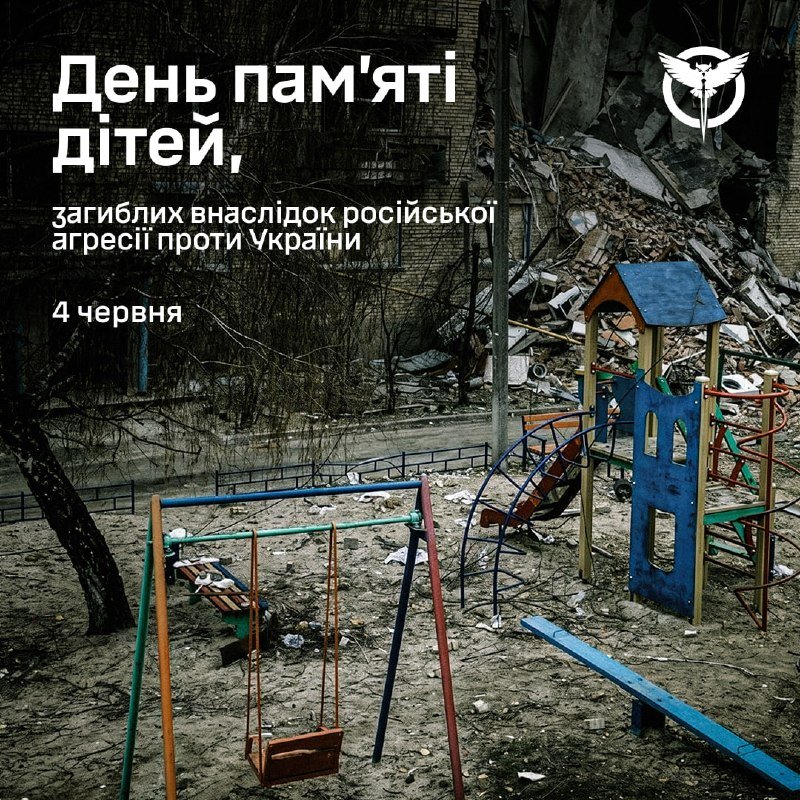
The US Embassy in Kyiv issued its latest travel advisory on May 28, 2026, reiterating a blanket warning that no American should travel to Ukraine for any reason, citing what it called the armed conflict ongoing across the entire country. The advisory, posted on the mission's official X account, follows a pattern of escalating caution as Russian strike operations against Ukrainian cities have shown no sign of abating. Within hours of the advisory, Ukrainian air defense networks triggered a nationwide alert after intelligence indicated the takeoff of a MiG-31K aircraft — a Russian twin-seat interceptor modified to carry the Kh-47M2 Kinzhal hypersonic air-launched ballistic missile. The incident, reported by Ukrainian military channels on May 29 at 00:10 UTC, underscores the persistent threat envelope Ukrainian forces operate under, with population centres exposed to strike packages launched from Russian airspace on a near-nightly basis.
Against that backdrop, a group of US congressmen told Reuters on May 28 that Washington should send additional air defence missiles to Ukraine without further delay. The lawmakers stopped short of specifying which systems they prioritised, but their joint statement reflects growing bipartisan impatience with the pace of Western air defence transfers at a moment when Ukrainian commanders have repeatedly warned that interceptor stocks are insufficient to maintain continuous coverage of key urban areas. The call arrives as Ukraine's military leadership has publicly identified sustained air defence capacity as the single most critical factor determining whether the country's cities can function through another winter of Russian bombardment.
The Interceptor Gap
Ukrainian officials have maintained for months that the volume of missiles and Shahed-type drones Russia deploys against civilian and energy infrastructure each week outpaces the rate at which Western partners can supply compatible interceptors. The problem is not a lack of commitment in principle — NASAMS, Iris-T, Patriot, and Gepard systems have all been delivered — but rather the arithmetic of consumption against production and stockpiles. Each Russian strike wave, sometimes numbering dozens of munitions in a single night, depletes Ukrainian magazines. The US congressmen's push reflects an acknowledgment inside Washington that the current resupply cadence is too slow to prevent gradual erosion of Ukraine's defensive coverage.
The Reuters reporting indicates the lawmakers framed additional deliveries as a straightforward strategic necessity: without adequate air defence, Ukraine cannot protect the rear-area infrastructure — power stations, water treatment facilities, and command nodes — that its military depends on to sustain operations in the east. That framing sits comfortably within the established Western rationale for supporting Ukraine's air defence network, which Western analysts have consistently identified as the backbone of Ukraine's ability to absorb Russian strikes without the kind of systemic infrastructure collapse that would cripple both the war effort and civilian morale.
The Russian Calculus
From Moscow's standpoint, the campaign against Ukrainian infrastructure serves a dual purpose: degrade the enabling systems Ukraine's military needs to function, and impose a attrition cost on Western supporters by forcing them to choose between sustaining Ukraine's air shield and preserving their own readiness stocks. Russian state-aligned military commentators have described the Kinzhal system — the hypersonic asset whose launch triggered the May 29 alert — as specifically calibrated to challenge Western air defence architectures. Whether that characterisation is technically accurate or aspirational messaging, the practical effect is the same: Ukraine must treat every Kinzhal-capable aircraft operating from Russian or Belarusian airspace as an imminent threat to population centres hundreds of kilometres away.
The MiG-31K's detection near Ukrainian airspace on May 29 follows a pattern of Russian air operations designed to keep Ukrainian air defence batteries active and consuming interceptors, even when no strike is ultimately launched. Ukrainian commanders have acknowledged this pressure tactic while insisting it remains effective precisely because a single unengaged Kinzhal warhead striking a hospital or power plant would constitute a strategic failure no commander can accept. The Kinzhal's reported hypersonic speed — significantly faster than conventional cruise missiles — further compresses the decision window for engagement, raising the probability that some inbound packages will reach their targets during periods of coverage gaps.
The Structural Constraint on Western Donors
The bottleneck in Ukrainian air defence is not primarily a question of political will, though political will matters at the margins. The deeper problem is industrial: Western air defence systems were designed for the stockpiling and sustainment model of high-income democracies defending their own territory, not for the high-intensity consumption rates of a proxy war against a large-scale missile and drone campaign. NASAMS and Patriot interceptor production lines cannot be expanded overnight, and every unit transferred to Ukraine is a unit unavailable for the donor nation's own air defence network — a consideration that defence ministries in several NATO member states have flagged in internal deliberations.
The congressmen calling for accelerated deliveries are, in effect, asking the administration to accept a measure of risk to US and allied air defence readiness in exchange for sustaining Ukraine's ability to protect its cities. That is a political judgement as much as a military one. It is also, implicitly, a bet that Russian strike operations will continue at or above current intensity — a bet that the trajectory of the war, as evidenced by the persistent MiG-31K activity and the overnight drone volleys, makes increasingly difficult to dispute. The alternative — allowing Ukrainian interceptor stocks to dwindle while Russian factories and depot lines operate at capacity — would, the lawmakers appear to be arguing, produce a far worse outcome than the modest readiness risk involved in faster transfers.
What Comes Next
The immediate question is whether the congressional pressure translates into a specific administration decision before Ukrainian stocks reach a genuinely dangerous low point. Ukrainian military briefings, drawing on publicly available statements from commanders, suggest that the window for a preventive acceleration is narrowing — interceptor inventories are not infinite, and the Russian strike campaign has not paused to accommodate resupply logistics. If deliveries continue at the current rate, coverage gaps in one or more population centres become a realistic contingency within weeks rather than months, according to the framing Ukraine's defence leadership has used in its public communications to Western partners.
For Washington, the decision sits at the intersection of domestic defence priorities, alliance management obligations, and the strategic calculation that a Ukraine unable to protect its rear areas is a Ukraine less able to sustain the frontline operations that Western policymakers have repeatedly stated they want to support. The congressmen's push adds political weight to what military logistics suggest is already an urgent problem. Whether that weight moves the needle will depend on how the administration weighs the competing risks — of acting too slowly, and of depleting the air defence inventory that protects American bases and allied capitals in Europe.
The sources do not indicate a specific timeline the administration has set for a decision, nor do they contain estimates of current Ukrainian interceptor stock levels. What they confirm is a sustained, high-intensity Russian strike posture, a US Embassy travel advisory reflecting genuine danger to any American present in the country, and a cohort of US lawmakers convinced that the arithmetic of air defence transfers needs to change now.
The Monexus desk prioritised Ukrainian military channels and Western congressional statements over Russian state-adjacent framing of the strike campaign. The air defence shortfall narrative was drawn from the Reuters congressional reporting; the MiG-31K alert from Operativno ZSU; the US travel advisory from the Epoch Times wire summary of the Embassy X post.
Wire provenance
This editorial synthesis draws on the following public wire/social posts:
- https://t.me/operativnoZSU
- https://x.com/Reuters/status/1923847123414323250
- https://x.com/USEmbassyKyiv/status/1923833123414323250