Verification Machines: How DJI, Tether and Oil Princes Are Stress-Testing America's工具箱
Three recent developments — a Chinese drone maker commissioning a Western security audit, a dollar-pegged stablecoin expanding in US markets, and energy executives warning of a Brent supply crunch — point in the same direction: the infrastructure underpinning dollar dominance is under pressure from multiple directions simultaneously.
Three stories, three industries, one structural fault line. On 26 May 2026, DJI — the Chinese commercial drone manufacturer — released findings from an independent security audit conducted in partnership with German verification firm Ankoven. Two drone models, the sources reported, posed no major security vulnerabilities; nor was there evidence of unauthorized data transmission. The company is now using that finding as a lobbying instrument, pressing US regulators to reverse Entity List and domestic-use designations it contests as protectionist rather than technically grounded.
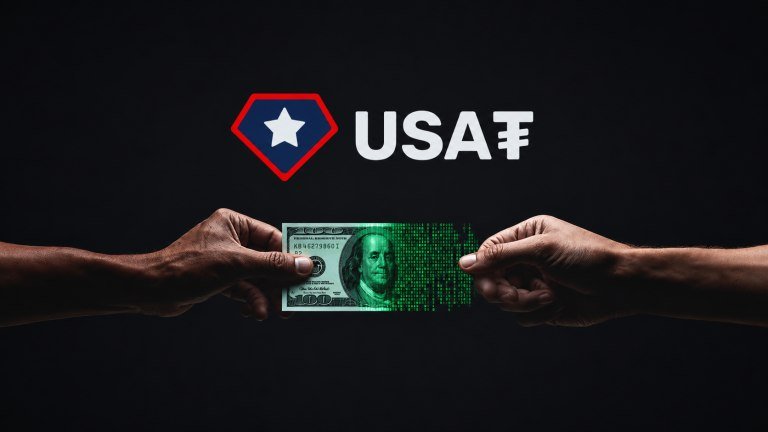
The same week, CryptoBriefing reported a 540-percent year-on-year jump in Tether's USA₮ supply, a dollar-pegged stablecoin the issuer has positioned for US institutional markets, as reserves topped $141 million. And Middle East Eye carried warnings from crude oil traders and upstream executives — unnamed but described as senior — that mounting financial pressure on producing states is compressing investment in new capacity, risking a Brent supply crunch within the forecast window.
Separately, each story is a business desk item. Together they form a pattern: the dollar-denominated architecture of global commerce is being probed, circumvented, or diversified away from — not by a single challenger but by actors with no common ideology beyond a shared interest in functioning outside the same set of constraints.
The Audit as a Political Instrument
DJI did not commission the Ankoven audit naively. The company has been locked out of US federal procurement since 2022, when the Pentagon designated it a "Chinese military company" — a category that carries commercial sanction effects, not just military contracts. The Commerce Department's Entity List addition the following year extended the prohibition to US private-sector buyers. Washington's stated rationale in each case was national security: drones, the concern runs, could transmit sensitive imagery or geospatial data to their manufacturer, and from there to the Chinese state.
DJI's public response has been consistent: that its drones can and do operate in air-gapped configurations, that no evidence of unauthorized transmission has been produced in any public counterintelligence filing, and that the determination rests on a classification the company is not permitted to see. The Ankoven findings represent a direct attempt to meet that evidentiary gap with third-party verification — an instrument DJI is now deploying in advocacy and regulatory filings.
This is a structural shift in how Chinese technology companies respond to Western market restrictions. The historical pattern was either compliance theatre or diplomatic complaint. Independent Western auditing of the actual technical claims is something else: it moves the argument onto ground controlled by the accuser — the demand for technical evidence — and forces regulators who won't disclose classified reasoning to explain why third-party verification is insufficient.
The Security Rationale, Examined
The national-security case against DJI is not self-evidently fabricated. The intelligence concerns are real enough that even the company's most sympathetic Western analysts acknowledge that a Beijing-issued legal obligation to cooperate with state intelligence requests exists in Chinese law. The question is whether that legal architecture translates into a live threat at scale — and on that question, the US government has not offered public evidence.
This pattern recurs across Chinese technology. Huawei's exclusion from 5G networks generated years of public debate before any specific device-level vulnerability was attributed to Chinese state actors. TikTok's ownership by ByteDance triggered executive orders and congressional hearings without a published technical finding establishing the mechanism of harm. The security rationale is treated as established by category membership — Chinese company, critical infrastructure — rather than by the kind of engineering-level proof that the Ankoven audit attempts to supply.
DJI controls a substantial share of the non-military commercial drone market in the United States. The company's prominence there predates the political escalation, and its penetration reflects genuine product advantages — cost, payload, flight endurance — that have made alternatives commercially unattractive even for buyers aware of the procurement restrictions. If the security determination is sound, it should be supportable by the kind of engineering-level audit the company is now offering. If it is not supportable at that level, the policy rests on something other than technical evidence.
That is an uncomfortable question for the US position, and it is not one that commercial advocacy alone will settle. What DJI has done, strategically, is put the burden of disclosure back on the regulator by commissioning exactly the kind of verification the regulator would presumably require if it were acting in good faith on the stated security rationale.
The Dollar System and Its Structural Framings
The Tether item belongs in the same structural frame, though the mechanism is different. Dollar-denominated financial infrastructure gives the US a specific kind of leverage over cross-border capital flows — the ability to exclude actors from correspondent banking, to threaten secondary sanctions on third-party intermediaries, to choke off dollar-denominated financing for entities under sanction. That leverage depends on the dollar's position as the default settlement currency for global commodity trade, particularly crude oil.
Tether's USA₮ is not a challenger to the dollar. It is a dollar-pegged token — it runs inside the dollar system rather than across it. What its supply surge signals is the arrival of digital-dollar-adjacent infrastructure in a space previously dominated by regulated correspondent banking relationships. That infrastructure is faster to provision, less dependent on the permission of large banks, and — in jurisdictions under secondary sanction pressure — structurally more available than dollar wire access through standard channels.
The implications are double-edged. For actors subject to US financial exclusion, dollar-pegged stablecoins offer a payment rail that bypasses correspondent banking without replacing the dollar's reserve status. For the US, the existence of that infrastructure is a signal that the financial architecture is being hedged — that dollar leverage, while potent, is no longer the only available option for actors with sufficient incentive to seek alternatives. The 540-percent supply jump for USA₮ is a small number in absolute terms — $141 million in reserves — but the trajectory is the variable the sources are tracking.
The Energy Friction
The energy executives quoted by Middle East Eye are making a structurally similar point from the other end of the commodity chain. Their logic, as reported: financial pressure on producing states — sanctions designations, secondary sanctions risk on revenue flows, correspondent banking restrictions on crude proceeds — reduces the capital available for upstream investment. Compressed investment translates, on a multi-year lag, into lower production capacity. The supply crunch is not hypothetical in the medium term; it is the predictable consequence of a financial architecture that treats revenue security as a policy variable.
The Middle East is not a monolithic producer, and Iran's designation is a separate case from Saudi Arabia or the UAE. But the signal that extends beyond any single producer is this: if the financial system can be weaponized against crude revenues, every major holder of dollar-denominated energy export income has an incentive to hedge. Non-dollar pricing, long-term supply contracts with non-dollar settlement, buyer diversification eastward — these are not revolutionary steps. They are incremental hedges that preserve optionality without requiring producers to surrender market share.
The irony is precise. Dollar dominance in energy markets is the mechanism by which financial exclusion of Iranian crude is consequential — it is the reason a buyer who purchases Brent has to route dollar settlement through a correspondent bank that respects US designations. That same architecture is what makes financial exclusion a self-limiting instrument when it creates supply uncertainty for buyers who need crude. The supply crunch energy executives are warning of is not a natural shortage — it is a potential consequence of a financial architecture that constrains the capital investment needed to prevent it.
What This Pattern Means
DJI is not challenging the dollar system. Tether's USA₮ runs inside it. Energy executives are not advocating for its replacement. But all three are operating in the same structural space: each is navigating, reacting to, or hedging against an architecture that grants the US singular leverage over market access — whether the access in question is commercial drones, payment infrastructure, or crude oil revenues.
What the sources are describing, across three distinct industries, is the response to that leverage as it becomes more aggressive, less technically grounded in disclosed evidence, and more explicitly weaponized — by entities whose cooperation the dollar system requires but whose market participation it simultaneously constrains through financial pressure.
The audit, the stablecoin supply numbers, and the supply-crunch warning are not the same story. They are three data points in a structure that rewards readers for placing them in relation to each other. That structure is the dollar system, and three weeks in May 2026 are not enough time to declare it in crisis. They are, however, enough to identify the kind of stress that accumulates before the next arrangement takes form.
Wire provenance
This editorial synthesis draws on the following public wire/social posts:
- https://t.me/CryptoBriefing/1847
- https://x.com/middleeasteye/status/1928421984192348288