War's Long Shadow: Drone Warfare and the Invisible Casualties of the Israel-Hezbollah Frontline
Hezbollah's release of thermal-equipped FPV drone footage underscores the technological evolution of the northern front, while fresh data on Israeli psychological toll reveals the compounding human cost of three years of continuous warfare.
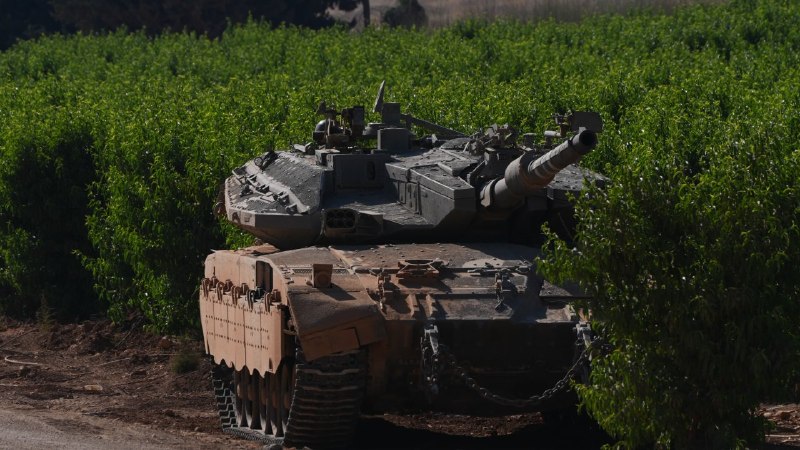
On 24 May 2026, Hezbollah's war media office published footage of an FPV drone operation conducted in al-Bayadha, a town in southern Lebanon. The video showed drones equipped with thermal imaging cameras, a capability that represents a meaningful step in the precision and targeting range of the group's arsenal. Three years of continuous conflict across multiple fronts — from Gaza to Lebanon and beyond — have left measurable psychological damage on civilian populations on both sides of the border. Fresh reporting indicates that a substantial proportion of the Israeli public now requires therapeutic intervention for conflict-related trauma.
The dual release — military hardware on one hand, human suffering on the other — captures the layered nature of a conflict that has defied resolution. The drone footage is not merely a propaganda artefact. It is evidence of a persistent, technologically advancing threat posture along Israel's northern frontier, one that successive rounds of Israeli operations have failed to suppress permanently.
The Drone Footage: What the Video Shows
The footage released on 29 May depicts an FPV — first-person-view — drone operation in al-Bayadha. The key detail, highlighted by Fars News International's reporting of the release, is the presence of thermal camera equipment on the aircraft. Thermal imaging allows an operator to identify heat signatures, making it significantly easier to locate personnel and vehicles even in low-visibility conditions such as night operations or dense terrain.
The operational date recorded in the footage is 24 May 2026, meaning the release came five days after the mission itself. That lag is not unusual in coordinated media releases; it allows for operational review and editing before the footage enters the public domain. What matters is the capability demonstrated: Hezbollah, despite sustained Israeli strikes targeting its infrastructure in Lebanon, retains the ability to equip, launch, and successfully operate FPV platforms with enhanced sensors in areas adjacent to the Israeli border.
FPV drones have become a defining feature of modern conflict in the region. Ukraine demonstrated their effectiveness as loitering munitions against armoured vehicles and fortifications. The transfer of that tactical knowledge to non-state actors in the Middle East has been a persistent concern for Western and Israeli defence analysts. A thermal-equipped FPV extends the engagement window into full 24-hour operations and degrades the effectiveness of conventional camouflage measures.
The Human Cost: Psychological Damage at Scale
Also emerging from recent coverage is a stark accounting of psychological harm. According to reporting by Fars News International citing Israeli sources, approximately one third of Israel's population now requires psychotherapy or psychiatric support as a consequence of three years of continuous bombing, rocket fire, and war across successive fronts. The toll encompasses the direct trauma of attacks — including the October 2023 Hamas incursion — as well as the compounding stress of sustained mobilisation, displacement of northern communities, and uncertainty about the conflict's duration.
Conflict-generated mental health crises do not respect the ceasefire lines drawn on maps. Studies of populations exposed to prolonged bombardment, whether in Gaza, southern Lebanon, or communities in northern Israel, consistently show elevated rates of PTSD, anxiety disorders, and depression that persist long after the sounds of explosions cease. Mental health systems in conflict zones are routinely overwhelmed; the infrastructure to treat them is often itself a casualty of the violence.
The figure cited — one third of a national population — is extraordinary by any measure. It suggests not a residual clinical problem confined to frontline communities, but a systemic psychological strain affecting the broad civilian base. If accurate, it places an enormous burden on Israeli mental health services at a moment when those same services are contending with direct damage to facilities and the departure of practitioners from active duty.
The Northern Front: Persistent and Evolving
Hezbollah's continued ability to deploy thermal-equipped drones from southern Lebanon is a measure of the failure — or at least the incompleteness — of Israel's northern strategy. Israel's campaign against Hezbollah infrastructure in Lebanon has been intensive, involving air strikes, special operations, and targeted assassinations of senior figures. The group has lost commanders, weapons depots, and communications nodes. Yet the footage from al-Bayadha demonstrates that operational capacity endures.
This pattern — significant damage inflicted, without the elimination of core capabilities — is familiar from Israel's campaigns in Gaza and from the broader history of counterterrorism operations against well-entrenched non-state actors. The technology gap between Hezbollah and the Israel Defense Forces remains large, but the asymmetry that once gave the IDF a near-total ability to control the airspace above southern Lebanon has been narrowed by the proliferation of cheap, effective drones that ground-based air defences struggle to neutralise at scale.
The northern border has been largely depopulated on the Israeli side since October 2023. Communities from Kiryat Shmona to Metula have been evacuated. The footage from al-Bayadha was recorded in an area that, from Hezbollah's perspective, represents a zone of active operations — not a quiet rear area. That the group is investing in thermal capability for these operations suggests it is actively preparing for a more intensive phase of confrontation, one in which night-time targeting becomes central rather than peripheral.
Compounding Consequences
The overlap between the drone footage and the mental health data is not coincidental. Advanced surveillance and strike capabilities on one side generate fear, displacement, and hypervigilance on the other. The communities of northern Israel have lived under the shadow of Hezbollah's rocket arsenal for years; the addition of precision drone platforms raises the perceived threat to an already traumatised population. Research on community resilience after prolonged conflict consistently identifies perceived threat as one of the most powerful drivers of long-term psychological harm — more so than the experience of direct violence alone.
On the Lebanese side, populations in the south face their own calculus of harm. Israeli strikes have killed civilians, destroyed infrastructure, and driven displacement on a scale that Lebanon's fractured institutions are poorly equipped to manage. The human cost of this conflict has accumulated across every year since 2023 without a political resolution in sight.
The conflict's continuation creates a feedback loop. Trauma generated by violence erodes the social cohesion necessary for negotiated settlements. Hardliners on all sides gain supporters when populations are afraid. And the technological capabilities on display — thermal drones, advanced munitions, precision surveillance — lower the threshold for lethal engagement even as they make political agreement more elusive.
This article was filed from secondary sourcing of Iranian state-adjacent media reports, which carry a structural pro-Resistance framing. The thermal drone footage is presented as documentary evidence of capability; the psychological toll statistics require independent corroboration from Israeli health authorities before they can be treated as verified fact.