The $300 Billion Question: What Washington's Iran Deal Gambit Really Means
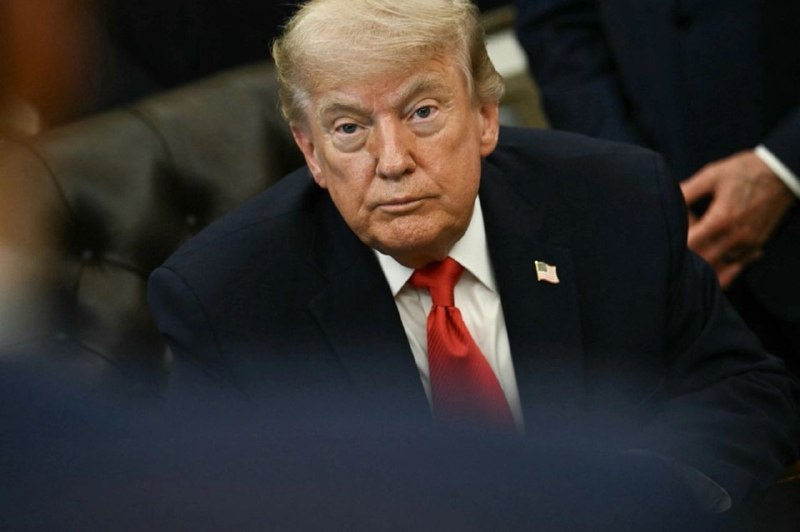
When President Trump announced on 29 May 2026 that he would convene top officials in the Situation Room to make a final decision on Iran, the market-reactive infrastructure around that declaration moved faster than the diplomatic record could keep pace. Polymarket's trading community — a crowd that had been pricing a US-Iran agreement at roughly even odds just hours earlier — surged the probability of a ceasefire or deal announcement by the end of the month to 52 percent within minutes of the announcement. A separate Polymarket data point, flagged by unusual_whales community monitors, showed that a draft framework circulating among US and Iranian officials reportedly references a possible 300 billion US dollar "investment fund" for Iran — a figure that dwarfs the 2015 JCPOA's unfrozen asset repatriations and, if accurate, signals a structural realignment rather than a tactical pause.
The Reuters Breakingviews column published the same day was characteristically blunt: a new US-Iran deal could be as useless as the last one. The column's argument — that deals without verified compliance architecture tend to reproduce the conditions of their predecessor — deserves serious engagement, not dismissal. But it also risks projecting the failures of Barack Obama's approach onto an agreement that has not yet been signed, and whose structural elements, if the draft fund figure is accurate, depart substantially from what Obama attempted.
The Deal on the Table
The specifics of the draft framework remain contested. Officials have not released the document publicly, and the 300 billion dollar figure has not been independently verified by wire services reporting from Washington or Tehran. What is clear from the thread of public statements is that Trump's conditions for Iran — flagged across social media monitoring feeds as unusual_whales community flagged on 29 May 2026 — centre on verifiable caps on uranium enrichment, international monitoring access, and the suspension of Iran's ballistic missile programme for a defined period. Whether Iran's Supreme Leader will accept those conditions in full is the question the Situation Room meeting is designed to answer.
The investment fund framing, if it holds, would represent a significant departure from the sanctions-relief-for-nuclear-concessions exchange that characterised the JCPOA. Rather than a phased lifting of individual sanctions blocks contingent on IAEA certifications, the proposed structure appears to involve a large-scale capital vehicle — potentially sovereign wealth fund architecture — that would channel reconstruction and commercial investment into Iranian infrastructure in exchange for the nuclear package. That structure has obvious attractions for Tehran: it gives the Iranian economy a structural floor that survives even if individual sanctions waivers are challenged in Congress, and it gives the IRGC and affiliated commercial networks a stake in the outcome that internal hardliners currently lack.
The Sceptic's Case
The Reuters Breakingviews editorial has a clean argument: previous US-Iran agreements collapsed because they lacked enforcement mechanisms that survived changes in the US political environment. The JCPOA was abandoned by the Trump administration in 2018 — not because Iran had demonstrably cheated, but because the executive calculus had shifted — and the re-imposition of maximum pressure achieved neither regime change nor nuclear rollback. An agreement built on the same structural logic, even with a larger financial commitment attached, faces the same vulnerability: a future administration could simply walk away again.
That argument is legitimate, and it is not answered by pointing to the 300 billion dollar figure alone. If the fund is controlled by an entity outside direct US government jurisdiction — say, a multilateral arrangement involving European Development Finance institutions and Gulf Cooperation Council sovereign wealth funds — it gains a durability that unilateral executive action cannot easily dismantle. But if the fund is structured as a US Treasury escrow arrangement, it is vulnerable to the same political cycle that sank the JCPOA. The sources reviewed do not specify the fund's legal architecture, and that gap is where the Breakingviews critique gains its traction.
There is a secondary sceptical case, less visible in the Western wire framing but present in regional reporting: that Iran has made calculated use of diplomacy-as-pause before, using negotiations to reduce international pressure while advancing its enrichment programme at the margins. The 2015 agreement gave Iran a legitimised pathway to near-commercial-grade enrichment capacity; critics argue the deal's sunset clauses — not the nuclear terms themselves — were the structural flaw, and that a new agreement must address the timeline problem or reproduce it. Whether the draft terms circulating on 29 May 2026 address those sunset clauses is not yet public.
The Structural Dimension
What gets less attention in the immediate coverage is what a US-Iran agreement of this scale would mean for the dollar's regional role. The JCPOA, when implemented, funnelled Iranian oil revenue through the dollar-denominated international banking system — reinforcing the currency's reserve status and the Treasury's ability to enforce secondary sanctions. A large bilateral investment fund that channels capital outside the SWIFT architecture, or that denominates Iranian oil contracts in a currency basket including non-dollar units, would chip at that structure in ways that Gulf sovereign wealth managers and European energy traders are already quietly watching.
This is not a conspiracy theory; it is a structural observation. The United States has used financial architecture as a foreign policy instrument with extraordinary consistency across administrations. When that architecture is altered — even partially, even temporarily — the consequences ripple through commodity pricing, trade settlement, and the financing costs of allies who have built their energy trade around dollar-denominated contracts. The 300 billion dollar figure, if it reflects a genuine capital commitment rather than a negotiating posture, is large enough to matter not just to Iran's economy but to the regional financial architecture that the dollar has anchored for five decades.
China's position on this is instructive. Beijing has maintained substantial commercial and energy relationships with Iran throughout the maximum pressure campaign, using yuan-denominated oil trade and alternative settlement mechanisms to preserve the relationship. A US-Iran deal that relieves secondary sanctions pressure would not reverse that — it would likely accelerate it, as European and Asian energy companies that had reduced their Iranian exposure would re-enter the market, creating competition with Chinese firms that had maintained theirs. The Global Times and Chinese state media commentary on this story, while not part of the primary wire record on the day of the announcement, would frame the deal as evidence of Washington's transactionalism and Beijing's strategic patience — a narrative with genuine traction in parts of the Global South where the dollar's role as a policy instrument has long been resented.
Precedent and What It Tells Us
The historical parallel most frequently cited by analysts tracking this file is the 1979 Iran hostage deal's indirect legacy — the proposition that Tehran's negotiating behaviour is structurally risk-averse, oriented toward regime survival rather than normalised relations, and therefore unpredictable under pressure. That parallel is not wrong, but it misses the degree to which the Iranian negotiating position has shifted since 2019. The maximum pressure campaign, by collapsing Iran's oil export revenue and inflating domestic inflation, achieved a dual effect: it strengthened the hardliners who argued that the West could not be trusted, and it strengthened the reformists who argued that only a verifiable nuclear capability could serve as a deterrent against future pressure. A deal that satisfies neither faction completely is possible; one that satisfies both simultaneously is not.
The other precedent worth examining is the North Korea file. Trump negotiated directly with Kim Jong-un in 2018 and 2019, achieved a photo-op summit and a vaguely worded agreement, and watched it collapse within twelve months when the North Korean side declined to proceed with verified denuclearisation. The Iran deal's advocates will note that Tehran is not Pyongyang — Iran has a more complex relationship with international commercial networks, a more sophisticated diplomatic corps, and a larger domestic constituency for normalised trade. The critics will note that the structural similarity — a charismatic leader-to-leader negotiating format, a large financial commitment, an ambiguous compliance verification mechanism — is exact.
Stakes and Forward View
If the deal announced in the coming days is structured around the 300 billion dollar fund with genuine multilateral governance — that is, if the money is committed by parties outside the immediate reach of a future White House's executive authority — it represents the most significant reconfiguration of US-Iranian relations since 1979, and one of the more consequential acts of financial architecture since the Bretton Woods system was dismantled. It would give Iran a structural economic floor, reduce the humanitarian costs of sanctions on ordinary Iranians that have generated significant international criticism, and create conditions under which Gulf rivals — Saudi Arabia, the UAE, Bahrain — would need to recalibrate their own Iran policies. It would also give the Trump administration a visible foreign policy achievement heading into a midterm environment where legislative wins are politically scarce.
If, on the other hand, the fund is a negotiating figure that gets cut back substantially in the final text — as most large financial commitments do in the final stage of major negotiations — the deal reverts to something closer to the JCPOA template: verifiable nuclear concessions in exchange for sanctions relief, with the sunset clause problem unresolved. That outcome would satisfy the Breakingviews critique most directly, and would leave the region in roughly the same structural position it occupied before the May 2026 announcements — with the added complication that Iran would have used the negotiation period to advance its enrichment capability, and that a future breakdown would begin from a more advanced baseline.
The Situation Room meeting on 29 May 2026 is either the culmination of eighteen months of back-channel preparation or a high-stakes political event designed to produce a headline before the month's end. The sources reviewed do not permit a clean determination of which. What is clear is that the draft fund figure — 300 billion dollars — has already entered the information environment, and that figure will shape expectations regardless of what the final text contains. In negotiations where public framing is itself a lever, that may be the most important fact on the table.
This publication covered the deal announcement prospects against the broader context of US sanctions architecture and regional energy trade. The Reuters Breakingviews scepticism about deal durability was the dominant Western wire frame; Monexus added the structural financial architecture dimension and the Global South contextualisation that the wire services largely elided.
Wire provenance
This editorial synthesis draws on the following public wire/social posts:
- http://reut.rs/4flaV4R