Yemeni Armed Forces Chief Declares Solidarity With Palestinian Resistance, Claims Israeli 'Security Defeat'
Major General Yousef al-Madani, Chief of the General Staff of Yemen's armed forces, issued a public statement on 29 May declaring support for the Palestinian resistance and claiming Israel had already suffered a security defeat before any military outcome. The statement, carried by Iranian state-linked channels, landed as coalition forces continue operations against Houthi maritime targets in the Red Sea.
Major General Yousef al-Madani, Chief of the General Staff of Yemen's armed forces, issued a public statement on 29 May declaring that Yemen stands with the Palestinian resistance and offering condolences over what he described as martyrdom — a reference to losses sustained during the ongoing conflict in Gaza. The statement, carried simultaneously by multiple Persian and Arabic-language channels linked to Tehran's media ecosystem, went further: it claimed that Israel had been defeated in terms of security before any military outcome had been decided. The framing was precise. Al-Madani did not say Israel had been militarily defeated. He said the defeat had arrived first in the domain of security — a formulation that positions the conflict as already settled in favour of the resistance, even as fighting continues.
The timing matters. Al-Madani's statement emerged less than three months after a renewed round of US-led strikes against Houthi positions in Yemen, following a period in which the group had accelerated maritime attacks in the Red Sea and Gulf of Aden. It arrived as ceasefire negotiations in Gaza remained deadlocked, and as the Trump administration was applying what it described as maximum-pressure tactics on Iran, including a new round of secondary sanctions targeting the Islamic Republic's oil exports. In that context, the Yemeni statement reads less as battlefield analysis and more as a geopolitical signal: Tehran's regional architecture is intact, its allies are unified, and the pressure campaign is not producing the concessions Washington anticipated.
What the Statement Claims
Al-Madani's remarks, as transmitted by Jahan Tasnim and Al-Alam, carried two distinct layers. The first was solidarity: the Yemeni armed forces, in his words, stand with the Palestinian cause and with what he called the nation's position. The second was a victory claim — that Israel had already lost in the security domain before any decisive military conclusion. The language drew directly on a framing used consistently across the Iran-linked resistance axis since October 2023: that the conflict in Gaza is not merely a regional matter but a test of Western credibility, and that the pattern of strikes on Red Sea shipping, rocket fire into Israel, and political pressure on Western governments constitutes a coherent strategy of attrition.
The claim of security defeat is not new. Iranian state media, Hezbollah's communications apparatus, and Shiite political figures in Iraq and Lebanon have used variations of it throughout 2024 and 2025. What distinguishes al-Madani's entry into that discourse is the source: a senior military official from a country that has demonstrated, over two years of sustained maritime campaign, a real capacity to disrupt global trade. The Houthis have fired ballistic missiles at US warships, targeted commercial vessels with anti-ship missiles, and used uncrewed surface vessels in attacks that forced major shipping insurers and carriers to reroute around the Cape of Good Hope — adding twelve to fourteen days to voyage times and hundreds of dollars per container to freight costs. That operational record gives the claim of security defeat a different weight than if it came from a party with no demonstrated capability.
Western officials have not accepted the framing. A spokesperson for the US Central Command, speaking in April 2026, described the Houthis as having overextended their strike capacity and suffering significant losses of launch infrastructure in US and allied strikes. Israeli officials, for their part, have pointed to the ongoing destruction of Hamas military infrastructure in Gaza, the maintenance of an Iron Arrow interceptor system, and hostage recovery negotiations as evidence that the security picture remains open. But the Houthis' claim is addressed not to Western capitals — it is addressed to regional audiences, to the populations of Yemen, Lebanon, Iraq, and Iran itself, and to the Arab street that has watched Gaza under bombardment for eighteen months. For that audience, the claim of security defeat does not require proof. It requires resonance.
Yemen's Role in the Resistance Axis
Understanding al-Madani's statement requires placing it within the structure of the Iran-linked resistance axis — a network of armed groups and political movements aligned with Tehran's regional strategy. The axis has long included Hezbollah in Lebanon, paramilitary organisations in Iraq, and Hamas and Islamic Jihad in Gaza and the West Bank. Yemen's Houthi movement, formally styled Ansar Allah, entered the axis openly after 2015, when the Saudi-led military intervention in Yemen drew the group into a deeper relationship with Iran. That relationship involves training, weapons transfers — including ballistic missile and anti-ship cruise missile technology — and strategic coordination. It does not, by most analysts' assessment, involve direct Iranian command and control: the Houthis pursue their own operational objectives and have demonstrated independent decision-making capacity, including on ceasefire negotiations with Saudi Arabia that proceeded without direct Iranian oversight.
But the ideological alignment is real. The Houthis frame their conflict with Saudi Arabia and the United States as part of the same struggle against Western hegemony that animates Hezbollah, Hamas, and the Iranian Revolutionary Guard Corps. The Red Sea campaign, in this framing, is not a separate dispute about shipping lanes. It is Gaza by other means — a way of applying pressure on the same Western governments that are arming Israel and blocking a ceasefire. Al-Madani's statement that Yemen stands with the Palestinian resistance is, in this context, a restatement of a two-year-old policy, not a new departure. But the framing — security defeat before military defeat — signals something more specific: a belief that Israel and its allies have already crossed a threshold from which recovery is difficult, even if the shooting continues.
The International Response and Its Limits
The United States and its partners have responded to the Houthi maritime campaign with a combination of military action and financial pressure. Operation Prosperity Guardian, the coalition established in late 2023 to protect commercial shipping, has conducted regular strikes on Houthi positions using carrier-based aircraft, Tomahawk cruise missiles, and US Navy intercepts of incoming missiles and drones. In February 2025, the Trump administration designated the Houthis as a Foreign Terrorist Organization, a move that added sanctions pressure but also drew objections from aid organisations warning that the designation would impede humanitarian access to a country already suffering one of the world's worst humanitarian crises. The administration then partially waived the designation under pressure from aid groups and some Arab governments, a retreat that the Houthis interpreted — with some justification — as evidence of the limits of American willingness to sustain economic warfare against a movement that controls significant territory and population.
Al-Madani's statement, broadcast through Iranian state-linked channels, reflects that political context. The coalition has demonstrated it can strike Houthi targets; it has not demonstrated it can end the strikes. The Houthis have absorbed significant losses — launch sites destroyed, commanders killed, naval vessels damaged — and continued their campaign with relatively little reduction in tempo. That durability is what the statement's framing about security defeat is designed to exploit. It suggests not that the Houthis have won a battle but that the American and allied strategy has reached the limits of its effectiveness.
What We Verified and What We Could Not
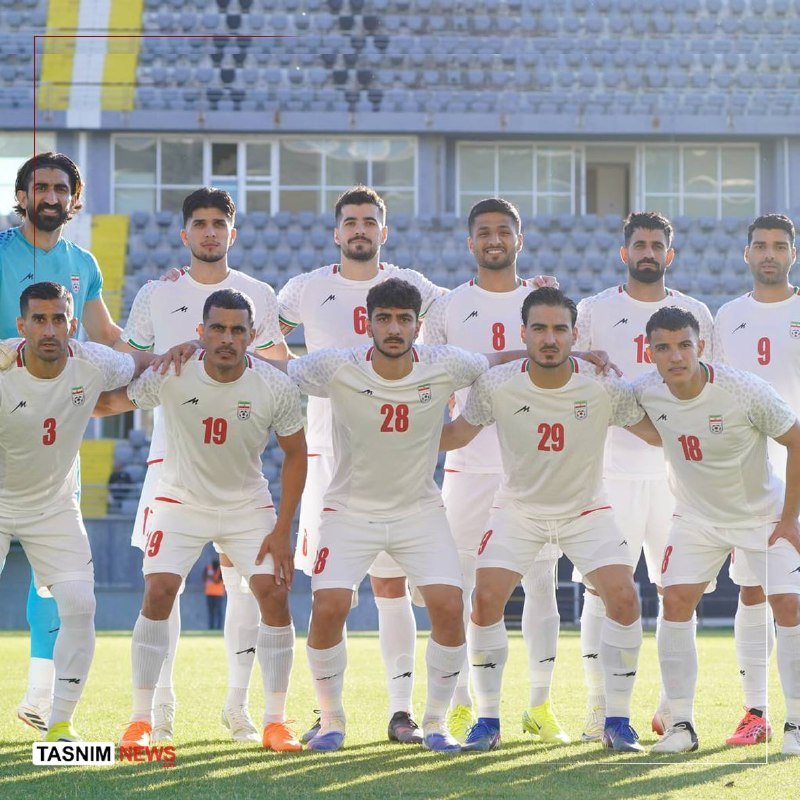
The primary source for this article is the Telegram posts from Jahan Tasnim, Al-Alam, and the Sprinter account, all carrying the same statement by Major General Yousef al-Madani on 29 May 2026. The substance of the statement — that Yemen's armed forces stand with the Palestinian resistance and that the Zionist enemy was defeated in the security domain — is verifiable from those sources. The image accompanying this article was sourced from the Jahan Tasnim Telegram post.
What we cannot independently verify is the context for the statement's timing: whether it was issued in direct response to a specific event, such as a new round of strikes, a diplomatic development, or an internal Houthi calculation about momentum. We also cannot confirm from these sources whether al-Madani's framing was coordinated with Tehran or reflected an independent Houthi editorial decision. Additionally, the specific claims about Israeli security failures — the central substantive assertion in the statement — rest on the Houthi/axis framing and have not been corroborated by Western or Israeli military sources. Those claims are reported here as the position of Yemen's armed forces command, not as verified fact.
Forward View
The trajectory is familiar: sustained Houthi maritime operations, periodic coalition strikes, and a political narrative from the resistance axis that frames the conflict as a test of Western staying power rather than a military contest. Al-Madani's statement fits that pattern. The interesting variable is not the statement itself — it is the reaction it generates. If the coalition responds with more strikes, the Houthis have a ready-made counter-narrative: proof that Western powers are the aggressors, that the security defeat is real because it provokes this level of response. If they do not respond, the statement passes without cost — and the axis draws another inference about American willingness to absorb挑衅 without escalation.
The Gaza ceasefire question remains the pivot. Every party in the resistance axis has calibrated its behaviour to the state of the ceasefire talks: when negotiations advance, pressure tactics ease; when they stall, maritime and rocket operations resume. Al-Madani's statement, landing as talks remain frozen, suggests the axis is preparing for a sustained period rather than an imminent breakthrough. For shipping insurers, naval commanders, and regional diplomats, that is the calculation that matters — not the claim of security defeat itself, but what it signals about the next phase of the campaign.
Wire provenance
This editorial synthesis draws on the following public wire/social posts:
- https://t.me/JahanTasnim/37451
- https://t.me/alalamfa/29984
- https://t.me/sprinterpress
- https://t.me/JahanTasnim