Ronald Acuna Jr. Returns to Center Stage as Braves Host Reds in Pivotal NL Matchup
With SportsLine's model projecting Friday's matchup 10,000 times, the focus turns to whether the Braves' star outfielder can rediscover his MVP form after a lengthy injury absence.
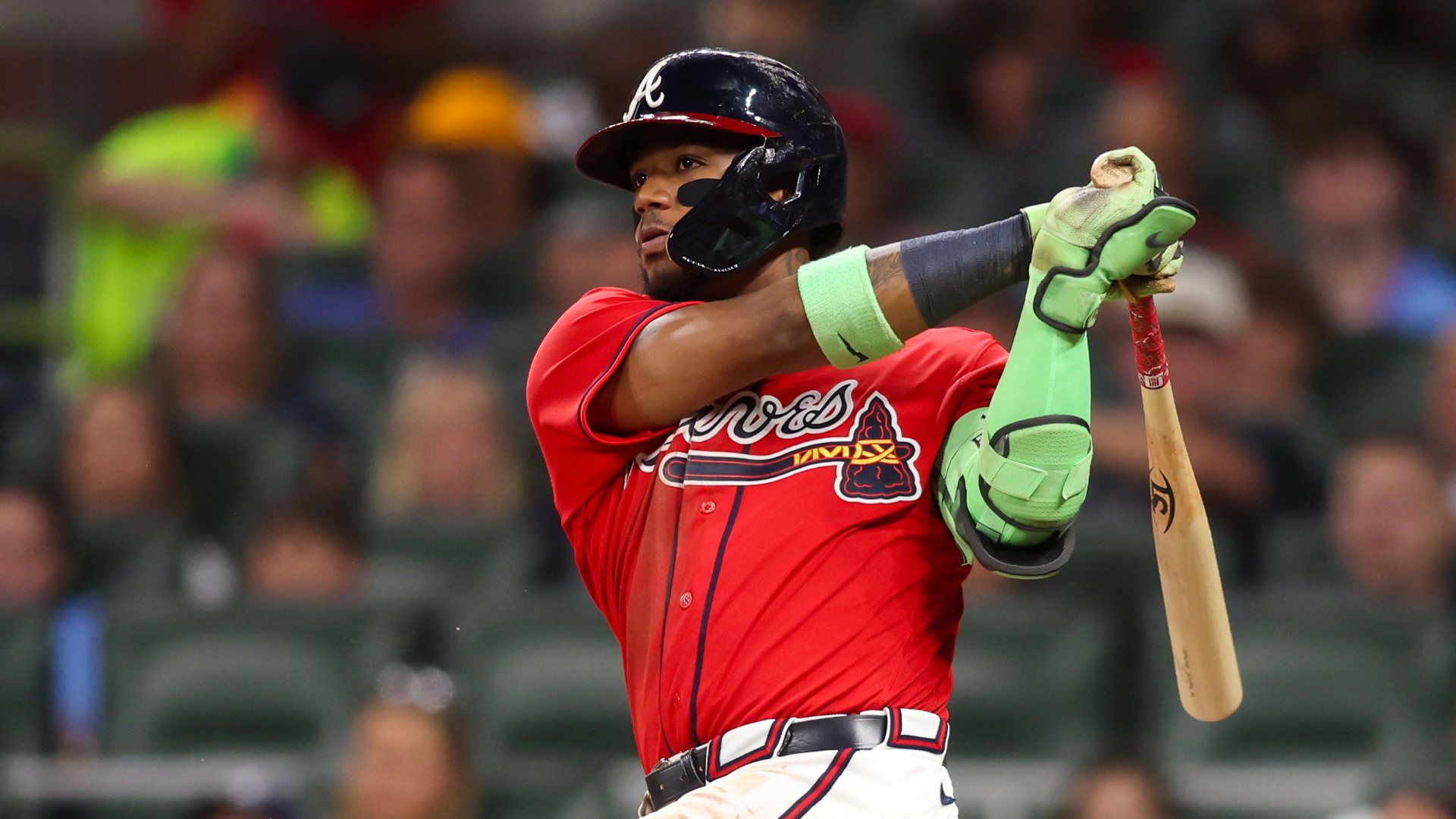
The Atlanta Braves enter Friday's interleague matchup against the Cincinnati Reds with something to prove. SportsLine's predictive model ran 10,000 simulations of the contest on May 29, 2026, reflecting the statistical uncertainty surrounding a Braves lineup still adjusting to the return of its most dynamic player. Ronald Acuna Jr., the 2018 National League Rookie of the Year and 2023 MVP, has spent much of this season working back from injury. The outcome of these嶹e-廈调整期 questions may determine whether Atlanta consolidates its position in the NL East or slips into a crowded wildcard race.
The core tension in this matchup is straightforward: the Braves possess one of the most potent collections of hitters in the National League when fully healthy, but sustained excellence at the plate requires consistency that young lineups and returning stars rarely achieve immediately. The Reds, meanwhile, arrive in Atlanta having shown flashes of competitive capability but lacking the structural depth to threaten the upper tier of the National League standings. The Friday contest thus functions as a diagnostic for Atlanta more than a genuine test of Cincinnati's ambitions.
Acuna's Road Back to MVP Caliber
Acuna's 2026 campaign has been defined by the gap between expectation and early-season production. When a player misses significant time and returns to a lineup carrying a franchise's postseason hopes, the adjustment period tends to follow a recognizable arc: initial rust, gradual mechanical refinement, and then a return to the offensive baseline that made the player indispensable in the first place. The Braves' coaching staff has managed Acuna's workload carefully, a strategy that reflects both medical prudence and the organization's awareness that October matters more than May.
SportsLine's modeling accounts for these variables by incorporating recent performance metrics alongside historical benchmarks. The simulation's output for Friday's game suggests a Braves team that should score in the range of four to six runs, a figure that presupposes Acuna contributing near the middle of that order rather than anchoring it. Whether he delivers that output depends on factors the model cannot fully capture: pitch selection timing, comfort in the batter's box, and the mental calibration that comes only from live competitive at-bats against quality arms.
What the Numbers Cannot Measure
Predictive sports models excel at processing large sample sizes and establishing probabilistic baselines. They struggle, however, with the intangible dimensions of baseball that often decide close games. The confidence a player draws from a loud out or a well-struck ball carries forward in ways that defy quantification. A lineup that feeds off a leadoff home run behaves differently than one that manufactures a run through small ball. The Braves, historically a team built on power and patience, often live and die by which version of their offense shows up on a given night.
For the Reds, the matchup represents an opportunity to test themselves against elite competition without the full weight of postseason implication. Cincinnati's young core has shown competitive resolve but lacks the finishing quality that separates genuine contenders from entertaining also-rans. A strong showing at Truist Park would signal organizational progress; a lopsided loss would underscore the distance remaining. The model likely tilts toward Atlanta, but baseball's variance means the Reds are never fully out of any given contest.
The Broader NL Landscape
The National League, as of late May 2026, remains stratified. The Philadelphia Phillies continue to control the East through starting pitching depth. The Los Angeles Dodgers reload rather than rebuild, maintaining their status as the conference's default postseason favorite. The San Diego Padres have emerged as a genuine wildcard threat, mixing veteran leadership with emerging talent. The Braves occupy the second tier—capable of beating anyone on a given night, but dependent on their injured stars returning to form and their rotation maintaining the consistency that defined last season's division-title drive.
This structural reality gives Friday's game outsized importance relative to its placement in the regular-season calendar. Every contest against a team like Cincinnati, which lacks the firepower to exploit defensive miscues or capitalize on defensive lapses, represents a win the Braves cannot afford to relinquish if they intend to control their own postseason destiny. The model may project a comfortable Atlanta victory, but the practical requirement is simpler: execute, win the games you are supposed to win, and arrive at the trade deadline with flexibility rather than desperation.
Stakes and Forward View
The immediate stake is three points in the standings and a psychological boost heading into a grueling summer stretch. The larger stake is the trajectory of a Braves season that began with championship expectations and has since been complicated by the realities of roster construction in a league that rewards depth and punishes injury clusters.
If Acuna rediscovers his timing and the Braves' lineup functions as designed, Atlanta becomes considerably more difficult to face in October. Opposing pitchers must account for a leadoff hitter who draws walks at an elite rate, steals bases at a prolific clip, and punishes mistakes with extra-base power. The multiplier effect on subsequent hitters—Matt Olson, Ozzie Albies, Austin Riley—transforms an already dangerous lineup into one that can overwhelm opponents through the batting order.
If the adjustment period extends, the Braves enter the summer relying on starting pitching and defense to mask an inconsistent offense. That model can win divisions, but it struggles against elite competition in seven-game series where one-dimensional teams expose their limitations.
SportsLine's model will continue updating its projections as new data arrives. The human story, however, plays out one at-bat at a time. Friday's first pitch sets the stage for what promises to be a revealing few days in the NL East race.
Desk note: CBS Sports wire provided the primary modeling data and betting-line context for this piece. Coverage emphasized roster construction and competitive dynamics over gambling-angle framing, reflecting Monexus's editorial posture toward sports reporting.
Wire provenance
This editorial synthesis draws on the following public wire/social posts:
- https://en.wikipedia.org/wiki/Ronald_Acu%C3%B1a_Jr.