Bessent Confirms $1 Billion Iran Crypto Seizure as Trump Currency Proposals Surface
Treasury Secretary Scott Bessent confirmed on 30 May 2026 that US authorities had seized $1 billion in cryptocurrency linked to Iran. The announcement arrives as separate Congressional proposals to place Donald Trump's portrait on a $250 bill and issue a commemorative coin add a political dimension to currency policy.
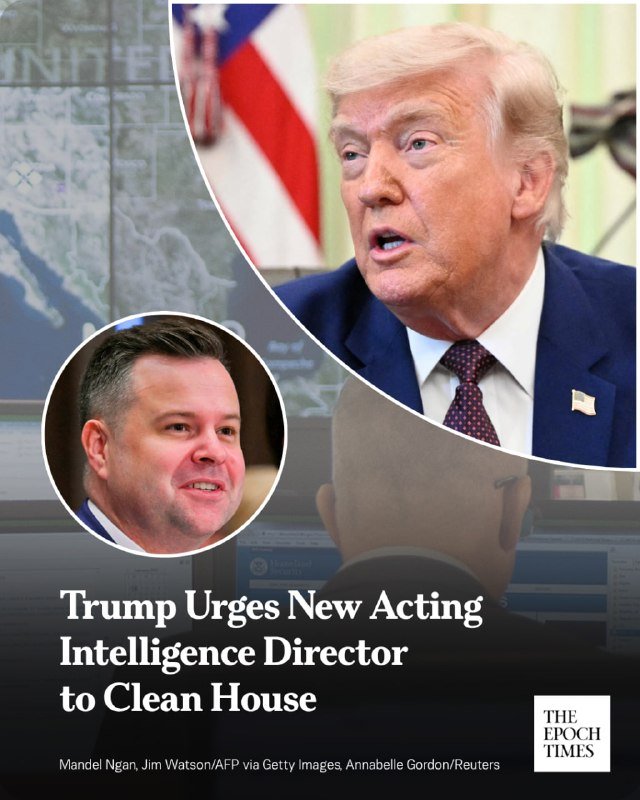
Treasury Secretary Scott Bessent told an audience on 30 May 2026 that US authorities had confiscated $1 billion in cryptocurrency belonging to Iranian actors, according to reporting carried by English-language wire services via Telegram that same morning. The announcement is the largest confirmed single crypto seizure by the US government. Separately, Bessent confirmed that Congress was considering legislation to place Donald Trump's portrait on a new $250 banknote, and that a commemorative coin bearing Trump's image remained under discussion. All three statements were reported within roughly an hour of each other on the morning of 30 May 2026.
The currency proposals are speculative and political. The crypto seizure is operational and carries immediate geopolitical weight. The confluence of the two in a single morning's news cycle illustrates how the Treasury Secretary's office functions as both a financial enforcement agency and a platform for political messaging — often in the same paragraph. What the seizure demonstrates, with or without that political framing, is that cryptocurrency's resistance to state authority depends heavily on assumptions the enforcement record is steadily dismantling.
How the seizure works — and why it keeps improving
The sources do not provide granular detail on the technical mechanism of the $1 billion confiscation. What is clear is the direction of travel. US authorities have now demonstrated, across multiple administrations and asset classes, that cryptocurrency does not function outside the reach of state power. The enforcement logic operates on two axes. The first is technical: blockchain analysis firms working under contract or subpoena can trace transactions across public ledgers, mapping wallet clusters to identified actors even when the wallets themselves are pseudonymous. The second axis is institutional: once assets sit in a regulated exchange, a custodial service, or a payment processor, those entities are subject to Treasury's Office of Foreign Assets Control directives. Iran's digital asset operators — like those of any government targeted by comprehensive sanctions — face a structural problem. They cannot practically conduct billion-dollar transactions exclusively through non-custodial, peer-to-peer channels. The moment they touch an exchange or a bridge with US jurisdiction, the enforcement surface expands enormously.
Bessent's public disclosure of the seizure — rather than merely executing a quiet civil forfeiture — signals an intent to make an example. The scale alone achieves that. Previous crypto seizures by the US Department of Justice and OFAC, spanning cases involving the Blender.io mixer in 2022 and cryptocurrency linked to North Korean actors in 2023, were substantial but smaller in headline dollar terms. A billion-dollar confiscation, announced by the Treasury Secretary personally, elevates the act from enforcement to statement.
The geopolitical signal — timing, target, audience
Iran sits at the center of a set of active, difficult US negotiations. Nuclear talks involving Iran's uranium enrichment program and the prospect of sanctions relief have proceeded in fits and starts through multiple administrations. The return of broad US tariffs under the current executive has added a further layer of economic pressure on Tehran. Into that context, a publicised billion-dollar crypto seizure functions as an enforcement action and a negotiating signal simultaneously. The message to Iran's financial intermediaries — and to any third-party state or entity contemplating transactions with Tehran's digital asset infrastructure — is that the US can identify, freeze, and take possession of targeted cryptocurrency reserves.
The disclosure also has a diplomatic audience beyond Iran. The demonstration effect matters for allied governments considering their own regulatory approaches to digital assets, and for adversarial states — Russia, North Korea, and others — who have studied how effectively the US can deploy blockchain tracing as a sanctions tool. Bessent's framing, referencing Iran's failure to recognise the money had already been seized, reads as a direct challenge to whatever financial architecture Tehran constructed around these assets. That language is closer to public diplomacy than regulatory procedure.
The structural precedent for dollar hegemony
There is a longer arc here that the seizure announcement illuminates. Dollar hegemony has rested partly on the SWIFT messaging network and the correspondent banking system — infrastructure that gives the US outsized influence over cross-border flows denominated in dollars or touching US-regulated entities. Cryptocurrency was, in part, a response to that architecture: a system designed to settle value transfers without touching SWIFT, without correspondent banks, and without a central clearinghouse subject to US jurisdiction. The enforcement record — and Thursday's billion-dollar seizure is the most significant data point yet — suggests the challenge to dollar hegemony through cryptocurrency has so far been narrower than its architects anticipated.
The reason is structural: most cryptocurrency activity still connects, at some point, to regulated financial infrastructure. Stablecoins are pegged to dollar reserves. Exchanges facilitating large-volume transfers are corporations with bank accounts and legal addresses. The US Treasury's ability to compel cooperation from those entities — through sanctions designations, information-sharing requirements, and blocking orders — gives it a choke point that purely technical decentralisation cannot easily bypass. The billion-dollar seizure is evidence that this choke point works at scale.
What comes next for Iran and the broader financial system
The immediate loser is Iran's operational financing capacity in whatever domain those assets supported. The sources do not specify what programs or proxies the confiscated cryptocurrency funded, but the pattern of Iranian digital asset activity — documented by blockchain analysis firms including Chainalysis and Elliptic across multiple annual reports — typically encompasses regional militia support networks and sanctioned procurement chains. Whatever those funds were allocated toward, that allocation is now disrupted.
The broader loser, for now, is the argument that cryptocurrency provides a durable sanctions-evasion infrastructure for state actors. The US enforcement capability is not perfect, and privacy-enhancing technologies continue to evolve. But the trajectory is clear: each successful seizure improves the Treasury's blockchain forensics, expands its knowledge of exchange-based choke points, and demonstrates to third parties that Iran's financial engineering has a ceiling the US government has already found.
The currency proposals — the $250 bill with Trump's portrait and the commemorative coin — occupy different terrain. They are political instruments rather than enforcement tools, and they invite scrutiny on their own terms. Both ideas require Congressional action and, in the case of the $250 denomination, would represent an innovation in US currency design that has no modern precedent. Whether either proposal advances beyond consideration will depend on legislative dynamics the sources do not yet illuminate.
What Thursday's announcements share, beyond their source, is a demonstration of what the Treasury Secretary's podium is for: not only the management of existing financial architecture, but the deliberate construction of new facts on the ground — in cryptocurrency ledgers and, increasingly, in currency itself.
Wire provenance
This editorial synthesis draws on the following public wire/social posts:
- https://t.me/englishabuali
- https://t.me/nexta_live
- https://t.me/intelslava