Budapest's Ukraine Red Line: Minority Rights as Diplomatic Choke Point
Hungary's Viktor Orbán has reiterated that high-level talks with Kyiv remain conditional on resolving the status of the Hungarian minority in Ukraine—a stance that places cultural rights at the centre of Budapest's broader confrontation with the bloc's Russia policy.
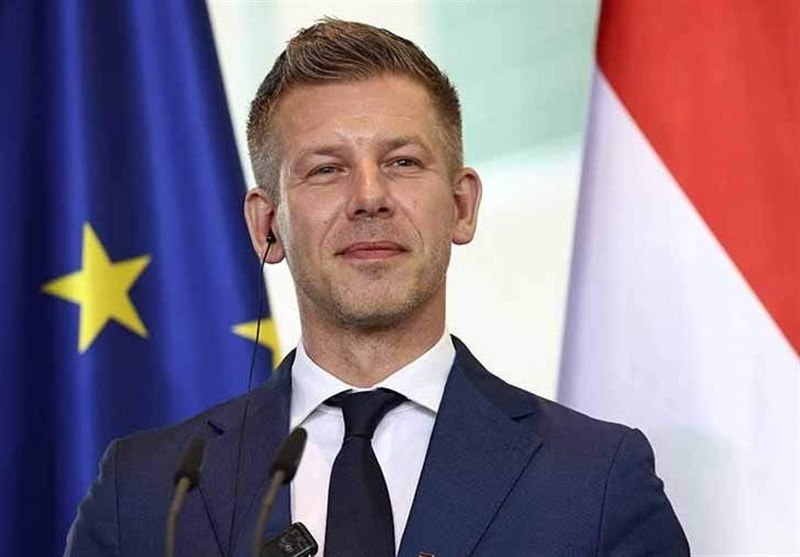
Hungarian Prime Minister Viktor Orbán told reporters on 30 May 2026 that meaningful negotiations with Ukraine cannot proceed until Kyiv addresses the rights of the Hungarian-speaking community living in western Ukraine. The condition—reiterated publicly on the eve of a European Council session that was expected to review further support for Kyiv—has become one of the most durable diplomatic obstacles in Brussels' relationship with the Orbán government.
The Hungarian minority, concentrated in the Zakarpattia region along the Ukraine-Hungary border, has been a source of bilateral friction for years. Budapest contends that successive Ukrainian governments failed to protect minority language rights, grant cultural autonomy, or offer meaningful consultation on legislation affecting ethnic Hungarians. Kyiv, for its part, has pointed to constitutional guarantees and recent legislative adjustments as evidence of progress.
What makes Orbán's position structurally significant is not the substance of the claim—it is the function it serves. Budapest has used minority rights as a durable veto mechanism, one that is difficult for EU partners to characterise as purely obstructionist because cultural protection obligations are woven into the bloc's own foundational treaties. Every time a fellow member state urges Hungary to lift its block on EU-Ukraine aid or accession talks, Budapest can point to its stated precondition and argue it is defending rights embedded in European convention law.
The Precedent Problem
The timing of Orbán's statement matters. European Union leaders are currently navigating the third year of a discussion about whether to open accession negotiations with Ukraine—a process that requires unanimous agreement from all 27 member states. Hungary has blocked progress at multiple junctures, citing concerns that span from the rule-of-law provisions in EU conditionality mechanisms to what Budapest frames as insufficient protection for the Hungarian community in Zakarpattia.
The pattern is familiar to EU observers. Budapest has employed similar conditionality tactics on other accession candidates—most recently with Serbia's EU trajectory, where Hungary has linked its own support for Belgrade's candidacy to guarantees about the treatment of ethnic Hungarians in Vojvodina. The strategy works because minority rights are genuinely complex, because the legal instruments are genuinely ambiguous, and because no partner wants to be seen dismissing the concerns of an ethnic community.
What critics within the EU institutions argue, however, is that the framing is selective. Hungarian media, including outlets sympathetic to the Fidesz government, have devoted significantly more coverage to the situation of ethnic Hungarians in Ukraine than to the treatment of other minority communities in countries where Budapest has commercial interests. The differential attention—observers note—correlates with broader geopolitical positioning rather than with any systematic human rights audit.
A Structural Lever, Not a Standalone Issue
To understand why Budapest is unwilling to move on this condition, it helps to situate it within the broader architecture of Hungary's foreign policy. Orbán has maintained a relationship with the Russian government that Brussels and Washington have repeatedly described as inconsistent with EU solidarity on Ukraine. Hungary has blocked weapons transfers through its territory, delayed sanctions packages at the Council table, and pursued energy contracts with Russia while the rest of the bloc moved toward diversification.
The minority rights condition functions as a pressure release valve that allows Budapest to maintain its resistance without the EU being able to characterise it as pure obstruction. When Germany or Poland pushes for progress on Ukraine's accession, Hungary can say it is defending a legitimate legal and cultural concern—one that mirrors the language used in the EU's own human rights frameworks. The result is that Budapest's position on Ukraine is never purely about Ukraine.
Ukrainian officials, for their part, have publicly acknowledged the difficulty but noted that legislative steps taken since 2021—including amendments to the education law that critics within the Ukrainian parliament itself argued were imperfect—represented genuine engagement with EU standards. Ukrainian deputy ministers have attended consultations in Budapest. A bilateral working group on minority rights was established in 2023. Progress, Kyiv argues, has been made.
Hungary's response has been to move the goalposts. The original demand—repeal of the 2017 education law that restricted teaching in minority languages—was eventually met in part. The new condition focuses on broader cultural autonomy and constitutional guarantees. The scope of what Budapest defines as a satisfactory resolution has expanded as the diplomatic conversation has moved forward.
What the Stakes Look Like
The immediate stakes are procedural. Without Hungary's agreement, EU accession talks with Ukraine cannot formally open, regardless of the remaining conditionality benchmarks Kyiv has already met. The European Commission has signalled that it considers Ukraine ready to move to the next stage. The question is whether Budapest will allow that to happen before the Hungarian minority issue is, in Budapest's framing, resolved.
Beyond the procedural question lies a more structural one about what the EU's own enlargement process looks like when a member state uses cultural rights as a lever to extract concessions on unrelated policy matters. If minority rights conditions can indefinitely postpone accession, the incentive for other governments to employ similar tactics increases. The precedent matters for the Union's capacity to absorb future candidates in the Western Balkans as much as it matters for Ukraine.
Orbán, for his part, shows no sign of calibrating the position for domestic political comfort. The Hungarian government has consistently polled well on its handling of ethnic Hungarian interests abroad, and Fidesz messaging regularly returns to the theme of Budapest defending Hungarians against external pressure. Whether the condition is genuine or instrumental, it serves a political function that Budapest has no reason to abandon.
The European Council meeting scheduled for early June will test whether any compromise language can be found—something that diplomats in Brussels have described as increasingly unlikely. If Hungary maintains the position, the EU faces a choice between accepting a de facto Hungarian veto on Ukraine's European future or finding procedural mechanisms that can proceed without full consensus. Neither option is without cost.
This desk noted that the dominant wire framing of this story focused on Hungary's procedural obstruction; this article attempts to surface the structural logic of the minority rights condition and the ambiguity it creates in EU enlargement policy.
Wire provenance
This editorial synthesis draws on the following public wire/social posts:
- https://t.me/DDGeopolitics/1243