Euphrates Flooding Buries Syrian Village Under 1,500 Dunums of Water
Flooding along the Euphrates River has inundated 1,500 dunums of agricultural land and residential areas in the Syrian village of Al-Mahukiyah, as residents call for outside intervention in a region where infrastructure degradation and contested upstream water politics compound the immediate crisis.
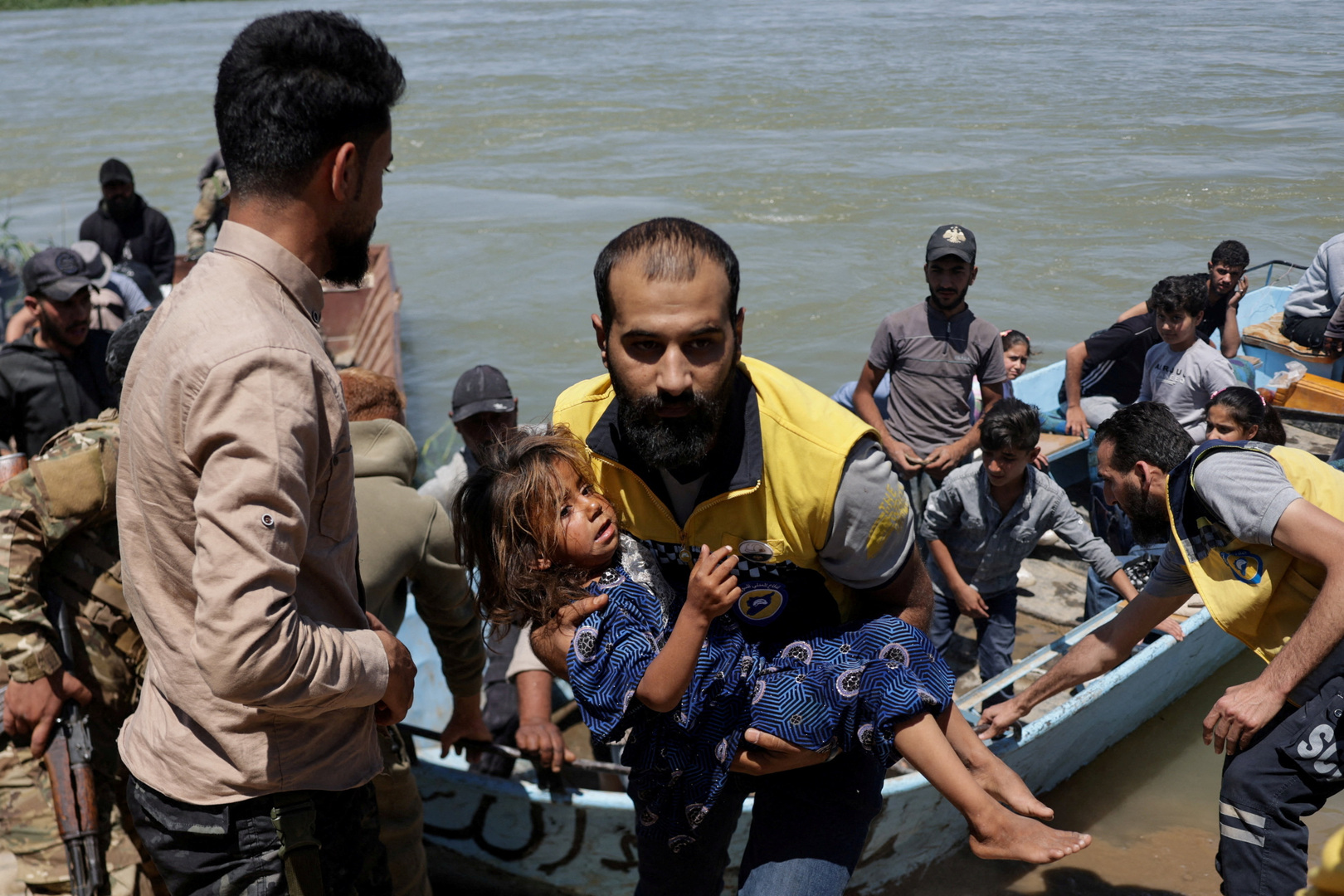
Residents of Al-Mahukiyah, a village in Syria's Raqqa governorate, are calling for outside assistance after the Euphrates River overran its banks on 30 May 2026, submerging more than 1,500 dunums of agricultural land and part of the residential area, according to a report from ShaamNetwork. The flooding adds another pressure to a community whose farmland and water access have been contested for years along one of the region's most politically charged waterways.
The episode underscores a structural vulnerability along the Euphrates corridor: the river is genuinely cross-border, and communities downstream have long faced compounding pressures from both reduced flows and extreme weather events. Al-Mahukiyah sits in a part of Syria where the agricultural cycle is heavily dependent on river irrigation, meaning damage to cultivated land carries immediate food-security implications for the local population. No official damage assessment has yet been published by any Syrian government body or international body operating in the area.
Flood Event and Immediate Impact
ShaamNetwork's report describes water covering what residents identify as 1,500 dunums — roughly 150 hectares — of land used for crop production, alongside parts of the village's residential zone. Local accounts as reported by the outlet make clear the flooding is not simply a minor overflow; households and fields have been directly affected, and the community is seeking intervention. The report does not specify what caused the surge in water level on this specific date, nor does it provide details on whether the flooding has receded or remains ongoing.
Agriculture in this stretch of the Euphrates valley depends on predictable seasonal flooding cycles combined with managed irrigation. When those cycles are disrupted — whether by upstream dam operations, infrastructure degradation, or unusually heavy rainfall in the catchment area — the margin for absorbing excess water is narrow. Al-Mahukiyah's position along the river places it directly in the path of that risk.
Regional Water Politics
The Euphrates originates in Turkey's Anatolian highlands and flows through Syria before reaching Iraq. Turkey operates a series of large dams on the upper Euphrates as part of its Southeast Anatolia Project, a multi-decade infrastructure programme that has significantly altered the river's downstream flow. Syrian and Iraqi governments have repeatedly raised concerns about reduced water availability, particularly during drought periods, and have accused upstream operators of prioritising hydroelectric generation and agricultural irrigation over downstream entitlements.
Turkish authorities, for their part, have defended their water management record, arguing that data on rainfall and river flow does not support the downstream characterisation of severe upstream appropriation. The dispute is not new: it has been a point of friction in bilateral Turkish-Syrian and Turkish-Iraqi relations for decades. What is structurally consistent is that no binding treaty governs the allocation of Euphrates water among the three riparian states. A 1987 protocol between Syria and Iraq set minimum flow requirements from Turkey, but it was negotiated under different hydrological conditions and carries no enforcement mechanism. Water analysts who track the basin note that the absence of a shared legal framework leaves downstream communities exposed whenever political conditions shift or climatic pressures mount.
Infrastructure and Climate Context
The Euphrates has always been subject to seasonal variation. But the region has entered a period where those variations carry higher stakes. Long-term data from regional monitoring shows that communities along the Syrian and Iraqi sections of the river have experienced lower average water levels over the past two decades, with the decrease most pronounced during the spring melt season. Climate modelling for the upper Euphrates catchment suggests continued variability, with some projections pointing to reduced snowpack in the Anatolian highlands — which would further constrain what reaches the lower basin.
In Syria, the additional complication is infrastructure. Years of conflict have degraded the monitoring and control systems that would normally allow operators to anticipate and respond to unusual flow events. Whether the flooding in Al-Mahukiyah on 30 May was exacerbated by degraded river management or by conditions upstream is not possible to determine from the available reporting. What is clear is that communities like Al-Mahukiyah have limited recourse when water levels deviate sharply from seasonal norms, regardless of cause.
Stakes and Forward View
For the residents of Al-Mahukiyah, the immediate question is whether the flooded land can be recovered before the next planting season, and whether affected households have somewhere to shelter while fields drain. Longer-term, the episode reinforces a pattern that water-security analysts have tracked for years: a structurally unresolved allocation framework means that communities along the Euphrates bear the consequences of upstream decisions they cannot influence.
The absence of a binding treaty covering the three riparian states means that even in years when rainfall is adequate, the distribution of water remains subject to bilateral negotiation rather than shared governance. That gap has been visible during drought periods and is now visible again in the context of flooding. The question is not simply whether Turkey, Syria, and Iraq can agree on water allocation — it is whether any mechanism exists to provide communities on the ground with protection when the river's behaviour diverges from what the land can absorb.
Al-Mahukiyah's residents have called for intervention. Whether that means humanitarian assistance, infrastructure repair, or a political agreement that addresses the river's cross-border management remains, for now, unresolved.
Wire provenance
This editorial synthesis draws on the following public wire/social posts:
- https://t.me/ShaamNetwork