France's Armed Forces Minister Reasserts Defense Sovereignty as European Defense Spending Accelerates
French Armed Forces Minister Sébastien Lecornu has reiterated that France's security strategy rests on national sovereignty, not American guarantees — a statement arriving as Paris prepares to finalize a sixth consecutive year of real-terms defense budget increases.
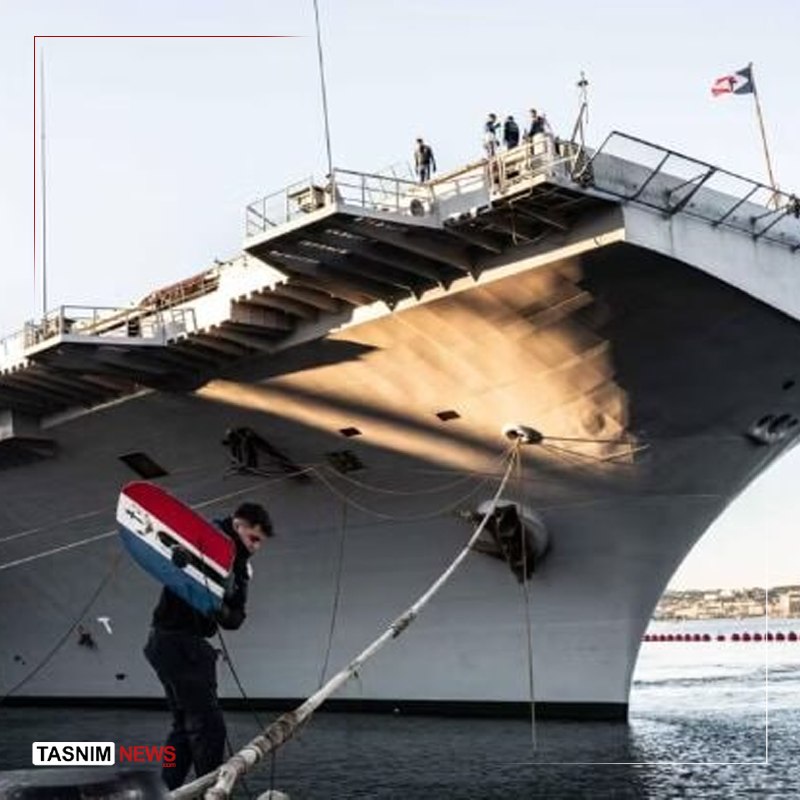
On 30 May 2026, French Armed Forces Minister Sébastien Lecornu delivered remarks that amounted to a diplomatic calibration rather than a rupture. France's security strategy, he said, had been built on national sovereignty for sixty years and would remain so. The statement, carried by multiple wire services including Fars News International, was framed in Paris as a restatement of baseline strategic identity rather than a polemical assertion against any particular ally.
The timing is nonetheless notable. French defense expenditure has risen in real terms in five consecutive budget cycles since 2021, and projections tabled in the 2026 Loi de Programmation Militaire point to continued real-terms growth through the end of the decade. That trajectory places France among the handful of NATO members whose spending has not merely met but substantially exceeded the Alliance's two-percent-of-GDP guideline — a threshold Washington has repeatedly used as a benchmark for burden-sharing. By doubling its defense budget over the past decade, as the Armed Forces Ministry confirmed in its May briefing, France has constructed a domestic industrial base, a strategic command architecture, and a conventional deterrence posture that function independently of any single external security guarantee.
The statement from Lecornu arrives at a moment of accelerated European defense mobilization. Germany's debt-brake suspension, Poland's formalization of a permanent military modernization fund, and the EU's recent ratification of the Strategic Compass implementation plan have collectively reshaped the continental security landscape. Within that context, France's reassertion of sovereign defense logic is less a departure from the NATO framework than a positioning maneuver within it — a claim to leadership of a European pillar that Paris has advocated for, with uneven success, since at least the Saint-Malo declaration of 1998.
What the French Position Actually Says
The substance of Lecornu's remarks deserves scrutiny beyond the headline language. France has been a NATO member continuously since 2009, when Nicolas Sarkozy reversed the de Gaulle-era withdrawal, and French forces operate daily within Alliance command structures. The Armed Forces Ministry's characterization of a sixty-year sovereignty baseline is technically accurate but historically compressed: the Gaullist era of strict independence ended when France rejoined the integrated military command in 2009, and France's defense strategy since then has been NATO-consistent in its operational architecture even as it has maintained divergences — on nuclear doctrine, on expeditionary force employment, and on technology transfer policy — that reflect specifically French assessments of national interest.
What the May 2026 statement does is signal that those divergences are widening rather than narrowing. The defense budget trajectory, the expansion of the state's own defense industrial base, and the explicit language of sovereignty all point toward a France that is building the infrastructure of strategic autonomy as an end state rather than as a contingency. This is a meaningful shift. Previous French governments framed independent capability as a fallback — insurance against American retrenchment. The current framing treats it as the primary architecture, with NATO as a supplementary layer.
The European Context: Convergence Without Consolidation
France is not alone in this trajectory, but it is ahead of most. Germany's defense spending surge, driven by the Zeitenwende declared by Chancellor Olaf Scholz in February 2022, has produced large budget increases but remains constrained by procurement bottlenecks, industrial fragmentation, and the unresolved question of whether Germany's next government will continue the fiscal relaxation that made those increases possible. Poland has committed to four percent of GDP on defense — the highest in NATO — but its spending is heavily oriented toward American hardware and forward-deployed American forces, making it simultaneously the Alliance's most Atlanticist European member and its most expensive in per-capita terms. Sweden's NATO accession brought substantial capabilities but a defense establishment still oriented toward Baltic deterrence rather than Mediterranean power projection.
France's positioning, by contrast, is built around autonomous operational reach. The Force projection components of the French military — the aircraft carrier Charles de Gaulle, the nuclear deterrent submarine fleet, the overseas bases in the Indian Ocean and Pacific — are designed to function without reliance on American logistics or enablers. This is a structural choice that reflects a geopolitical culture: France has consistently defined its security interests as extending beyond Europe's geographic perimeter, from the Sahel to the Indo-Pacific, in ways that do not map neatly onto the Alliance's traditional focus on Article 5 territorial defense.
The Multipolar Dimension
Here the analysis must extend beyond the immediate European context. The reassertion of French defense sovereignty is legible through a broader structural lens: the progressive erosion of the post-Cold War unipolar moment and the corresponding recalibration by middle and regional powers of their strategic dependencies. France is not unique in this. India, Turkey, Saudi Arabia, South Africa, and Brazil have each pursued defense-industrial autonomy with varying degrees of success. What distinguishes the French case is the scale of investment, the maturity of the industrial base, and the explicit political language that frames independence as a strategic virtue rather than a无奈的 necessity.
The implications for dollar hegemony, while indirect, are worth noting. Defense procurement at the level France is executing requires either American weapons systems — which come with dollar-denominated contracts, servicing infrastructure, and political strings — or a domestic and European industrial ecosystem that operates outside that financial architecture. France's current procurement mix leans toward the latter: the SCALP naval cruise missile, the Leclerc tank modernization program, the Félix electromagnetic intelligence platform, and the expansion of the nuclear submarine class are all denominated in euros and serviced by French and European defense firms. As this industrial base matures, it represents a structural shift in where European defense capital flows — away from American primes and toward a European supply chain that does not route through Wall Street.
What Remains Uncertain
The sources consulted for this article do not provide the specific figures from France's 2026 defense budget, the exact percentage of GDP represented by current expenditure, or a detailed breakdown of procurement commitments that would allow a precise accounting of France's degree of independence from American defense technology. The Armed Forces Ministry's statement that France has doubled its budget over a decade is directional but lacks the granularity needed to assess whether that doubling represents a shift from dependency to autonomy or simply an expansion of capabilities alongside continued American integration. The political durability of the sovereignty frame also remains open to question: a future French government, particularly one dependent on a coalition that includes parties skeptical of defense spending, could reverse the trajectory without changing the legal architecture.
What is clear is that the trajectory is set, the language is consistent, and the industrial investment is real. France is building a defense apparatus designed to act first and ask permission later — or not ask at all. Whether that is a stabilizing force in a multipolar world or a source of new tensions within existing alliances will depend on how the next several years of European security architecture unfold.
This publication's wire intake showed moderate variation in how different services framed the Lecornu statement. Fars News International led with the sovereignty language; the X account of Sprinter Press framed it as a direct counter to American security guarantees. The gap reflects editorial positioning rather than a factual dispute — all services carried the same underlying statement.