Hegseth's $1.5 Trillion Bet: Defense Buildup and the Iran Deal That Wasn't
As US-Iran nuclear talks collapse and new sanctions bite, Pete Hegseth's simultaneous unveiling of a $1.5 trillion defense blueprint raises questions about whether the administration is negotiating or preparing for something else entirely.
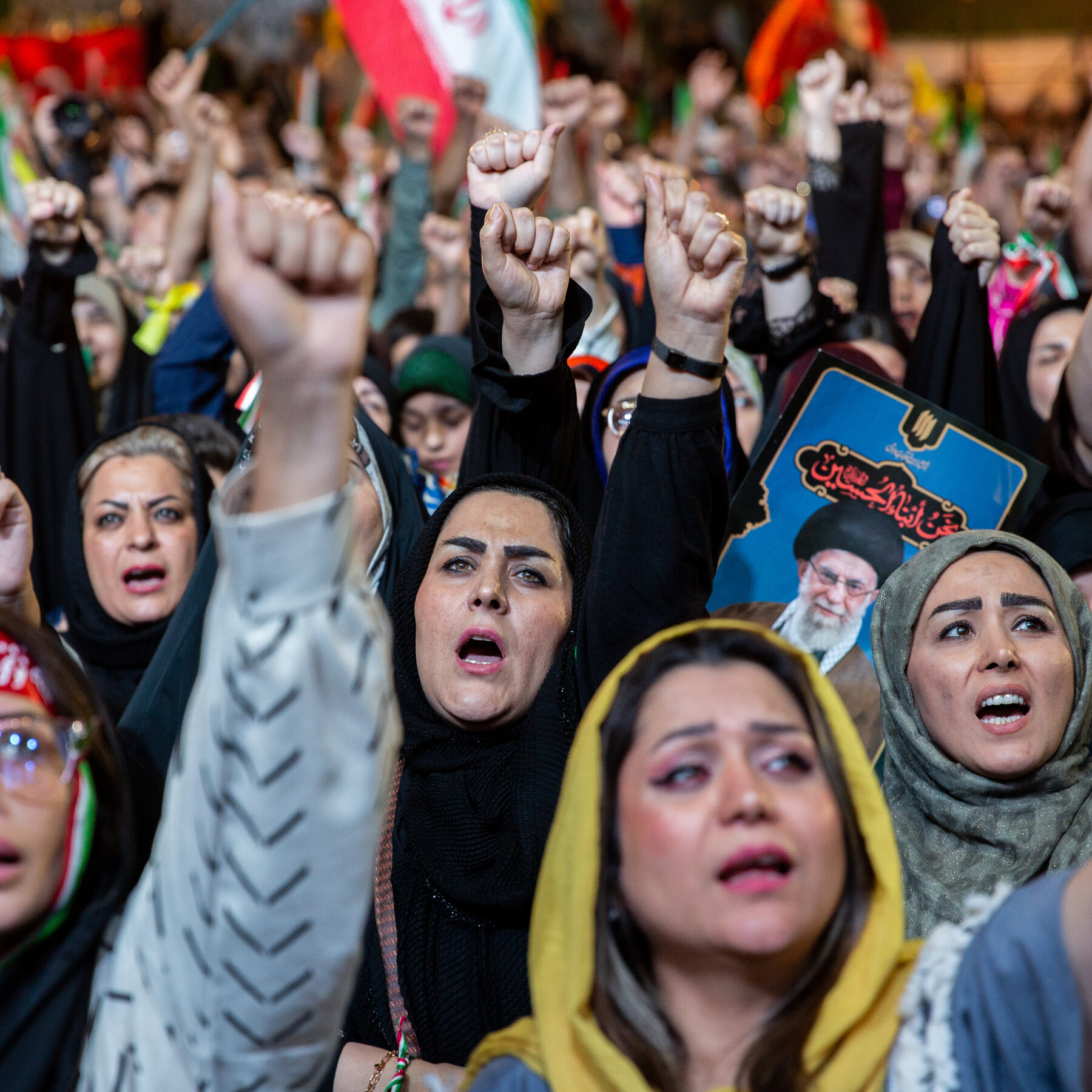
The Trump administration's approach to Iran is running on two incompatible tracks. On one, US Secretary of State Marco Rubio and his negotiators are attempting to coax Tehran back to the nuclear negotiating table. On the other, the Treasury Department is tightening the economic noose and Defense Secretary Pete Hegseth is presiding over the largest peacetime defense budget request in recent memory. The contradiction is not incidental — it defines where US-Iran policy currently stands.
On 29 May 2026, the State Department confirmed that indirect nuclear talks with Iran had reached an impasse. The sticking point is not minor: Iran insists that any agreement explicitly preserve its right to enrich uranium, a threshold Tehran considers non-negotiable. The demand strikes at the architecture of every previous deal and every US negotiating position since 2003. Without movement on enrichment rights, the diplomatic track has no obvious next step.
Within hours of that diplomatic freeze becoming public, the administration imposed a fresh round of sanctions targeting Iran's energy and financial sectors, according to reporting by CryptoBriefing on 29–30 May 2026. The timing was not accidental. Sanctions imposed in the immediate wake of a negotiating breakdown are a familiar instrument of pressure — meant to remind Tehran that the alternative to a deal is continued economic deterioration. A second CryptoBriefing report on 30 May detailed how the new measures further constrain an already compressed Iranian banking sector and target remaining workarounds for oil revenue collection.
Sanctions as substitute for strategy
The sanctions package is not trivial. They arrive after months of escalating financial pressure that has already pushed Iran's crude export volumes to multi-year lows and weakened the rial against hard currencies. The stated objective is to deny Iran the resources it would need to advance its nuclear programme while a diplomatic off-ramp remains theoretically open. In practice, the effect is to foreclose the very leverage Iran would need to offer a compromise on enrichment — because a government that arrives at the table from a position of economic collapse is less likely to make concessions than one that retains some stability.
The sources do not indicate whether the Treasury Department coordinated the timing with the State Department's diplomatic team. What the record shows is a familiar pattern: a negotiating failure followed immediately by escalation rather than recalibration. Iranian officials have not publicly responded to the latest sanctions, but previous rounds have been met with threats of accelerated enrichment activity — a response Tehran treats as defensive, the US treats as provocation.
The $1.5 trillion frame
Into this environment of stalled diplomacy and tightening sanctions, Pete Hegseth on 29 May announced a sweeping $1.5 trillion defence posture review, per CryptoBriefing reporting. The figure dwarfs any peacetime request in recent memory and encompasses expanded naval presence in the Pacific, accelerated development of next-generation strike capabilities, and a significant increase in forward-deployed forces across theatres that include, explicitly, the Middle East.
On the same day, Hegseth delivered a separate warning from Washington about Chinese military expansion in the Pacific, telling Australian broadcaster SBS that Beijing's growing capabilities represent a direct challenge to the regional balance of power and rightful cause for concern among US allies. Separately, CryptoBriefing reported remarks attributed to Hegseth in which he referenced a cabinet-level discussion about the prospects for an Iran deal, including a characterisation of the president's stated desire for a resolution.
The juxtaposition is instructive. The defence review — and the explicit invocation of Chinese power in the Pacific — is not primarily about Iran. But it does reveal the administration's hierarchy of threat: large-scale military deterrence and great-power competition sit above the Iran nuclear file in the allocation of resources and rhetorical attention. Diplomatic resolution of the Iran question is being pursued, but it is being pursued within a framework that also budgets for the scenario in which it fails.
Structural constraints on both sides
The deeper problem is not one of personalities or negotiating technique. The Iranian enrichment demand reflects a position that has hardened over two decades of sanctions, regime-change rhetoric, and the 2018 US withdrawal from the Joint Comprehensive Plan of Action. Enrichment capability is now framed domestically in Tehran not merely as a negotiating chip but as a symbol of national sovereignty and technological achievement — language that makes any concession on the threshold politically expensive for any Iranian government.
On the US side, the parameters of what any administration can accept are constrained by domestic political arithmetic and the expectations of Gulf allies who view a nuclear-capable Iran as a threat regardless of the formal terms of any agreement. The current administration's stated openness to a deal coexists uneasily with a congressional coalition that would treat enrichment rights concessions as capitulation. Neither side can easily move to the centre without absorbing significant domestic political cost.
The result is a negotiating deadlock that sanctions and military posturing are unlikely to break — because the deadlock is structural, not tactical.
What comes next
The immediate trajectory, as the available record suggests, is continued pressure without substantive negotiation. The sanctions will bite harder on Iran's economy over the coming months. The $1.5 trillion defence envelope will fund visible deployments and procurement that the administration will present as deterrence rather than preparation. Iran will continue low-level enrichment activities that remain below weapons-grade but well above the zero level the JCPOA imposed. The diplomatic channel will remain technically open — useful for asserting that a deal was always possible if Iran would simply capitulate — while both sides position for a longer contest.
Whether a genuine off-ramp exists at this stage is unclear from the available sources. What is clear is that the administration has decided it can manage the problem rather than solve it, at least for now. That management strategy carries its own costs: an Iran that feels cornered is an Iran with fewer incentives to exercise restraint. The deal, if it ever comes, will require one or both sides to absorb losses they have so far refused to acknowledge publicly.
This article was filed from Canberra and Washington.
Wire provenance
This editorial synthesis draws on the following public wire/social posts:
- https://www.sbs.com.au/news/article/us-warns-chinese-military
- https://t.me/ClashReport/placeholder
- https://t.me/CryptoBriefing/placeholder1
- https://t.me/CryptoBriefing/placeholder2
- https://t.me/CryptoBriefing/placeholder3
- https://t.me/CryptoBriefing/placeholder4