The Hard-Power Doctrine: Hegseth's Alarm and the Fraying Architecture of Asia-Pacific Stability
Pentagon chief Pete Hegseth sounded an unambiguous alarm on 30 May 2026 over China's military expansion, urging allies to spend more on defence — but the framing raises as many questions as it answers about whether 'stable equilibrium' can be achieved through harder power projection alone.
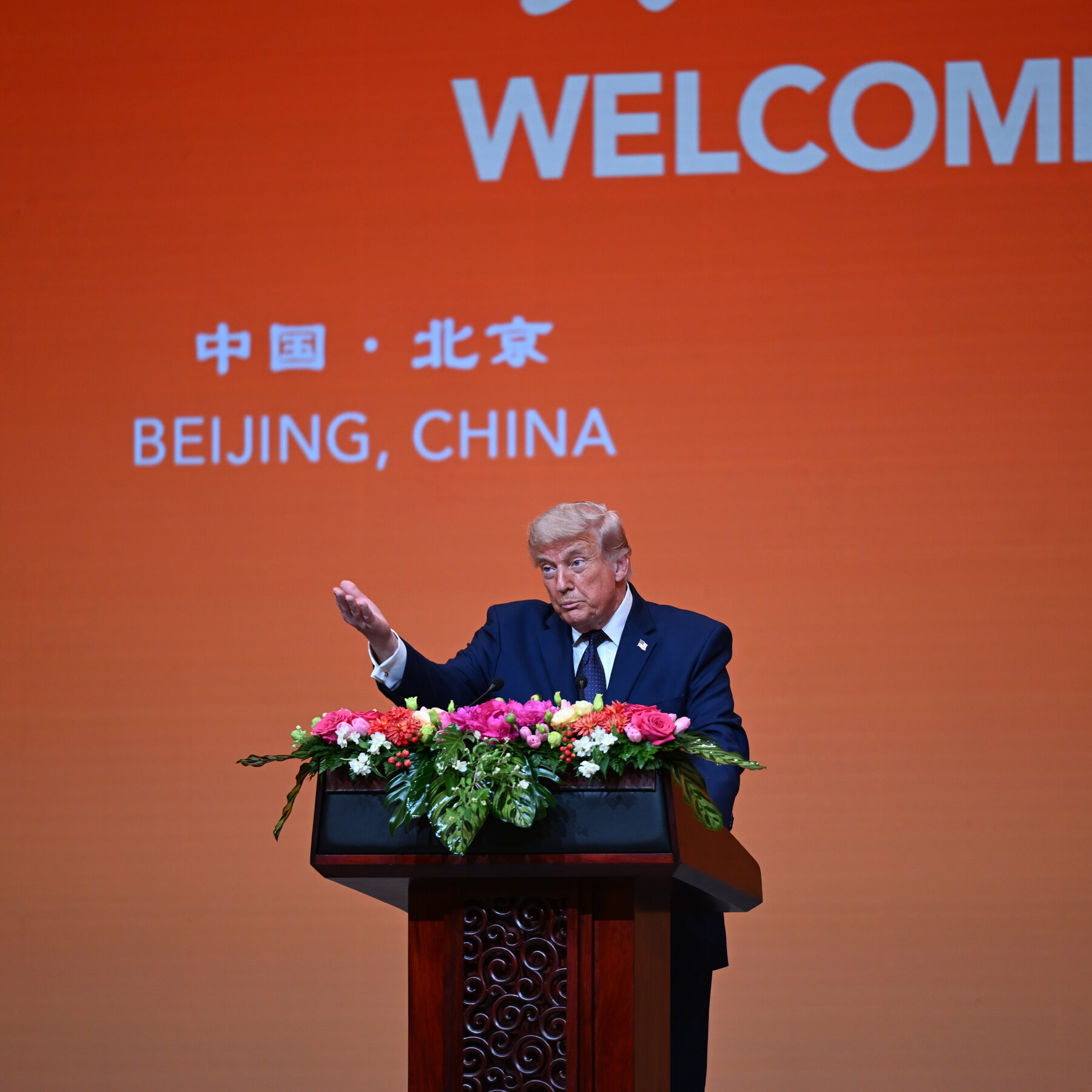
The Pentagon's top civilian spoke plainly in Singapore on 30 May 2026. There was no diplomatic softening, no retreat into the studied ambiguity that has characterised American Asia-Pacific messaging under previous administrations. Pete Hegseth, delivering remarks that drew swift coverage from Reuters and aligned news wires, told assembled defence ministers and military chiefs that the United States sought what he called "stable equilibrium" with China — but immediately appended a caveat that stripped the phrase of any comfort it might otherwise offer. "You can have all the rules you want, and rules are great," Hegseth said, according to remarks captured by the ClashReport wire service, "but if you can't back them up with hard power, the rules are not worth the paper they are written on." The message landed the same morning on Reuters: the Pentagon chief had sounded "alarm" over China's military buildup and was pressing allies to open their defence budgets wider.
The timing matters. Hegseth's Singapore appearance fell within a period of heightened regional anxiety about the trajectory of the South China Sea disputes, Taiwan Strait tensions, and a broader Indo-Pacific security architecture that has been under sustained pressure since the post-pandemic realignment accelerated. What was notable was not merely the content — Washington has spoken of a "pacing challenge" from Beijing for years — but the register. The language of deterrence theory, of credible commitment and power projection, had been dialled up to something closer to a direct challenge.
The Equilibrium Formula and Its Contradictions
The phrase "stable equilibrium" carries a specific meaning in international-relations practice: it describes a condition in which competing powers have sufficient mutual capability that the costs of aggressive action outweigh the returns, producing a de facto standoff that both parties prefer to the alternative of open conflict. It is a comfortable formula, and one Washington has employed before — usually in the context of Cold War containment logic. Applied to the China relationship, however, it runs into an immediate structural problem. Beijing does not accept that the current regional order represents equilibrium at all. From the Chinese foreign-policy perspective, the US alliance architecture across the first island chain, the presence of American forces in Okinawa and the Korean Peninsula, and the routine Freedom of Navigation Operations in waters China claims as its own — these are not the neutral backdrop against which two great powers find their natural level. They are, from Beijing's vantage, an主动的外来压力 — an主动的外来压力 — a主动的外来压力 — an主动的外来压力 — a proactive external pressure that constrains China's legitimate security posture.
Hegseth's framing of "stable equilibrium" therefore arrives pre-loaded with an assumption that both sides have already accepted the same baseline. China has not. This does not mean the aspiration is wrong, but it does mean the path toward it is considerably narrower than the Pentagon chief's phrasing suggests. A stable equilibrium is not achieved by one party demanding the other accept the current distribution of power and then demonstrating the will to enforce it through military hardware. It requires some degree of shared acceptance of the terms. The sources do not indicate that Beijing was offered, or would have accepted, any set of negotiated parameters alongside Hegseth's hard-power emphasis.
The Buildup Framing and Its Selective Amnesia
The alarm over China's military expansion is factually supported — the People's Liberation Army has undergone a sustained modernisation programme spanning decades, with particular emphasis on anti-access/area-denial capabilities, naval expansion, and missile technology. The scale of this transformation is genuinely significant. But the framing deserves scrutiny. Hegseth's characterisation of "rightful alarm regarding China's historic military buildup and the expansion of its military activities in the region and beyond," as captured by the ClashReport thread, is a framing that elides the historical context in which that buildup occurred.
American military presence in the Western Pacific has grown substantially since the early 1990s. The US-Japan alliance was upgraded repeatedly across the 1990s and 2000s. The George W. Bush administration's 2001 National Security Policy Directive formally identified China as a "competitor." The Obama administration's "pivot to Asia" rebalanced American strategic attention toward the Pacific in concrete terms — additional naval deployments, access agreements with Southeast Asian partners, enhanced ties with India. Each of these moves was, from Beijing's perspective, a response to or anticipation of Chinese expansion. The Chinese buildup did not occur in a vacuum. It occurred in response to, and partly in reaction against, an American strategic architecture that was itself expanding. This is not a moral equivalence argument — it is a structural observation about how security dilemmas operate. When one side builds, the other builds. The question of who started it is historically contestable and analytically less useful than the question of whether the spiral can be arrested.
China's official position, as expressed through its foreign-policy apparatus, has consistently framed its military development as purely defensive and oriented toward protecting national sovereignty. Whether one accepts that framing at face value or reads it as a legitimating narrative, it is the position Beijing brings to any diplomatic exchange. Hegseth's alarm — however factually grounded — was delivered without visible engagement with the counter-argument that the buildup represents a rational response to American strategic pressure, not an autonomous drive toward regional hegemony. That omission matters for the credibility of any "stable equilibrium" aspiration.
The Allies' Dilemma and the Defence-Spending Imperative
The third component of Hegseth's Singapore message was the pressure applied directly to allies. Urging defence spending increases is not new — it has been a persistent theme across successive American administrations, with particular intensity since the 2022 Russian invasion of Ukraine exposed the costs of underfunded European militaries. But the Asia-Pacific context presents a different problem. Japan, South Korea, Australia, the Philippines, and Southeast Asian nations have varying degrees of alignment with American security architecture, and varying levels of economic capacity and political appetite for military expansion.
Japan has moved furthest, announcing successive increments to its defence budget and, crucially, expanding the legal interpretation of its post-war pacifist constitution to permit a more active self-defence posture. South Korea maintains one of the world's most capable military establishments relative to its population and GDP, but faces its own political constraints. Southeast Asian nations — including those with American security partnerships — have shown consistent reluctance to position themselves explicitly as bulwarks against China. Vietnam, the Philippines under Marcos, and others have deepened ties with Washington, but have also been careful to preserve economic relationships with Beijing that are difficult to jeopardise. The belt-and-road infrastructure that connects much of the regional economy to Chinese investment creates structural dependencies that defence spending alone cannot offset.
Hegseth's pressure on allies to spend more therefore confronts a regional landscape that is less malleable than the Pentagon chief's language suggests. The alliance architecture exists; its willingness to absorb American prompting on budget priorities is more variable. A defence-spending increase driven by American pressure rather than indigenous threat assessment can produce capability, but it can also produce political friction — particularly in societies where the costs of military investment compete directly with ageing populations, housing pressures, and economic competitiveness challenges.
The Hard-Power Doctrine and Its Structural Logic
What Hegseth articulated in Singapore was, stripped of diplomatic packaging, a variant of the argument that credibility is maintained through demonstrated capacity — that alliances are only as strong as the credible threat of force that underwrites them. This logic has deep roots in American strategic culture and finds contemporary expression in the thinking of a faction within the Washington national-security establishment that is skeptical of diplomatic engagement as a standalone instrument. The doctrine holds that rules-based international order requires a backstop of hard power, and that failing to maintain that backstop invites revisionist powers to test the limits of American resolve.
There is genuine structural logic to this position. International institutions, treaties, and norms operate on a substrate of power. When that substrate weakens — when the credible threat of consequences for violations diminishes — the rules become contingent rather than binding. This is not a controversial observation in realist international-relations theory. It is the underlying logic behind American forward deployment in Europe and the Pacific.
But the doctrine has its limits. Hard-power credibility requires both capability and willingness, and willingness is the harder variable to maintain over time. American military superiority in the Western Pacific is not infinite; it is contested by the precise anti-access capabilities that the PLA has been developing. The doctrine of credible deterrence therefore runs headlong into the problem that deterrence, if it works, is invisible — and if it fails, the costs are catastrophic. Moreover, a doctrine organised around hard power as the primary instrument risks crowding out the diplomatic, economic, and institutional tools that might produce a more durable equilibrium. Hegseth's formulation, as reported, offered no visible role for negotiation, confidence-building measures, or the slow, unglamorous work of arms-control verification.
The sources do not indicate that the Pentagon chief addressed the Chinese diplomatic response to his remarks, nor do they capture the reactions of regional defence ministries beyond the bare acknowledgement of his urging. What they do confirm is a deliberate tonal shift — from the measured ambiguity of earlier phases of American Asia-Pacific policy toward something more direct and more explicitly threat-based. Whether that shift produces the "stable equilibrium" Hegseth described, or whether it accelerates the very security dilemma it purports to manage, is a question the coming months will test.
This publication's coverage of the Hegseth Singapore remarks foregrounds the structural tensions in the "stable equilibrium" framing — specifically the absence of any indication that the Chinese position was engaged as a co-equal input to that equilibrium. The dominant wire framing treated the alarm over China's buildup as self-evidently warranted. Monexus notes that the historical record of how that buildup developed is more complex, and that the question of whether harder American power produces stability or instability in the Pacific remains genuinely contested among regional analysts and among the nations the US is asking to spend more on defence.
Wire provenance
This editorial synthesis draws on the following public wire/social posts:
- https://t.me/ClashReport/7892
- https://t.me/ClashReport/7891