Hezbollah Releases Footage of Southern Lebanon Strike as IDF Reports Drone Interceptions
Hezbollah published combat footage on 30 May showing its fighters targeting Israeli military vehicles in southern Lebanon, coinciding with renewed drone activity along the northern border as both sides continue exchanges that have tested ceasefire frameworks.
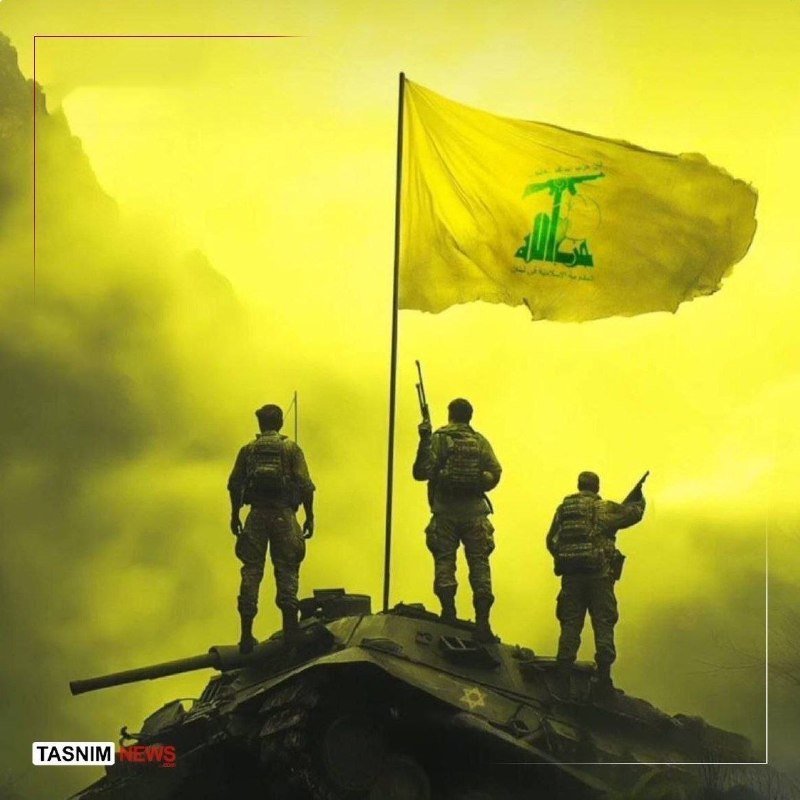
On 30 May 2026, Hezbollah's military media wing released footage dated 27 May showing its fighters targeting what the group described as an Israeli army gathering, including a Merkava tank, on the outskirts of Zawtar al-Sharqiya in southern Lebanon. The release coincided with renewed drone activity along the northern Israel border, where the IDF confirmed intercepting two of several incoming aircraft while a third struck Israeli territory. The sequencing of propaganda release and battlefield claim underscores the carefully choreographed nature of exchanges that have defined the Israel-Hezbollah dynamic since the extended ceasefire framework took shape.
The footage, authenticated by Hezbollah's al-Manar television and cross-posted by regional outlets including The Cradle and Press TV, shows fighters employing what appears to be anti-armour munitions against a column of Israeli military vehicles. The IDF has not issued a public casualty assessment tied specifically to the Zawtar al-Sharqiya incident, and the timeline between the filming date of 27 May and the public release of 30 May raises familiar questions about the operational lag between events on the ground and their articulation through militant media channels. The IDF's northern command acknowledged the broader drone incursion on 30 May, confirming two interceptions and one impact, without directly addressing the specific footage.
The Merkava Footage and Its Payload
Hezbollah's military media released the video showing a Merkava main battle tank engagement at close quarters, a weapon system that represents a significant portion of the Israeli armoured fleet and one that Hezbollah has targeted with increasing regularity since exchanges intensified in late 2025. The footage demonstrates continued penetration of Israeli defensive perimeters in southern Lebanon, a matter that IDF spokespersons have characterised as unacceptable and met with proportionate response. The date stamp of 27 May places the engagement during an already tense period when multiple border incidents were logged by both sides, though the public release three days later serves a distinct informational purpose distinct from tactical reporting.
The targeting of a Merkava, a tank designed with crew survivability as a central feature, carries symbolic weight in militant communications. Israeli defence doctrine treats armoured vehicle losses as first-order operational failures regardless of casualty outcomes, and Hezbollah's media apparatus treats each such engagement as evidence of the resistance's sustained capability to penetrate Israeli defensive formations. The footage's production quality — stabilised imagery, clear identification of the target, apparent munition impact — follows the template Hezbollah has refined over years of documenting engagements along the Lebanon-Israel demarcation line.
Drone Incursions and the Interception Calculus
Separately on 30 May, the IDF confirmed that several drones had approached northern Israel over the preceding hours, with two intercepted and one reaching Israeli territory. The IDF statement did not attribute the drones directly to Hezbollah, though the timing and vector align with patterns established in previous exchanges attributed to the group. Hezbollah has not formally claimed the drone flights as of the IDF statement's release, though the group's military communications typically lag operational actions by hours or days depending on verification and editorial processes.
The interception framework itself reveals pressure points in Israel's air defence architecture. Iron Dome batteries defending the northern sector have been activated with increased frequency, and each intercept represents a material cost — interceptor missiles, radar tracking hours, deployed personnel. Hezbollah's drone strategy, which has evolved from largely static observation platforms to munitions-capable systems, has forced Israeli defenders to treat every incursion as a potential strike rather than a passive intelligence gathering mission. The IDF's claim of two interceptions and one impact suggests imperfect detection or saturation tactics rather than systemic failure, but the one drone that reached Israeli territory nonetheless represents a penetration that Hezbollah framing will characterise as a success.
The Eid al-Adha Context and Domestic Pressures
The footage release falls within the Eid al-Adha holiday period in Lebanon, a timing that Hezbollah's opponents in Lebanon and the broader opposition media landscape have exploited with counter-narrative imagery. Social media channels circulating in Arabic and English have published AI-generated comparisons purporting to show Lebanon before and after what supporters of Hezbollah describe as a "victory" — a framing that refers to the November 2024 ceasefire arrangement and its aftermath. The contrast imagery, which cannot be independently verified and whose provenance is contested, reflects the continuing contest over narrative ownership of the conflict's conclusion.
Lebanese civilians in the south have navigated the holiday under conditions that international organisations describe as fragile recovery, with infrastructure damage from the 2024 conflict still being assessed and resettlement proceeding unevenly. Hezbollah's framing of sustained resistance capability through footage releases serves a domestic audience that has absorbed significant losses, while Israeli messaging emphasises the continuing threat and the IDF's obligation to respond proportionally to any incursion. The competing narratives around Eid al-Adha — celebration versus cautionary imagery — illustrate how religious observance and military commemoration remain intertwined in a conflict whose formal boundaries remain contested.
Escalation Thresholds and Diplomatic Pressure
The sustained pattern of exchanges since the ceasefire framework's establishment has tested the arrangement's durability without triggering a comprehensive breakdown. Both Hezbollah and Israeli leadership have publicly reaffirmed commitment to the ceasefire while reserving the right to respond to violations, creating an operational environment where each side defines violations differently. The footage from Zawtar al-Sharqiya, and the drone incursions on 30 May, fall within the grey zone that has characterised the arrangement's first eighteen months — below the threshold that either side has publicly designated as grounds for full resumption of hostilities, but above the level of background friction that the ceasefire was designed to eliminate.
Diplomatic channels remain engaged, with the United States and France maintaining contact with both Beirut and Jerusalem through the mechanism established under the November 2024 agreement. Egyptian and Qatari intermediaries have also been active, according to regional reporting, though no public statements from mediators have addressed the specific incidents of 30 May. The challenge for diplomacy is the arrangement's fundamental asymmetry: Israel defines any Hezbollah military presence south of the Litani River as a violation, while Hezbollah defines Israeli overflights and border incursions as equally actionable. The footage release and drone interceptions sit squarely within this definitional dispute.
The immediate stakes are operational and political rather than existential. Neither side appears to have an interest in full-scale hostilities given the reconstruction costs, political liabilities, and regional complications that resumption would entail. But the grey-zone dynamics create pressure toward incremental escalation that both sides simultaneously manage and exploit. The footage from Zawtar al-Sharqiya will be analysed by Israeli military planners for force protection implications, while Hezbollah's domestic audience will register it as evidence of continued capability. The drone penetration, if confirmed as Hezbollah-attributed, will strengthen arguments within Israel's security establishment for more aggressive interception postures. The ceasefire holds, for now, on terms that neither side fully controls.
Monexus covered this story through Hezbollah and Iranian state-adjacent channels as primary sources, with IDF confirmations providing the counterpoint. Western wire services had not published standalone reports on the 30 May incidents at the time of this article's filing; readers seeking wider context should monitor Reuters and AP feeds for updates.
Wire provenance
This editorial synthesis draws on the following public wire/social posts:
- https://t.me/TheCradleMedia/1847
- https://t.me/presstv/8921
- https://t.me/wfwitness/4821
- https://t.me/AMK_Mapping/3341
- https://t.me/englishabuali/2893
- https://t.me/TheCradleMedia/1846