Escalation Arithmetic: What Hezbollah's Northern Barrage Says About the Gaza Ceasefire's Fragile Aftermath
Hezbollah's Saturday rocket salvo into Kiryat Shmona and the Safed area — fifteen projectiles, at least one confirmed impact — arrived precisely when the ceasefire framework governing Gaza was already showing cracks. The arithmetic of escalation does not care about diplomatic calendars.
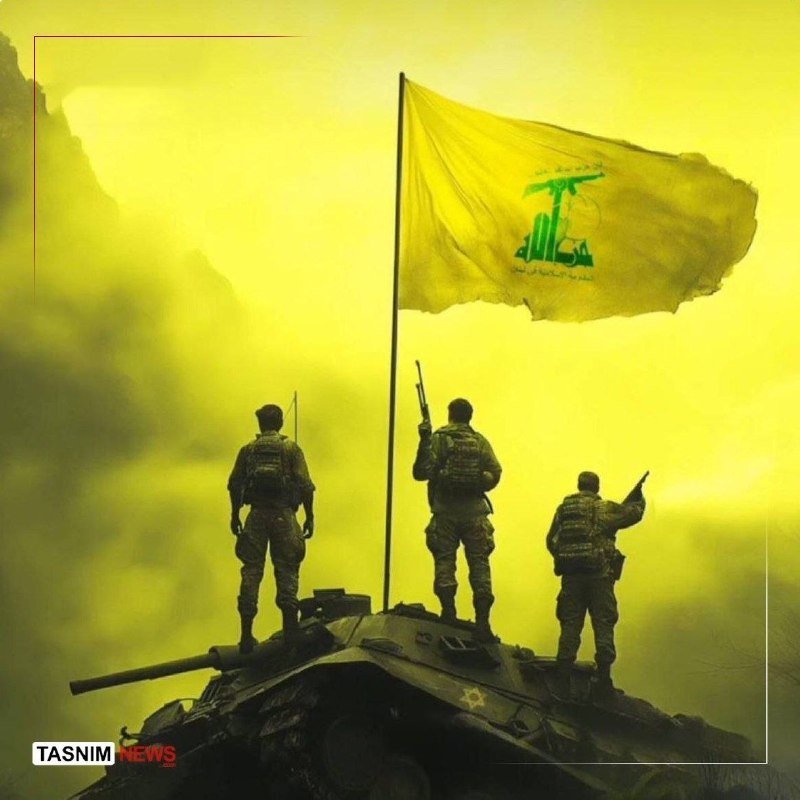
On the morning of 30 May 2026, northern Israel absorbed its sharpest single rocket salvo in weeks. According to Israeli Army Radio reporting confirmed by open-source monitoring channels, Hezbollah launched at least fifteen rockets toward Kiryat Shmona in the space of several hours — one struck the town, others fell short or were intercepted. The Iran-aligned militia supplemented the bombardment with drone incursions along the northern and northeastern border strips. Kiryat Shmona, a city of roughly 12,000 residents before waves of evacuation reduced its population, has been living under what residents describe as a permanent alert since October 2023.
The timing is not incidental. The Gaza ceasefire — always a conditional arrangement rather than a formal peace — has been under sustained pressure for weeks. Each time negotiators inch toward a new bridging proposal, an actor along one of the multiple active fronts tests the framework's tolerance. Saturday's barrage landed while Egyptian and Qatari mediators were carrying messages between parties who have no direct diplomatic channel. Hezbollah has its own calculation: it is not bound by whatever arrangement Hamas reaches in Gaza, and the militia has absorbed enough Israeli strikes since November 2023 to nurse a retaliatory appetite that the diplomatic calendar cannot satiate.
The Ceasefire That Wasn't a Ceasefire
The foundational problem is terminological. Western governments and media have described the arrangements stopping active combat in Gaza as a "ceasefire," but the frameworks in place are ceasefire-adjacent at best. Hostage releases are conditional on continued pauses. The Palestinian territories remain under a hybrid governance arrangement that no single party controls. And crucially, Hezbollah's stated casus belli — resistance to Israeli operations along the Lebanese border — has never been formally addressed by any document that Tel Aviv would describe as binding.
When a militia can credibly claim that its rationale for attacking a neighbour does not derive from an agreement it did not sign, escalation logic takes over. Hezbollah leadership has signalled for months that the group interprets any significant reduction in Gaza-related pressure on Israel as an opportunity to reset its own calculus. Saturday's strikes are consistent with that pattern: they were limited enough not to provoke a full-scale Israeli ground incursion into Lebanon, but large enough to register in Tel Aviv's security calculus and remind Washington that the northern front cannot be treated as settled.
The Numbers Behind the Headlines
Fifteen rockets is not a decapitation strike. It is not the saturation barrage that Hezbollah planners have demonstrated the capacity to execute. It is, by the militia's own operational posture dating to the 2006 Lebanon war and reinforced through the 2023-2024 exchange, a probe. Probes answer questions: How fast did Iron Dome respond? Did the drones draw any additional radar attention away from the rockets? Were there openings in Israeli early-warning coverage on the western approach to Safed?
Israeli Army Radio's reporting — that one projectile impacted Kiryat Shmona while others were intercepted or fell in open ground — suggests the barrages achieved partial penetration. For a city that has seen its population depleted by evacuation orders, even a single confirmed impact carries disproportionate political weight in Tel Aviv. The Israeli government has for months faced pressure from northern residents' associations demanding either a durable quiet or a decisive ground operation to clear the threat. Fifteen rockets give the latter faction another data point.
The IDF has not yet released complete damage or casualty figures from the May 30 strikes. Open sources do not confirm any Israeli fatalities from the barrage. This absence of casualties is itself a fact that will shape the immediate response calculus: Jerusalem has less domestic pressure to escalate disproportionally, but it also cannot appear to absorb rocket impacts without consequence.
Washington Is Watching, and Running Out of Bandwidth
The United States has staked considerable diplomatic capital on the proposition that ceasefire negotiations will eventually produce a durable framework covering all active fronts. That proposition looked fragile before Saturday's strikes and considerably more so afterward. Hezbollah operates with a substantial degree of autonomy from Tehran's direct instruction — a feature, not a bug, of the IRGC's proxy model — which means there is no single back-channel through which Washington can deliver a credible restraining message.
American mediators have been carrying simultaneous negotiations on Gaza, on the Iranian nuclear file, and on a potential long-term architectural arrangement for Lebanon. The May 30 escalation complicates all three. If Tel Aviv responds militarily in ways that create Lebanese civilian casualties, the political space for continued US mediation narrows sharply. If Hezbollah interprets a restrained Israeli response as green light for the next probe, the cycle continues. The Biden administration's own domestic political constraints — an election-adjacent environment in which any Middle East escalation carries second-order electoral risk — further restrict its ability to apply pressure symmetrically on both parties.
What Remains Uncertain
The sources covering Saturday's strikes do not yet indicate whether the IDF's cabinet has authorised a specific response, or whether Israeli military planners are managing the event within existing rules of engagement. Open-source intelligence cannot substitute for classified assessments of where Hezbollah's command believes its operational freedom currently ends. The militia has absorbed significant attrition — officers targeted, weapons depots struck, communications infrastructure disrupted — but retains sufficient launch capacity to sustain probing attacks across a wide front.
What is clear is that the ceasefire infrastructure governing Gaza was never designed to contain the northern front. Hezbollah did not sign it, does not recognise its premises, and acted within its own strategic timeline on Saturday morning. The diplomatic urgency that follows will be measured not in ceasefire framework language but in the readiness of Israeli commanders to accept that the northern border will remain contested for the foreseeable future — or to pay the political price of a more expansive ground operation that Washington has privately made clear it does not want.
Kiryat Shmona itself offers the starkest measure of what "foreseeable future" means on the ground: a city emptied of most of its residents, rebuilding postponed indefinitely, and now, on the final day of May 2026, another confirmed impact in its streets.
Wire provenance
This editorial synthesis draws on the following public wire/social posts:
- https://t.me/GeoPWatch/8478
- https://t.me/AMK_Mapping/44521
- https://t.me/AMK_Mapping/44519