Hormuz Blockade Risks Global Oil Shortage as War With Iran Escalates
Heads of the IEA, IMF, World Bank, and WTO issued a rare joint warning on 30 May 2026 that a blockade of the Strait of Hormuz is creating acute risk of a global oil supply shock, with prices already spiking and strategic reserves under pressure.
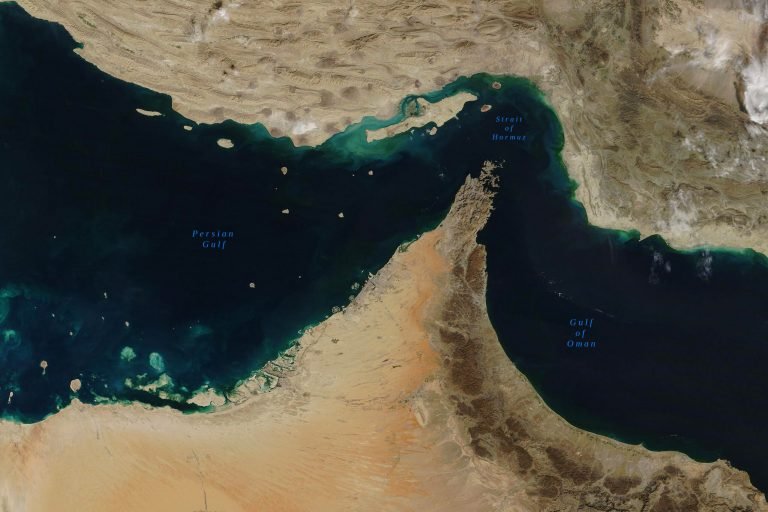
The heads of four global economic institutions issued an unusually coordinated warning on 30 May 2026, declaring that a blockade of the Strait of Hormuz is creating acute risk of a worldwide oil supply shock. The joint statement from the International Energy Agency, International Monetary Fund, World Bank, and World Trade Organization described conditions in global energy markets as "deteriorating rapidly" and called for urgent diplomatic action to prevent a supply crunch that could dwarf previous oil crises.
The blockade, which sources describe as stemming from the ongoing war with Iran, has disrupted tanker traffic through the 21-mile-wide strait through which roughly one-fifth of global oil shipments pass. Brent crude futures surged in pre-market trading following the announcement, while the U.S. Department of Energy confirmed it was activating preliminary protocols for a coordinated strategic petroleum reserve release among IEA member nations.
The Immediate Supply Threat
The Strait of Hormuz is the world's most critical oil chokepoint. Roughly 21 million barrels of oil pass through it daily, according to established shipping lane data — more than the combined daily output of Saudi Arabia and Russia. Any sustained disruption to traffic through the strait immediately ripples into global supply chains, because a significant portion of Gulf Cooperation Council crude — including Saudi, Iraqi, Kuwaiti, and Emirati exports — has no viable alternative export route in the short term.
The joint statement from the institutional heads — a format reserved for the most severe systemic warnings — noted that insurance markets have already begun adding war-risk premiums to Gulf shipments, effectively raising the cost of every barrel that does make it through. Several major shipping firms have rerouted vessels around the Cape of Good Hope, adding 10 to 14 days to transit times and corresponding logistical costs that叠 directly into refined product prices at the pump.
The IEA specifically flagged that without a diplomatic de-escalation, member nations should prepare for "supply-side disruption that could exceed the 1973 Arab oil embargo in speed of onset." The comparison is notable: that embargo triggered a global recession and forced a fundamental restructuring of Western energy policy for a decade.
Tehran's Counter-Position
Iranian state media, in reporting the joint warning, framed the crisis differently. According to accounts carried by PressTV and Tasnim, Iranian officials maintain that the blockade is a defensive response to what Tehran characterizes as acts of war against its territory, and that Western energy anxiety is a consequence of choosing to support those operations rather than a consequence of Iranian aggression.
The structural argument from Tehran's side is not without geopolitical weight. Iranian leadership has long held that Western naval presence in the Persian Gulf constitutes an encirclement, and that the strait's critical role in global commerce is itself leverage that Tehran is entitled to use in its own defense. Whether or not one accepts that framing, it reflects a calculation that has been building for years — and that the current conflict has brought to a head.
The sources describing Iranian state media framing do not present specific military details about the blockade's mechanics, and this gap matters. The precise composition of vessels transiting, detained, or turned back remains contested, with Western naval sources offering different characterizations than those available from Iranian outlets.
Structural Vulnerability in Global Energy Architecture
What the joint warning exposes is a structural vulnerability that energy analysts have flagged for years but that successive administrations chose not to address with urgency: the global economy's continued dependence on a single maritime corridor for a fifth of its oil supply. This is not a new problem. The 2019 attacks on Saudi Aramco facilities at Abqaiq and Khurais demonstrated that Gulf production infrastructure is highly concentrated and highly exposed. The current crisis adds a second vector of exposure — not just production disruption but transit disruption — in a way that leaves the market with almost no shock absorbers.
The strategic response options available to consuming nations are limited in the short term. SPR releases can smooth a 30-to-60-day supply gap but cannot substitute for sustained flows. Alternate supply from the United States, Canada, and Brazil exists but cannot ramp quickly enough to replace Hormuz throughput at current volumes. LNG substitution for power generation can absorb some oil demand, but industrial and transport demand for liquid fuels is not elastic on the timescales that matter.
The financial architecture compounds the physical problem. Oil futures markets have moved into backwardation — a condition where near-term contracts trade above long-term ones — which signals that traders expect the disruption to be temporary but acute. That expectation is itself a pressure on producers and governments to resolve the crisis quickly, because prolonged backwardation discourages the storage investments that would otherwise buffer the shock.
Stakes and Forward View
The stakes are asymmetric but distributed across the global economy. For European economies, the timing is particularly unwelcome: inflation had only recently returned to target ranges, and energy price spikes threaten to reignite service-sector cost pressures just as central banks are beginning their easing cycles. For Asian importers — particularly India and Japan, both heavily dependent on Gulf crude — the foreign exchange cost of higher oil bills arrives at a moment of currency vulnerability against a strong dollar.
For Iran and its regional allies, the leverage the blockade creates is real but carries its own risks. Sustained high oil prices accelerate global investment in non-Gulf supply chains — renewable power, electrification, U.S. shale expansion — in ways that could, over a five-to-ten-year horizon, permanently reduce the strategic value of Hormuz transit. Tehran is aware of this dynamic, which suggests the blockade is likely calibrated as a short-to-medium-term pressure instrument rather than a permanent arrangement.
The joint institutional warning implicitly acknowledges that multilateral diplomacy is the only mechanism capable of addressing a crisis of this scale, yet the channels through which such diplomacy could proceed are unclear. The sources do not indicate active ceasefire negotiations, and the institutional heads' statement stops short of naming specific diplomatic pathways. What is clear is that the economic costs of inaction — measured in inflation, growth forgone, and strategic reserve depletion — are being presented to governments as both immediate and compounding.
Monexus coverage of this story prioritizes the institutional warning from IEA, IMF, World Bank, and WTO heads as the primary frame, consistent with our approach of leading with the most direct institutional sourcing. Western wire coverage has focused on oil price movements and SPR release mechanics; Iranian state media framing has emphasized the defensive rationale for the blockade. This article attempts to hold both framings without collapsing them into a false equivalence, while flagging the specific gaps in verifiable detail that remain.
Wire provenance
This editorial synthesis draws on the following public wire/social posts:
- https://t.me/thecradlemedia/3124
- https://t.me/thecradlemedia/3125