Hormuz in the Crossfire: How a Blockaded Strait Is Rewriting Global Energy Calculus
As Iran keeps the world's most critical oil chokepoint partially shut and CENTCOM threatens enforcement, the gap between Trump's dealmaking optimism and the reality on the water is becoming a global economic emergency.
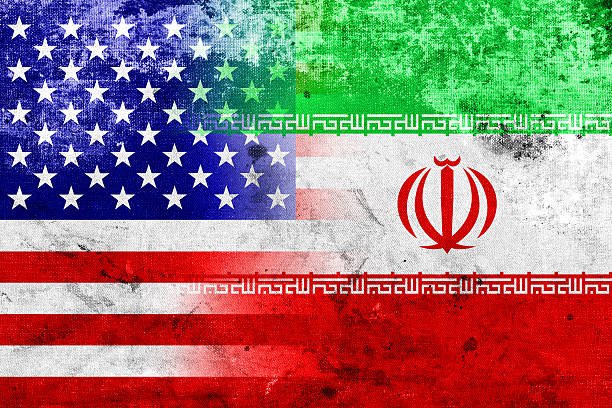
The Strait of Hormuz remains a chokepoint in name only. Since Iran began restricting vessel traffic through the 21-mile-wide corridor — the conduit through which roughly 20 percent of the world's oil moves — the world's energy architecture has been operating under a threat that diplomats have so far failed to fully defuse. On 29 May 2026, the gap between the diplomatic optimism emanating from the White House and the tactical reality inside the Persian Gulf was laid bare in stark terms: CENTCOM warned it would conduct military operations and target Iranian mine-laying vessels in self-defense, while simultaneously, officials in Tehran rebuffed conditions for lifting the blockade and positioned Hormuz access as a bargaining chip in ongoing nuclear talks.
That contradiction — a U.S. administration publicly declaring a deal is close while its own military command threatens enforcement action on the same waterway — reflects a fundamental fracture in Washington's approach to Iran. It also signals a real and growing risk to the global economy. According to reporting by Bloomberg, if the strait is not reopened by August, economists inside and outside the U.S. government fear the supply shock could trigger a recession comparable in scale to the 2008 financial crisis. The assessment, drawing on internal modeling, treats a prolonged Hormuz closure not as a tail risk but as a central scenario requiring active mitigation.
The Military Front: CENTCOM Draws a Line
U.S. Central Command issued its most direct warning to date on 29 May 2026, stating that American forces would conduct military operations near the Strait of Hormuz and would target vessels laying mines in the waterway under the right of self-defense. The statement, confirmed by Bloomberg and carried by CENTCOM's public affairs office, represents a significant escalation in the publicly acknowledged U.S. posture. It moves the American military stance from deterrence to active enforcement — a distinction that Western allies and regional partners have been watching closely.
Iran manages Strait of Hormuz traffic, according to multiple accounts from Iranian state-affiliated media and confirmed by wire reporting, directly impacting global oil trade flows. The Islamic Republic has used the strait's geography as a lever in talks with Washington, with Iranian officials stating publicly that Hormuz access will not normalize until the United States agrees to terms Tehran finds acceptable. That position has not shifted despite public optimism from the Trump administration.
The CENTCOM warning serves multiple purposes simultaneously: it signals to regional partners — Saudi Arabia, the UAE, Qatar — that the U.S. remains committed to Gulf security; it puts Iranian naval assets on alert; and it creates leverage for the ongoing memorandum-of-understanding negotiations. Whether it changes Tehran's calculus is a separate question.
The Diplomatic Front: Close, But Not Closed
The United States and Iran are, according to reporting from multiple sources, nearing a memorandum of understanding that would extend their existing ceasefire and potentially ease Hormuz restrictions. That framework has been in negotiation for weeks. However, the same reporting cycle that confirmed the MOU discussions also confirmed a significant friction point: Iran has rejected the terms Trump administration officials presented for lifting the Hormuz blockade, according to Iranian state-affiliated coverage and cross-checked against wire reporting.
Trump himself claimed on 29 May 2026 that Iran had agreed to nuclear disarmament — a sweeping characterization that immediate fact-checking could not fully corroborate. The reopening of the Hormuz Strait remains unconfirmed by independent verification, and officials in Tehran have not publicly echoed the President's framing. The disconnect between a White House confident in imminent breakthrough and an Iranian negotiating position that has not moved on the core demand — lifting economic pressure in exchange for Hormuz normalization — is the central tension in this crisis.
Axios, reporting from its White House correspondent, has described the dealmaking as entering a critical phase, with the administration under pressure to show results both for domestic political purposes and to calm energy markets that are pricing in sustained disruption. The stakes for the President's team are high: a resolved Hormuz crisis would remove a significant economic threat heading into the second half of 2026; an unresolved one hands the Democrats a potent argument about mismanagement of a geopolitical crisis.
The Structural Picture: Energy, Leverage, and Dollar Architecture
The Hormuz crisis is not only a military and diplomatic problem. It is a structural one. The strait functions as the world's most critical energy chokepoint precisely because no alternative route exists at comparable cost and volume. Oil tankers coming from the Persian Gulf — loaded in Saudi Arabia, Kuwait, Iraq, the UAE, and Iran itself — must pass through the strait or accept a costly, logistically complex detour around the Cape of Good Hope. Every day of restricted flow drives up insurance premiums, spot freight rates, and refinery input costs, with the price pressure transmitting into gasoline markets globally within weeks.
For Iran, the strait represents the one lever where geography does most of the work. Unlike sanctions, which Tehran has weathered for years through creative workarounds and trade with non-Western partners, a Hormuz disruption directly threatens the economic recovery that Iranian officials have been quietly prioritizing. The regime needs the sanctions pressure lifted and the oil revenue spigot restored — both of which are formally on the table in the current MOU talks. The question is what Tehran is willing to exchange for that outcome, and whether the White House's public framing of imminent agreement reflects a deal that actually exists or one that is being announced ahead of schedule to manage market anxiety.
From the U.S. side, the Hormuz dimension of the Iran nuclear question reflects a broader pattern: the exercise of energy leverage in diplomacy is not new, but its deployment against a backdrop of domestic economic stress and a presidential administration that has staked significant political capital on dealmaking makes the stakes unusually high. Every day the strait operates below capacity is a day the global economy absorbs a cost that accumulates in freight markets, inventory levels, and eventually retail prices at the pump.
What Comes Next: Scenarios and Stakes
The most probable near-term outcome, according to analysts tracking both the military and diplomatic tracks, is a partial and conditional reopening — the strait opens enough to ease the acute price pressure, but not enough to fully normalize oil flows until a comprehensive nuclear deal is signed. Iran gets partial sanctions relief and some Strait access; the U.S. gets a face-saving de-escalation that it can market as progress without having resolved the underlying nuclear enrichment question.
The scenario that markets and governments are most actively preparing for is darker: a failure to reach MOU terms, a further Iranian hardening, and a U.S. military response that closes the strait entirely — either because of an incident at sea or because Tehran orders a full blockade in response to what it perceives as American provocation. That scenario would, per the Bloomberg modeling, produce a supply shock large enough to push major economies into recession. It would also likely trigger a coordinated strategic petroleum reserve release from the IEA, a scramble among Asian buyers for alternative supply contracts, and a sustained spike in LNG prices as utilities switch away from Gulf crude.
What remains genuinely uncertain is the internal cohesion of the Iranian decision-making apparatus. Reports indicate that different factions within Tehran's political structure are reading the negotiations differently — some seeing a genuine opportunity for sanctions relief, others viewing U.S. pressure as proof that Washington cannot sustain its own economic strain and therefore a reason to hold out. Until that internal debate resolves, the strait remains a contested space, and the risk of miscalculation — on either side — remains the most dangerous variable in the equation.
This publication's approach to the Hormuz crisis reflects a structural framing that treats energy geography as political architecture — the strait is not merely a shipping lane but a site where sovereignty claims, economic pressure, and military deterrence intersect. The dominant wire framing has focused on deal optics; this piece foregrounds the material and tactical dimensions that will determine whether the diplomats succeed.
Wire provenance
This editorial synthesis draws on the following public wire/social posts:
- https://x.com/unusual_whales/status/1924589012345678893
- https://t.me/CryptoBriefing/84782
- https://t.me/CryptoBriefing/84767
- https://t.me/CryptoBriefing/84765
- https://x.com/unusual_whales/status/1924356789012345678
- https://t.me/CryptoBriefing/84768
- https://t.me/CryptoBriefing/84777
- https://t.me/CryptoBriefing/84770
- https://t.me/CryptoBriefing/84771