Hormuz Deadlock: Oil Markets Brace as US-Iran Talks Stall Over World's Most Strategic Chokepoint
Talks over reopening the Strait of Hormuz have reached an impasse as Iran demands enrichment rights and the Trump administration dangles sanctions relief against a backdrop of military posturing and a Kazakh diplomatic proposal.
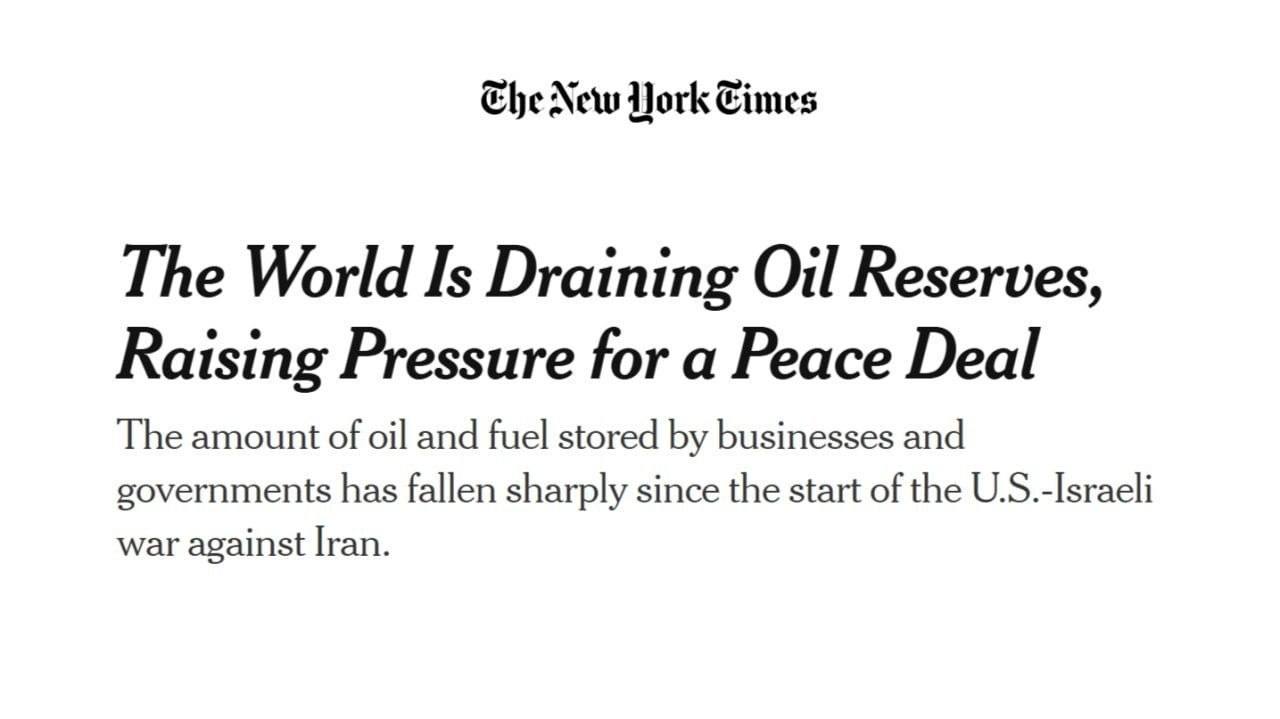
On 29 May 2026, the world's most consequential waterway remained effectively locked in diplomatic limbo. The Strait of Hormuz — through which roughly a fifth of global oil shipments pass — stayed under Tehran's operational control as nuclear talks between the United States and Iran collapsed into mutual recrimination, leaving energy markets to absorb a range of outcomes from tentative deal optimism to the prospect of a sustained supply shock.
The immediate trigger was a familiar one: a week of escalating exchanges following Israeli military strikes on Iranian territory had handed Tehran leverage it was not inclined to surrender. Iran's Islamic Revolutionary Guard Corps assumed direct management of strait traffic, and the government in Tehran made clear that passage rights would not be restored as a goodwill gesture — they were a bargaining chip, and Iran intended to use them.
What the Talks Are Actually About
The public posture from Washington has oscillated between triumphalism and threat. On 29 May, US President Donald Trump declared that Iran had agreed to nuclear disarmament and demanded immediate reopening of the strait as the price of sanctions relief. "Trump says he will soon decide on Iran deal, demands reopening of Hormuz Strait," Reuters reported that day, citing the President's remarks. But the same dispatches noted that confirmation from Tehran remained absent — an asymmetry the administration has not addressed publicly.
The Iran negotiating position, as articulated through official channels, is more granular: Tehran insists on the right to enrich uranium for civilian purposes under any revived framework. That demand goes beyond what the original 2015 Joint Comprehensive Plan of Action contemplated and sits at the heart of why talks have stalled. "Iran rejects Trump's terms for lifting Hormuz blockade amid nuclear tensions," CryptoBriefing reported on 29 May, capturing the gap between Washington's ask and Tehran's red line.
Iran's declared position, per a statement flagged by Polymarket on the same date, is that management of the Strait of Hormuz "must be decided solely by Iran and Oman" — effectively a rejection of any US veto over transit arrangements even in a de-escalation scenario. That framing matters because it signals that Tehran views the strait question as a matter of bilateral Gulf governance, not a US-led security concern.
The Kazakh Off-Ramp and Its Limits
Into this deadlock stepped Kazakhstan. On 29 May, Astana offered to serve as a neutral repository for Iran's enriched uranium, removing a key source of Western concern about Tehran's nuclear programme without requiring Iran to dismantle it entirely. "Kazakhstan offers to host Iran's enriched uranium, easing nuclear tensions," one CryptoBriefing dispatch noted. "Kazakhstan offers to take Iran's uranium, boosting diplomatic resolution hopes," read another, later the same day.
The proposal has merit as a face-saving formula: it allows Washington to claim progress on proliferation without forcing a public climbdown by Tehran; it gives Iran a tangible concession on enrichment rights; and it places material nuclear assets outside the region under international monitoring. Whether it can bridge the gap between a US administration that wants "disarmament" and an Iranian government that will not accept it depends on how much both sides are actually willing to conclude a deal — a question the talks so far have not answered.
Military Pressure and Market Signals
CENTCOM, the US military's Central Command, made clear on 29 May that American forces were positioned near the strait and prepared for operations. "CENTCOM warns of military operations near Strait of Hormuz amid US-Iran tensions," CryptoBriefing reported. That language was deliberate: it was not a threat, but it was not a diplomatic signal either. It was a reminder of the contingency option that any administration must keep open when a quarter of the world's oil flows through a single corridor controlled by an adversary.
Oil markets, for their part, have been doing what oil markets do in conditions of deep uncertainty: repricing in both directions within the same trading day. When Trump hinted at a deal on 29 May, prices fell. "Oil prices slide as Trump hints at US-Iran deal reducing geopolitical risks," CryptoBriefing reported. When the possibility of sustained disruption appeared in the same briefing cycle, estimates of a potential ceiling shot upward. "Oil prices could hit $160 per barrel amid Strait of Hormuz disruptions," another dispatch read. "Iran manages Strait of Hormuz traffic, impacting global oil trade," noted a third. That range — from a deal-driven drop to a supply-shock spike — captures the market's genuine uncertainty about which scenario materialises.
Stakes and Forward View
The structural logic here is straightforward: a prolonged Hormuz disruption does not just raise energy prices, it destabilises the fiscal position of oil-importing governments across Asia and Europe at a moment when most are already under pressure from debt loads and slowing growth. The US administration, whatever its rhetorical posture, has a material interest in a deal — not because it values diplomatic success, but because $160 oil in an election cycle is a political liability.
Tehran, meanwhile, is performing a calculation that every sanctions-stressed government performs: the cost of holding the strait closed is high, but the cost of making concessions that look like capitulation is higher. The Kazakh proposal gives both sides cover. Whether they take it depends less on the terms on paper than on whether the political cost of walking away from the table is higher inside either capital than the cost of accepting a compromise.
The signals from the 29 May briefing cycle suggest neither side has made that calculation yet. Until they do, the strait remains what Iran has made it: a pressure valve, not fully open, not fully closed — and carrying everything the world needs to keep running.
Wire provenance
This editorial synthesis draws on the following public wire/social posts:
- https://x.com/polymarket/status/1923498398760993078