The Hormuz Gambit: How Iran's Chokepoint Became the World's Problem
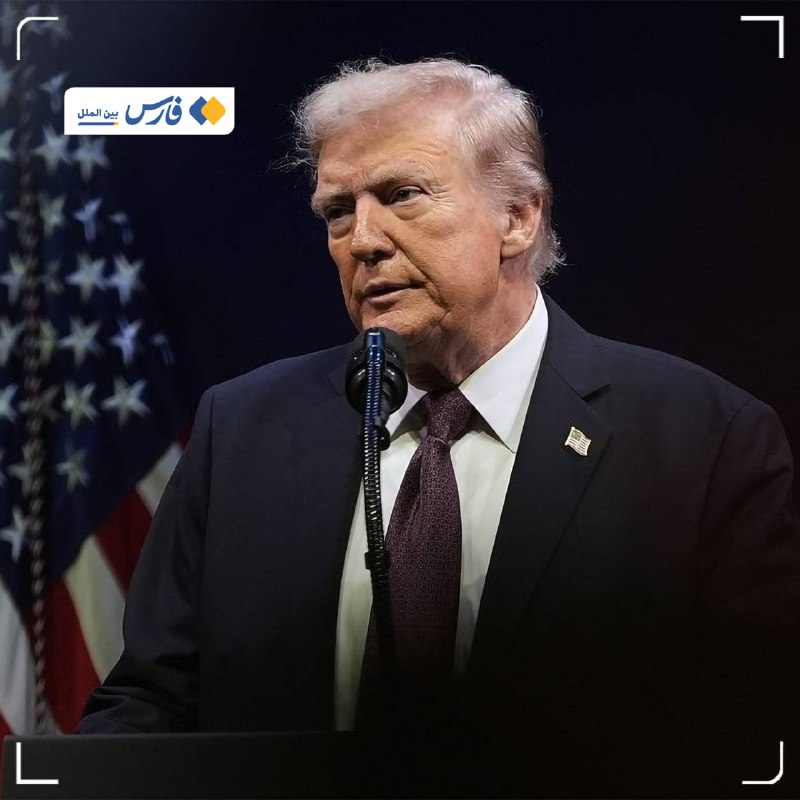
The Trump administration emerged from a two-hour meeting at the White House on 29 May 2026 without announcing a decision on Iran, according to accounts fromOSINTdefender. The session, chaired by the President and senior national security advisers, centred on whether to accept terms under discussion for extending a fragile ceasefire and reopening the Strait of Hormuz — the world's most critical oil transit corridor, through which roughly 20 percent of global oil shipments pass. By the time the meeting concluded, the gap between what Washington was prepared to offer and what Tehran had signalled it would accept remained wide enough to keep the standoff unresolved.
The divergence was underlined within hours of the meeting's end. An Iranian official, speaking on background to multiple regional outlets, framed the Hormuz blockade not as a provocation but as an asset — a piece of negotiating capital the Islamic Republic had no intention of surrendering cheaply, according to reporting byCryptoBriefing. That positioning directly contradicted the framing offered simultaneously by the White House, where officials suggested that Iran had privately agreed to a broader nuclear disarmament framework. Neither claim was independently verifiable at press time, and the absence of a joint statement or multilateral corroboration left both characterisations contested.
What is not contested is the material reality on the water and in the markets. CENTCOM issued a warning on 29 May of ongoing and planned military operations in proximity to the Strait of Hormuz, per reporting byCryptoBriefing. The advisory, unusual in its directness, came as shipping insurers and commodity traders began repricing a risk premium that several analysts described as approaching levels not seen since the 2019 attacks on Gulf infrastructure. A secondCryptoBriefing report that same day noted that the Strait disruption had already triggered measurable impacts on energy shipping through the waterway, with at least three major tanker operators reported to have rerouted vessels away from the chokepoint — adding days to voyage times and hundreds of thousands of dollars to per-ship operating costs. The compound effect on global supply chains is a number that energy economists are still calculating, but early estimates from commodity desks cited in financial wire reports described a potential supply shock of a magnitude that would require coordinated releases from the Strategic Petroleum Reserve to offset in the near term.
The Hormuz blockade is, at its surface, a military fait accompli. But to understand why Iran chose this moment to harden its position — and why Washington is finding its leverage more circumscribed than the public rhetoric suggests — requires stepping back from the immediate signalling war and looking at the structural conditions that make the Strait so uniquely effective as diplomatic capital.
The Leverage Arithmetic
No single piece of geography has done more to insulate Iran from international pressure than the seventeen-mile wide Strait of Hormuz. The waterway separates the Persian Gulf from the Gulf of Oman and is the transit route for approximately 17 to 20 million barrels of oil per day, depending on the reporting source and the accounting methodology used. The United States Navy has maintained a decades-long presence in the Gulf explicitly to guarantee freedom of navigation — a commitment that, in normal circumstances, represents a significant deterrent against blockade behaviour. Those are not normal circumstances.
Iran's decision to position the Hormuz reopening as a lever rather than a concession reflects a calculation that has been visible in Tehran's strategic communications for several years: that a credible threat to the Strait is more valuable than the Strait itself, at least temporarily. Iranian state-linked analysts and official spokespeople have long argued that regional security architecture is inseparable from Iran's nuclear programme — that demanding nuclear concessions in exchange for maritime normalisation is to demand unilateral disarmament while receiving nothing结构性 in return. That argument has a logic to it, even if Western governments have been unwilling to grant it the diplomatic recognition it implicitly deserves.
The nuclear dimension compounds the complexity. Trump administration officials have claimed, according toCryptoBriefing's account of White House readouts from 29 May 2026, that Iran has agreed to a nuclear disarmament framework. Iranian state media and official spokespeople have not corroborated this characterisation, and the language of "disarmament" — rather than "denuclearisation" or "IAEA compliance" — is a departure from the terminology used in previous multilateral frameworks, including the 2015 Joint Comprehensive Plan of Action, which Tehran honourably executed until the United States withdrew in 2018. The question of whether the reported agreement is real, partial, conditional, or a diplomatic fiction manufactured to support a specific domestic political narrative in Washington is a question the available sources do not resolve. What is clear is that Iranian negotiators, according to multiple regional accounts, are unwilling to cede the Hormuz card before receiving verifiable sanctions relief — a demand that puts them at direct odds with an administration that has publicly signalled it will not offer normalisation until the nuclear question is settled.
The Energy Dimension
The human consequences of a prolonged Hormuz disruption are not abstract. A report fromCryptoBriefing on 29 May 2026 documented what it termed a major energy crisis triggered by the conflict, with disruptions to Strait of Hormuz shipping already affecting spot markets for crude. A companion piece that same day described the disruption as risking a global energy supply shock — language that, while somewhat routine in energy reporting, reflects a genuine assessment shared by several commodity research houses that have published risk models for chokepoint closure scenarios.
The Strait's chokepoint geography means that even partial disruption creates outsized market effects. Unlike pipeline infrastructure, which has alternative routes, oil and LNG shipped through Hormuz have no near-term substitute transit. Rerouting around the Cape of Good Hope adds approximately two weeks to voyage times for tankers operating between the Gulf and Asian markets — primarily China, India, Japan, and South Korea, which collectively represent the largest volume customers for Gulf crude. European buyers, who have already absorbed significant disruption costs following the rupture of Russian pipeline supply routes, would face further pressure. The United States, while a growing exporter of LNG, is not insulated from these dynamics: higher global prices tend to transmit into domestic markets through a variety of mechanisms, and an administration that has made energy price relief a domestic political priority would find a prolonged Hormuz crisis deeply inconvenient.
The strategic dimension here is not lost on Tehran. Iran's leadership understands that the energy architecture of the Asian growth economies — China in particular, but also India and Southeast Asian markets — creates a political constituency for de-escalation that operates independently of Western diplomatic pressure. Beijing and New Delhi have both, in past Hormuz crises, privately urged restraint through back-channel diplomatic communications, and there is no reason to assume this pattern has changed. The question is whether that indirect pressure is sufficient to move Iranian calculus in the near term, or whether Tehran has determined that a short-term disruption, absorbed globally, is a price worth paying to extract maximum concessions in a negotiation it believes it can win on time.
The Structural Context
The Hormuz crisis arrives at a moment of broader recalibration in the architecture of Middle Eastern geopolitics. The post-2023 period — characterised by the managed reduction of direct US ground engagement in regional flashpoints, the continued expansion of Chinese economic and diplomatic presence across the Gulf, and the incremental normalisation of Iranian regional relationships with Gulf Cooperation Council states that previously categorised Tehran as an existential adversary — has altered the operating assumptions on which decades of American leverage were built.
Saudi Arabia and the UAE, both of which transit significant volumes of crude through the Strait, have in recent years pursued a more balanced diplomatic posture toward Tehran. That shift, driven partly by economic logic and partly by the managed lessons of the Yemen and Syria conflicts, means that the United States cannot rely on Gulf ally pressure as a supplementary lever of the kind it deployed in previous regional crises. This does not make Gulf states adversaries of Washington — the security architecture remains intact — but it does mean that the coalition of actors with a direct stake in Hormuz normalisation is wider and more varied than it was a decade ago, and not all of them share Washington's preferred sequencing for a negotiated outcome.
There is also the question of what the Hormuz gambit reveals about the current administration's approach to adversary negotiations more broadly. The pattern of high-profile personal diplomacy, maximum-pressure public signalling, and internal disagreement about what concessions are achievable has been visible in the administration's approach to other bilateral negotiations. Whether that approach produces a durable agreement with Iran — or whether it produces a temporary face-saving formulation that collapses under the weight of implementation disputes — is a question that will determine whether this crisis represents a turning point or merely an acute episode in a longer-running standoff.
What Comes Next
The immediate path forward is unclear, and the sources consulted for this article do not point to an imminent resolution. The two-hour White House meeting concluded without a decision, suggesting that the internal debate within the Trump administration between advocates of a phased sanctions-relief-for-compliance exchange and those favouring continued maximum pressure remains unresolved. The CENTCOM advisory suggests that military planners are not treating the diplomatic track as a substitute for operational contingency — a prudent if unsettling dual-track posture.
The energy markets will not wait for diplomacy to resolve. Spot prices for benchmark Gulf crudes have moved significantly in recent sessions, and the forward curve is pricing in a risk premium that will compress only when either the Strait reopens or alternative supply arrangements are confirmed. Asian refiners, who operate on narrow margins and rigid term contract schedules, are already beginning to seek spot alternatives — a process that, if sustained, will structurally alter trade flows in ways that outlast the immediate crisis.
The broader question is whether the Hormuz standoff marks a turning point in the Iran nuclear question or simply another cycle in a conflict that has resisted resolution for more than two decades. The available evidence suggests the answer depends less on the specifics of any proposed agreement than on whether the underlying security dilemma — which neither side has found a way to resolve without perceived surrender — is in fact resolvable through diplomacy at all, or whether it requires a more fundamental renegotiation of the regional order that the Strait itself has always embodied.
This desk covered the Hormuz crisis as an unfolding energy and security story, prioritising CENTCOM's operational warnings and Iranian official positioning over the White House's diplomatic readouts. The gap between those sources reflects the genuine uncertainty about where the negotiation actually stands.
Wire provenance
This editorial synthesis draws on the following public wire/social posts:
- https://t.me/OSINTdefender/4723
- https://t.me/CryptoBriefing/11421
- https://t.me/CryptoBriefing/11418
- https://t.me/CryptoBriefing/11415
- https://t.me/CryptoBriefing/11412
- https://t.me/CryptoBriefing/11408
- https://t.me/CryptoBriefing/11406