Iran's Parliament Wants to Legislate Control of the World's Most Important Oil Chokepoint
Tehran's announcement that it will table a law formalising its management of the Strait of Hormuz is not merely a negotiating posture — it is a deliberate assertion of territorial jurisdiction that carries real consequences for global energy markets and the credibility of US regional pressure.
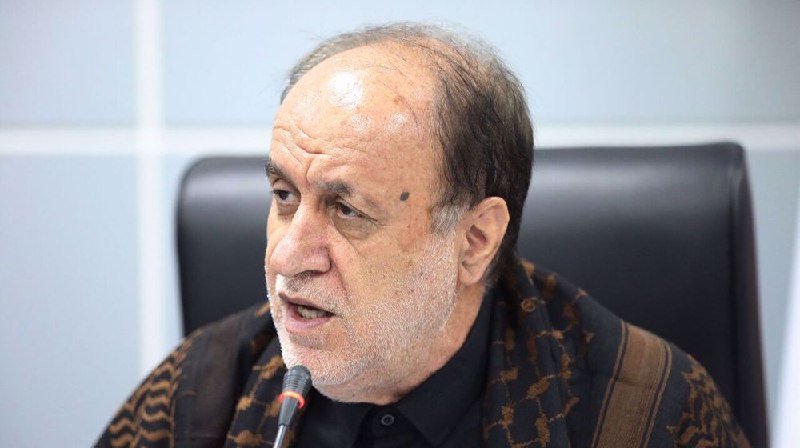
The Islamic Republic's Parliament is moving to pass a law formalising Tehran's management of the Strait of Hormuz, and the timing is not accidental. On 30 May 2026, MP Mohammad Jafar Salimi — a member of the Parliament's Presidium — told the Iranian state news agency Tasnim that the plan would be "presented to Parliament for review and voting," and that it would be turned into binding legislation. He added a pointed remark directed at Washington: what President Trump and others say about the necessity of opening the Strait is "an issue that concerns us, and we will not allow them to decide on it." That is not a posture. That is a legal claim.
The legislative act itself
Parliamentary votes on strait management are not abstract exercises. Tehran has long asserted that the Islamic Republic has the sovereign right to regulate passage through the水道 — a claim rooted in the 1982 Islamic Republic's Maritime Territory Law, which extends jurisdiction to twelve nautical miles from its baseline. What changes with a new law, even one that restates existing claims, is the domestic political architecture surrounding those claims. Passing the measure through the Majlis gives the executive a second lever: it can now point to parliamentary mandate, not just presidential discretion, when defending or calibrating its use of the waterway.
The move comes against a backdrop of elevated US-Iranian tensions over Iran's nuclear programme and renewed American demands that Tehran constrain its regional proxy networks. The Trump administration has made clear that it views freedom of navigation through Hormuz as a non-negotiable US interest. Tehran's response — legislate first, negotiate later — is a familiar tactic in its diplomatic playbook. But the speed with which Salimi announced the parliamentary timeline, and the directness of his warning to the US president, suggests this is calibrated for a specific audience: not just the nuclear negotiators in Vienna or Muscat, but the signal corridor between Washington and its Gulf allies.
The geopolitical warning to Washington
Salimi's reference to "what Trump and others say" is notable for its bluntness. The phrasing treats the American position as a collective demand — not a single administration's view, but an established expectation embedded in Western strategic culture — and then dismisses that expectation flatly. "We will not allow them to decide on it" is unambiguous language for a sitting MP speaking on the record to a state wire service. It leaves no room for diplomatic ambiguity.
The broader context is the current nuclear talks, which have produced incremental progress but no agreement. The US has insisted on limitations on Iran's uranium enrichment and on caps on its ballistic missile programme. Iran, for its part, has demanded sanctions relief and guarantees that any restored nuclear deal will not be unilaterally abandoned again — as the US did in 2018 under the previous administration. Within that deadlock, the Hormuz law functions as a reminder of an Iran capability that no sanctions architecture can erase: the ability to affect a fifth of global oil output by tightening or relaxing its naval posture in the narrow waters between Oman and Iran.
There is a secondary audience for the announcement: the Gulf monarchies. Saudi Arabia and the UAE have invested heavily in recent years in alternative export infrastructure — pipeline capacity through the East-West Crude Oil Pipeline, expansion of export terminals at Ruwais and Jebel Ali — specifically to reduce their exposure to a Hormuz choke-point. But those investments are not yet sufficient to absorb a full disruption. Any Iranian move to formalise tighter control of the水道 — even short of a blockade, which would be an act of war — raises insurance costs, increases tanker premiums, and forces commercial actors to price in a risk premium that will not dissipate quickly.
What this means for global energy and the wider calculation
The Strait of Hormuz processes roughly 20 to 25 million barrels of oil per day — somewhere between a fifth and a quarter of global daily output, depending on the accounting methodology. LNG flows through the same corridor add further weight. Any serious disruption to transit would not merely be an Iranian policy choice; it would be a global supply shock with immediate price consequences.
For Europe, which imports the majority of its crude from Gulf producers and relies on LNG routed through the水道, the implications are immediate and structural. For China — Iran's most significant trading partner and a country that has deepened its diplomatic and economic ties with Tehran since the reimposition of US sanctions — the Hormuz law represents a reminder of both the opportunities and the vulnerabilities embedded in its Gulf energy relationships. Beijing has every interest in keeping the水道 open. It also has every interest in a regional balance of power that constrains unbridled American naval dominance of the corridor.
The law, if passed, does not itself change the military calculus. Iran's Revolutionary Guard Corps Navy already operates aggressively within the waters. The law gives that operational posture a parliamentary veneer — and that veneer matters for domestic politics, for diplomatic signalling, and for the argument Tehran would make to any international legal body if the question of its jurisdiction were ever adjudicated.
Stakes and the road ahead
The risks here are real on both sides. For Washington, allowing a foreign parliament to legislate jurisdiction over the world's most economically consequential waterway — even if the legislation merely codifies an existing claim — erodes the normative framework the US has used to justify its own naval presence in the Gulf. For Tehran, the danger is that a law passed for domestic political purposes is eventually used as justification for actions that produce a sharper American response than the negotiating context requires.
The nuclear talks are not dead. But this week's parliamentary announcement raises the floor of what Iran will demand before it makes concessions on enrichment, and it raises the political cost for any future US administration of treating Hormuz access as an entitlement rather than a negotiated arrangement. Whether the law passes as announced, or whether it is used as a bargaining chip in the talks themselves, the signal has been sent. Washington can ignore it at its own risk.
This publication framed Iran's parliamentary announcement as a sovereignty claim with legal and economic implications, rather than as a simple threat or negotiating leverage. The Tasnim and Al-Alam reporting carried the story without alarmist framing; the editorial task was to translate that into structural context rather than rhetorical escalation.
Wire provenance
This editorial synthesis draws on the following public wire/social posts:
- https://t.me/alalamarabic
- https://t.me/alalamarabic
- https://t.me/tasnimnews_en