The Ceasefire That Isn't: Why Israel's Lebanon Talks Are Diplomatic Theater
Back-channel talks between Israeli and Lebanese military delegations over the weekend have been billed as a step toward regional de-escalation. The framing deserves scrutiny.
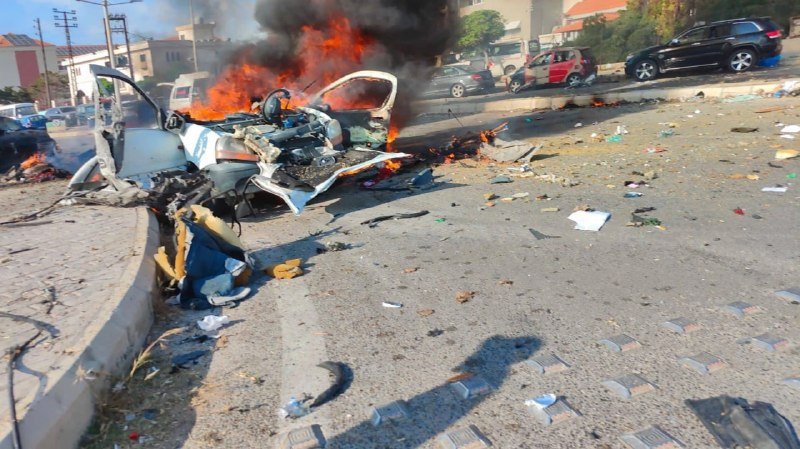
The diplomatic readout sounds reassuring: Israeli and Lebanese military delegations held talks over the weekend, discussed a security understanding, and Lebanon is demanding a full Israeli withdrawal. The wires call it progress. The sensible read: it's theater.
The gap between the language of negotiation and the conditions on the ground has always been the defining feature of this particular theater of Middle East diplomacy. That gap is especially wide right now.
The Silence That Speaks
Hezbollah's Ghalib Abu Zeinab did not use diplomatic language when he addressed the talks on Saturday. According to reporting by Fars News International, Abu Zeinab called the Lebanese government's silence "a service to America and Israel." The phrasing is blunt, but the underlying political reality is straightforward: any Lebanese executive that sits at a table with Israeli representatives without a unified national mandate does so at considerable domestic risk. The silence Abu Zeinab described is not indecision. It is the product of a political system under structural pressure from a faction that retains the capacity to shape what Lebanon's government can and cannot say out loud.
That is the constraint the back-channel talks are operating inside. A security understanding reached without the concurrence of the relevant armed actor on the Lebanese side is not a security understanding — it is a piece of paper that the men with weapons have not agreed to respect. History in this corridor is littered with such papers.
Washington Does the Narrative Work
Abu Zeinab also made a second claim, per Fars News International: that America is "narrating the Zionists' narrative" regarding Israel's war against Lebanon. The phrasing is polemical, but the structural observation underneath it has merit in how it maps the information environment.
American officials and American-aligned wire services have consistently framed the talks as a positive development — a sign of movement, a diplomatic opening, evidence that pressure is producing results. That framing is not false, exactly. The talks happened. The language of the readout is real. But the weight given to diplomatic surface against the depth of what remains unresolved — the occupation question, the weapons question, the enforcement question — tells us more about the needs of the narrators than about the facts of the situation.
Coverage routinely defers to the language of official spokespeople; dissenting analysis gets less column-inches. This is not unique to this story, but it is visible here.
The Defeat Question
Maariv military analyst Avi Ashkenazi offered a different frame on Saturday, one that cuts against the optimistic diplomatic read. According to reporting by Fars News International, Ashkenazi stated that Israel is "on the verge of another defeat in Iran and Lebanon." He noted that it remains unclear whether any agreement will be reached at all.
Ashkenazi's framing is worth treating seriously rather than dismissing as inside-the-tent pessimism. The analyst is asking a direct question: what has the campaign actually produced? If the answer is negotiated restraints that collapse when political conditions shift — because no underlying conflict of interest has been resolved — then the diplomatic progress is temporary by design. The question of whether an agreement will materialize, and whether it will hold, is not a technicality. It is the whole question.
What Comes Next
The United States has a clear interest in presenting this as a functioning diplomatic process. An active negotiation is evidence of American relevance; a breakdown is evidence of failure. That interest shapes the public framing, and it shapes how the reporting circulates.
What the reporting does not fully surface is the counterfactual: what happens if an agreement is signed and not honored? The pattern in this corridor suggests that the more fraught the ground conditions, the more likely a formal agreement is to serve as a political release valve rather than a structural constraint. The men who will not be at the table — or who will attend only to watch — are often the ones who determine whether the paper holds.
This matters because the stakes are not abstract. A failed agreement that produces a temporary lull followed by resumed hostilities is worse, strategically, than no agreement — it exhausts the political capital that makes enforcement possible, and it teaches the relevant actors that they can wait out diplomatic pressure. Whether these talks produce that outcome is genuinely unknown. The sources do not specify what enforcement mechanisms, if any, have been discussed. That omission is not minor.
The question is not whether talks happened. They did. The question is what the talks were designed to produce — and whether the actors with the most control over the ground situation were genuinely part of the process, or were managed around while the public framing moved forward. Until that question is answered with evidence rather than diplomatic readout language, the appropriate posture is skepticism, not relief.
Monexus covered the talks through the wire lens of diplomatic progress. This piece foregrounds the structural constraints on what an agreement can actually achieve.
Wire provenance
This editorial synthesis draws on the following public wire/social posts:
- https://t.me/wfwitness
- https://t.me/FarsNewsInt
- https://t.me/FarsNewsInt