Israeli Strikes Kill Five in Southern Lebanon as Cross-Border Exchange Intensifies
Israeli airstrikes killed at least five people in southern Lebanon on 29 May 2026, as a reciprocal exchange of fire between the IDF and Hezbollah accelerated despite international calls for restraint.
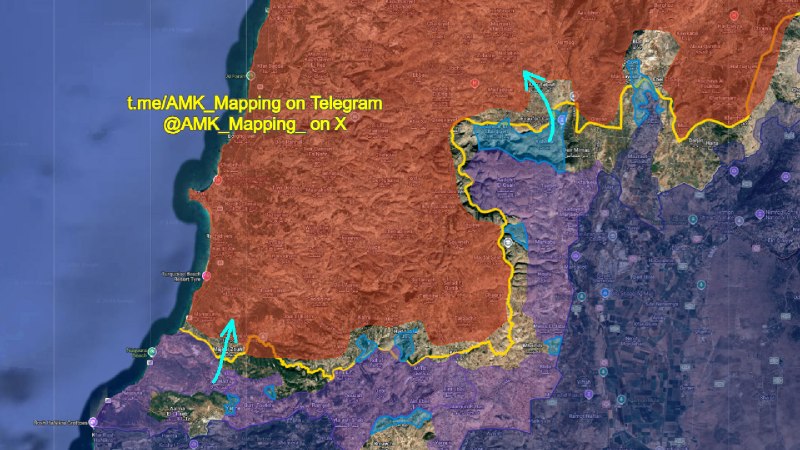
At least five people were killed in Israeli airstrikes targeting several towns in southern Lebanon on 29 May 2026, according to Lebanese medical sources cited by regional outlets. The IDF confirmed it struck what it described as Hezbollah infrastructure sites, while warning sirens sounded in northern Israel as projectiles were intercepted over populated areas. The exchange marks a significant escalation in a conflict that has simmered without formal resolution since the Gaza ceasefire, with both sides citing the other's violations as justification for continued military action.
The violence unfolds against a backdrop of sustained international pressure — from Washington, Paris, and Cairo — for a diplomatic resolution anchored in UN Security Council Resolution 1701, which ended the 2006 war but never produced the disarming of Hezbollah that was called for in its text. What the current uptick reveals, however, is the structural fragility of a brokered arrangement that depends on deterrence rather than institutional enforcement.
Strikes and Responses
Israeli forces struck multiple towns in southern Lebanon on the evening of 29 May, killing at least five people, according to initial reports. The IDF stated that its aircraft targeted Hezbollah positions in response to what it described as ongoing violations of the existing arrangement governing the Israel-Lebanon frontier. The strikes came within hours of Hezbollah announcing it had carried out 22 military operations against Israeli army positions in southern Lebanon over the preceding 24 hours — a statement released by the group and reported by Iranian state-affiliated news agencies.
Simultaneously, the IDF confirmed that air defence systems intercepted two projectiles launched from Lebanese territory toward northern Israel. The IDF Spokesperson Unit stated that no injuries were reported from the intercepted fire. Israeli authorities have not disclosed what type of projectiles were involved or whether they originated from Hezbollah or other armed groups operating in southern Lebanon.
Hezbollah's statement, framed as a response to what it called Israeli ceasefire violations, described its operations as defensive actions taken in accordance with what it terms its own interpretation of the ceasefire's terms. The group has consistently argued that Israeli overflights and surveillance activities constitute violations that entitle it to respond militarily. Israeli officials reject that framing, maintaining that their operations are defensive and proportionate.
Conflicting Interpretations of the Ceasefire Architecture
The underlying problem is one of competing interpretations of a text that both sides claim to uphold. Resolution 1701 established a zone south of the Litani River free of armed personnel and weapons, except for Lebanese government forces and UN peacekeepers. Israel has long argued that Hezbollah's military presence and weapons build-up in the area constitute a systematic violation. Hezbollah and its allies argue that Israeli surveillance flights, drone incursions, and intelligence activities — conducted with impunity — violate the same document's prohibition on hostile acts.
Neither side has moved to formally abrogate the arrangement. Both have, however, acted as if the other side's violations nullify their own obligations. The result is a pattern of tit-for-tat escalation in which each incident is technically a response to the previous one, creating a chain of justification that makes it difficult to identify an originating cause or a party solely responsible for escalation.
International mediators have struggled to establish a mechanism for verifying compliance. UNIFIL, the UN peacekeeping force deployed in southern Lebanon, has reported on ceasefire violations but lacks enforcement authority. Its patrols are frequently impeded; its reports are regularly circulated to the Security Council but produce no binding consequences.
The Structural Logic of Low-Intensity Attrition
What makes the current exchange notable is not its scale — it remains well below the 2006 conflict — but its persistence and the absence of any diplomatic off-ramp. Each wave of strikes is calibrated to remain below the threshold that would force a broader Israeli response. Hezbollah's 22 operations, as it described them, appear designed to demonstrate capability and assert presence without provoking a ground incursion. Israel's strikes similarly target infrastructure and personnel rather than launching points that would require large-scale mobilisation.
This is attrition warfare conducted below the threshold of formal conflict. Both sides have institutional interests in maintaining it. Hezbollah derives political legitimacy from resistance posture; the IDF's northern command has long argued that the current arrangement is inadequate but lacks political authorisation for a more robust response; the Lebanese state has neither the capacity nor the political consensus to enforce Resolution 1701's terms independently.
The result is that the ceasefire functions as a frozen conflict with periodic heat. Every few weeks, the pattern repeats: an Israeli strike, a Hezbollah response, a cross-border interception, and diplomatic calls for calm that produce no structural change. The five deaths recorded on 29 May fall into this cycle — numerically significant for those killed, but not significant enough on their own to alter the underlying arrangement.
What Remains Uncertain
The sources do not specify the identities of those killed in the strikes, nor have independent observers confirmed the specific targets hit by Israeli aircraft. The IDF has not released the names or affiliations of what it described as Hezbollah operatives. Hezbollah's statement does not confirm or deny casualties among its personnel. The absence of independent on-the-ground reporting from southern Lebanon makes it difficult to corroborate casualty figures from either side.
It also remains unclear whether the projectiles intercepted over northern Israel originated from Hezbollah specifically or from other armed groups in the area. The IDF statement references sirens without specifying the projectile type or origin point. Whether the fire was intended as a deliberate provocation, a warning shot, or a test of Israeli air defence response times has not been established.
The Diplomatic Vacuum
Washington has engaged periodically with both parties but has not presented a new framework for resolving the weapons and presence questions that Resolution 1701 left unresolved. France and Egypt have maintained quiet diplomatic channels but appear to lack leverage with either side. The absence of a credible enforcement mechanism means that each incident is managed individually rather than addressed structurally. Until either side or a mediating power changes the cost-benefit calculation that sustains the current equilibrium, the pattern of strikes, responses, and interceptions is likely to persist — and to periodically claim lives, as it did on 29 May.
This article was written using Telegram-sourced wire reports. Monexus covered the strikes as a reciprocity cycle; the dominant wire framing led with the Israeli action and treated Hezbollah's stated response as a secondary development.
Wire provenance
This editorial synthesis draws on the following public wire/social posts:
- https://t.me/presstv/12847
- https://t.me/idfofficial/10421
- https://t.me/farsna/9893
- https://t.me/FarsNewsInt/4421