Israel's Northern Border Lockdown Is Not a Drill — It's a Political Signal
Israel's tightening of civil defence restrictions near the Lebanese border is more than a security precaution. It is a message — calibrated to test Hezbollah's red lines, manage domestic pressure, and signal resolve to Washington without triggering the full-scale war both sides nominally want to avoid.
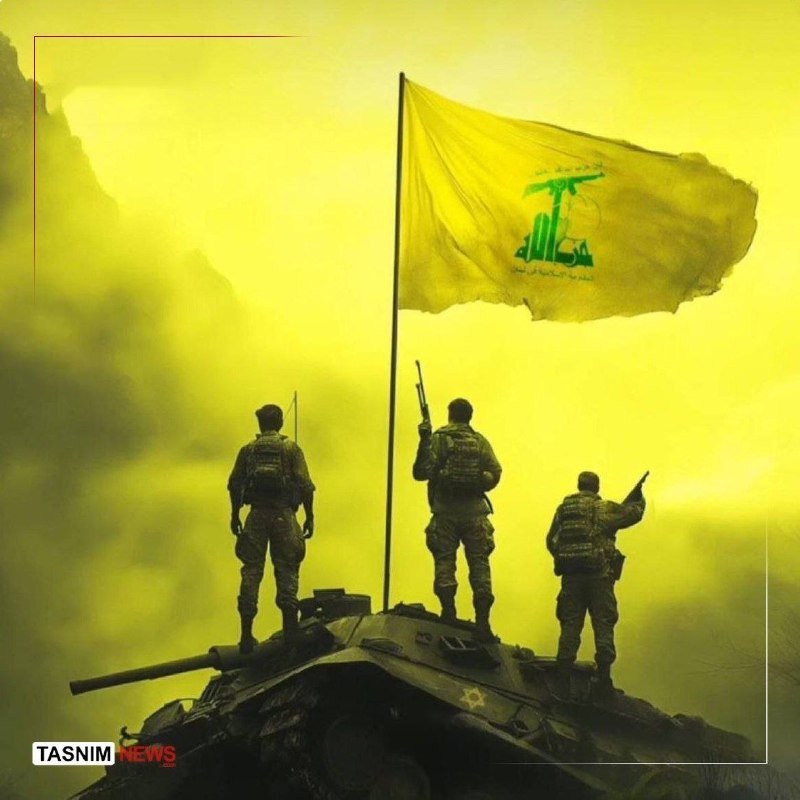
On 30 May 2026, Israeli authorities ordered schools closed and public gatherings restricted in communities along the Lebanese border. The timing was not accidental. The same day, open-source monitoring channels tracked one to two interceptions over northern Israel — the kind of incidental detail that rarely makes wire headlines but signals the narrow margin by which routine exchanges border on uncontrolled escalation.
This is not a drill. It is a political instrument dressed in civil defence language.
The Mechanics of Controlled Tension
Israel's civil defence apparatus — shelters, school closures, gathering limits — has historically been a calibrated tool. When authorities invoke it, they are doing two things simultaneously: acknowledging real risk to civilian populations and creating a documentation record that justifies further escalation if that risk materialises. The order to close schools carries particular weight. It is the move that makes international headlines, that forces Western capitals to take notice, and that signals to Hezbollah's leadership in Beirut that Tel Aviv is no longer treating the current arrangement as sustainable.
Hezbollah has its own calculus. The group has maintained a careful balance since the 2006 war — absorbing enough Israeli strikes to satisfy domestic audiences without triggering the full retaliation that would invite devastation. Recent years have seen that balance tested repeatedly. Iranian resupply lines, Syrian overwatch, and the steady transfer of precision-guided munitions have given Hezbollah a strike capability it did not possess fifteen years ago. That capability changes the equation for both sides.
What the Interceptions Actually Tell Us
Open-source monitoring on 30 May documented one to two interceptions over northern Israel. The figure is small enough to dismiss — and that is precisely the point. Both sides have an interest in keeping the daily score low. A headline that reads "one interception" is not a casus belli. It is the background noise of a conflict that has never formally ended. But the civil defence response suggests Tel Aviv is no longer comfortable treating that noise as background.
The restrictions were announced hours after the interception activity was detected. That sequencing matters. It suggests either that the interceptions were more significant than the open-source count implies, or that Israeli authorities were looking for a pretext to raise the public alert level — or both. The sources reviewed do not specify which projectiles were intercepted, their origin, or whether the interceptions represented new strikes or remnants of earlier barrages. That ambiguity is itself informative: it means the public record leaves room for both a routine explanation and a more alarming one.
The Domestic Pressure Dimension
Israeli governments — regardless of coalition composition — face persistent pressure from northern border communities. The建华 diaspora, the repeated evacuations, the economic disruption of proximity to a hostile non-state actor with a stated intention to resist Israeli operations in Gaza: these pressures accumulate. Every month that the current arrangement persists, the political cost in the north grows.
Civil defence restrictions are, in part, a response to that political cost. They are also a release valve. When schools close, when gathering limits are imposed, the government has acted. It has done something visible. Whether that action changes the threat calculus on the ground is a separate question — but the domestic optics serve a purpose that military analysts sometimes underweight.
Hezbollah understands this. The group's leadership watches Israeli political media, tracks Knesset debates, and times its own statements accordingly. A provocation timed to coincide with a vote on judicial reform, or a budget crisis, or a diplomatic initiative, carries different weight than the same provocation delivered at a moment of Israeli political stability. The civil defence announcement on 30 May may itself have been timed — not to respond to a threat, but to set conditions for one.
What Neither Side Wants — and Why That Doesn't Guarantee Peace
The sources do not indicate that either Israel or Hezbollah is preparing a large-scale offensive. Both sides have strong incentives to avoid one. Hezbollah's leadership is aware that a full-scale war would invite destruction on a scale the group cannot survive, regardless of its improved arsenal. Israel's leadership — facing an already stretched air defence network, ongoing Gaza operations, and a domestic audience exhausted by indefinite emergency — has every reason to keep the northern front at a managed simmer.
But managed simmering requires mutual restraint that neither side can fully control. Iranian patrons, domestic hardliners, miscalculation at the unit level, a projectile that malfunctions and lands in a school rather than an open field: any of these can turn a controlled signal into an uncontrolled escalation. The civil defence restrictions announced on 30 May are Tel Aviv's way of saying: we are watching, we are preparing, and we will not be blamed if this gets worse.
That is not a strategy. It is a posture. And postures, over enough time, have a way of hardening into commitments that constrain the very flexibility both sides need to keep the peace.
The northern border is not quiet. It has not been quiet for decades. What changed on 30 May was not the threat — it was the acknowledgement of it. And that acknowledgement, however routine it may appear, narrows the space for both governments to step back from the edge when the next incident arrives.
Wire provenance
This editorial synthesis draws on the following public wire/social posts:
- https://t.me/AMK_Mapping/2060736413323395072