The Artist's Subsidy and the Shrimp Fine: Poland's Class-War on Beige Envelopes
Warsaw's decision to extend social protection to artists sits awkwardly alongside a Gdańsk pizzeria fined 2,500 zł for misclassifying seafood as a luxury item. Together they reveal something uncomfortable about who the state actually protects — and who it audits.
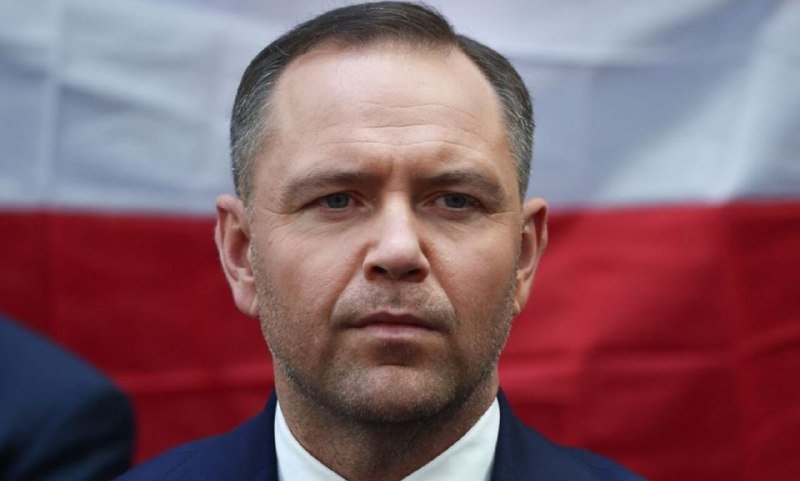
The Polish government announced on 29 May 2026 that artists would be included in the national social security system — a policy framed as liberation for creatives who would no longer need to choose between vocation and survival. That same day, tax inspectors in Gdańsk fined a pizzeria owner 2,500 zł after determining that shrimp fell under a luxury goods classification, rendering his entire seafood pizza taxable as a premium product. The two stories appeared in the same news cycle, reported by the same outlets, and they deserve to be read together.
The juxtaposition is not accidental. It is structural.
A subsidy without a means test
The artist provision — announced with photographs of the relevant committee convening — represents the kind of targeted social spending that polls well in liberal urban constituencies and generates warm coverage in cultural publications. Artists, the framing goes, are precarious workers whose creative output benefits society at large and who deserve the same basket of protections available to employees in more conventional sectors. It is not a radical proposition, and the political appeal is obvious.
But the announcement came without any accompanying detail on eligibility criteria, income thresholds, or the fiscal cost to a social security system already under pressure from demographic headwinds. The committee deliberated publicly; the numbers did not follow. This is a familiar pattern in Polish fiscal communication under the current administration — significant policy commitments announced with ceremony, with the mechanical details delegated to subordinate legislation and regulatory consultation that rarely receives equivalent coverage.
The lack of specificity matters because the distributional consequences are not neutral. If the artist category functions as a presumptive subsidy — which, given Poland's pension architecture, it effectively would — then it is a subsidy flowing disproportionately to a professional demographic that skews toward urban centres, higher educational attainment, and existing social capital. That is not a critique of artists as a class. It is a question about who is designing the social contract, and for whom.
The pizzeria as policy object
The Gdańsk case operates on a different register but illuminates the same distributional logic from below. Tax inspectors — working undercover in the literal sense — visited a pizzeria, ordered a shrimp pizza, ate it, and issued a fine. The statutory basis was a classification decision: seafood, and by extension any dish containing it, constitutes a luxury good under Polish VAT provisions. The fine was 2,500 zł. For a small independent pizzeria in a medium-sized city, that is not an administrative inconvenience. It is a existential pressure.
The critical observation is not that the tax authority was wrong about the law — the classification of luxury goods under Polish VAT is a genuine statutory question, not a policy invention — but that the enforcement energy is running in this direction. A state with sufficient bureaucratic bandwidth to deploy undercover inspectors to eat shrimp pizzas is a state choosing where to look. The same system is simultaneously extending social security coverage to a professional category whose members are, by the available evidence, significantly less economically precarious than the median small business owner in the service sector.
The enforcement asymmetry
Poland's tax administration has undergone significant modernisation in recent years, with digital reporting requirements, split-payment mechanisms, and expanded audit capacity. The ambition, articulated across multiple administrations, has been to broaden the tax base by reducingInformal economic activity and improving compliance among small and medium enterprises. That ambition is legitimate and, in principle, applied uniformly.
But enforcement is not uniform in practice. The Gdańsk case illustrates a pattern — widely documented in Central European compliance literature — where administrative capacity is deployed with visible intensity against visible economic actors: restaurants, retail, small services. The audit of a pizzeria, if contested, becomes a matter of public record. The audit of a cash-based informal contractor in a different sector may not surface in the same way. The 2,500 zł fine, published on social media and shared widely, functions as a deterrent signal to a defined community of small business operators. It is legible. It is proportionate, in the bureaucratic sense, to the infraction.
What is less legible is the parallel provision of social security access to a professional category that, by dint of project-based income and variable annual earnings, has historically struggled with contribution consistency. That struggle is real. The policy response is not wrong in principle. But the sequencing — headline subsidy announcement alongside fine enforcement against a small food business — communicates something about where the state's sympathies lie.
What the pattern tells us
The two cases, read together, suggest a government that is comfortable with targeted social interventions when those interventions serve visible political constituencies, but that deploys its compliance apparatus with equal vigour against economic actors who lack equivalent representational infrastructure. Artists have a professional association, cultural visibility, and sympathetic press coverage. A Gdańsk pizzeria owner has a fine and a social media thread.
This is not, in the first instance, a story about corruption or bad faith. It is a story about institutional incentives and the political economy of social spending. Governments respond to constituencies. Constituencies that are organised, culturally prominent, and politically sympathetic will tend to receive policy attention that is disproportionate to their economic need. Constituencies that are atomised, locally embedded, and unorganised will receive enforcement attention that is proportionate to their visibility and manageable in administrative terms.
Poland's current coalition — led by Donald Tusk's Koalicja Obywatelska — runs on a complex internal negotiation between progressive urban liberals and more traditional centrist operators. The artist provision sits comfortably in the liberal wing's political vocabulary. The Gdańsk enforcement sits comfortably in the technocratic wing's compliance agenda. The tension between them does not appear to be on anyone's internal agenda, because it is not a tension that generates headlines in the places where the coalition needs them.
The honest question this leaves for Polish taxpayers — and for the committee that will decide on artist subsidies — is whether the social security system is expanding to accommodate genuine precarity, or whether it is being extended as a cultural concession to a constituency that was always going to vote for the current government anyway. That question deserves an answer. The 2,500 zł fine suggests the state knows how to be precise when it wants to be.
This publication covered the artist social security announcement and the Gdańsk pizzeria case as parallel stories rather than as connected commentary. The wire ran them separately. We think the juxtaposition is the story.
Wire provenance
This editorial synthesis draws on the following public wire/social posts:
- https://x.com/ekonomat_pl/status/1954165873923276800
- https://x.com/ekonomat_pl/status/1954158500000661504
- https://x.com/sknerus_/status/1954162739600318465