The Prediction Market President: How Polymarket Bets Became the New Editorial Meeting
Polymarket's 24% probability on Trump praising Putin and an 8% chance on a tariff dividend signal something deeper than forecasting — they're a running audit of presidential credibility and an emerging competitor to the traditional news cycle.
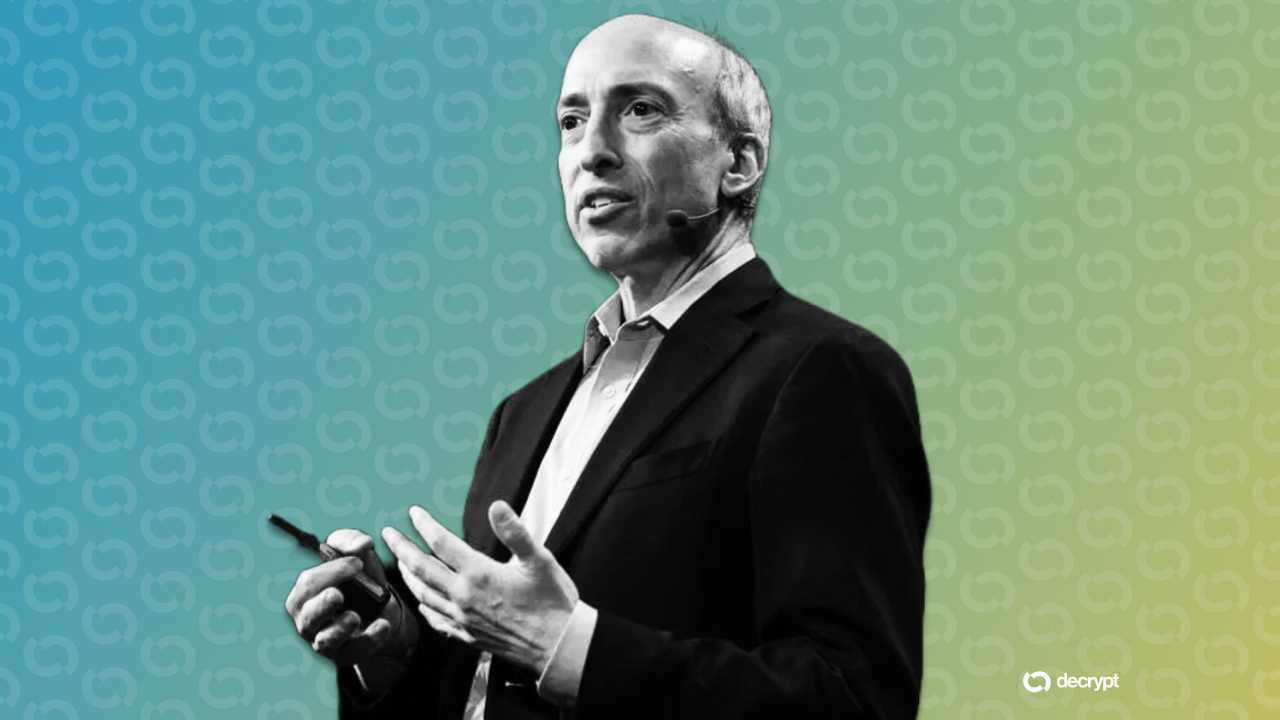
On 30 May 2026, a Telegram channel associated with Ukrainian news aggregated a Washington Post report with a single, arresting detail: Donald Trump, it claimed, wants his portrait printed on U.S. dollar bills during his lifetime. The report was unverified by the time it spread across Telegram and X. That did not stop it from generating traffic. Nor did it stop Polymarket — the decentralized prediction market that has quietly become a fixture in political intelligence — from registering the story as a data point worth pricing.
The dollar vanity anecdote is a symptom. The disease is what Polymarket has become: a real-time民意调查 of presidential credibility, conducted not through polling firms but through money. As of 29 May 2026, Polymarket users assigned a 24% probability to Trump publicly praising Vladimir Putin by the end of the month. An 8% probability attached to the idea that Trump creates a "tariff dividend" — the kind of headline-friendly policy win that might be announced in a Truth Social post rather than negotiated in a trade ministry — by the end of June.
These numbers are not forecasts in the conventional sense. They are bets. And in the era of the transactional presidency, the distinction has eroded to near-irrelevance.
The Market as Headline Generator
The mechanics deserve attention. Prediction markets aggregate information that traditional polling misses: insider sentiment, momentum signals, the credibility gap between what officials say and what markets believe will actually land. When a Polymarket event asks whether Trump will publicly praise Putin by a given date, it is not merely asking about diplomatic language. It is asking whether the President of the United States will perform a reversal that the market considers unlikely enough to be worth betting against.
The 24% figure means roughly one in four traders thinks it happens. That is not a dismissal — it is a nontrivial tail risk, the kind of outcome that moves cables and causes officials to prepare holding statements. The 8% probability on a tariff dividend is lower, but nonzero, and zero is the floor that conventional political reporting typically assigns to outcomes that have not yet been announced.
The Unusual Whales account on X reported on 29 May 2026 that Trump had stated the naval blockade "will now be lifted." Whether that statement was verified, misreported, or selectively leaked to a friendly account is less interesting than the market reaction it generated. The blockade lift claim — whatever its provenance — became a data input the moment it was posted. Prediction markets are not waiting for the editorial meeting. They are running in parallel.
Self-Referential Credibility Loops
The structural problem with treating prediction markets as editorial proxies is their susceptibility to the very noise they are meant to filter. A Polymarket event assigning probability to a Trump statement creates an incentive to make the statement. The prediction market becomes a forward commitment device: place the bet, then create the outcome. This is not hypothetical. Prediction market operators have noted that high-profile events attract attention that makes the predicted outcome more likely, not less — a feedback loop that traditional polling, with its methodological lag, largely avoids.
The dollar portrait story illustrates this neatly. A desire for presidential legacy monumentality — if true — is not a policy position. It is a vanity signal. But vanity signals, when reported, create market movement. Market movement creates incentives to perform the vanity. The loop closes.
What makes this structurally significant is not the individual bets but the cumulative effect: a running audit of presidential credibility conducted in real time, priced in dollars, and accessible to anyone with an internet connection and a cryptocurrency wallet. Traditional media covers the statements. Polymarket covers the credibility gap between statement and outcome.
What the Numbers Cannot Tell Us
The 24% and 8% figures must be read with appropriate humility. Prediction markets are efficient only under high liquidity and low manipulation risk — conditions that do not uniformly obtain across all events. The Putin praise market trades on thin volume. The tariff dividend event is a compound claim: what constitutes a dividend? A tax cut? A tariff reduction? A trade deal signed? The ambiguity in the event definition is also ambiguity in the market signal. Readers should treat these numbers as indicators of market sentiment rather than probabilistic forecasts of policy outcomes.
There is also the question of who is trading. Polymarket's user base skews toward crypto-native, internationally dispersed participants who are not representative of American public opinion or, for that matter, of professional political intelligence. A 24% probability on Putin praise from this cohort may say as much about the political priors of crypto traders as about the likely behavior of the White House.
The Stakes for Readers and Institutions
The deeper question is whether this market logic improves or degrades political information. On one side: prediction markets aggregate dispersed information faster than polling, price in credibility gaps that surveys cannot detect, and create accountability mechanisms for officials who habitually overpromise. On the other side: the markets reward performance over deliberation, price in headline risk before outcomes are known, and create perverse incentives for officials to game the market by making — or withholding — statements for financial effect rather than policy reason.
For readers, the practical implication is a recalibration of news consumption. When a Polymarket event exists alongside a story, the probability number is now part of the story. The question "will this happen?" has a market price. That price is not the answer. But it is now part of the evidence base that serious consumers of political news must engage with.
The dollar portrait story — whether it originated from a genuine White House briefing or a Telegram-facilitated game of telephone — will be forgotten by next week. The 24% and 8% numbers will not disappear. They will sit in market ledgers, waiting for the next headline that either confirms or disproves them.
Wire provenance
This editorial synthesis draws on the following public wire/social posts:
- https://t.me/TSN_ua/28451
- https://x.com/unusual_whales/status/1952365789234077941