The Art of Presidential Health Theatre and What It Signals
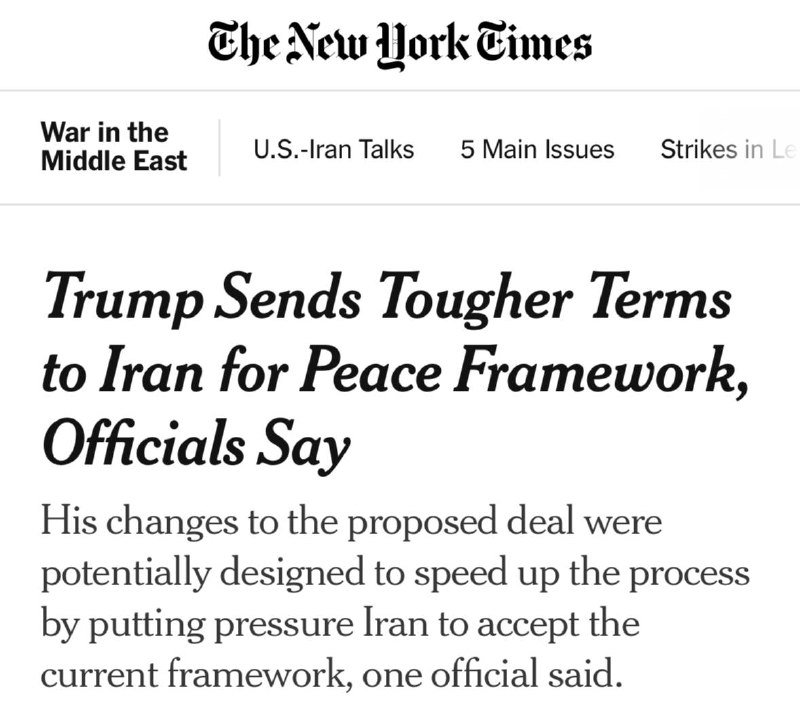
On 30 May 2026, the White House released the results of President Trump's annual physical examination. The President's physician declared Trump to be in "excellent health" and "fully fit" to serve. The disclosure landed in the middle of a week when the administration was simultaneously navigating one of its most consequential foreign policy judgments — what to do about Iran's latest proposal, a decision that will shape Middle East stability and global energy markets for years.
Trump has delayed a final decision on the Iran proposal, the New York Times reported on 29 May, as the White House weighs extending a ceasefire that has briefly contained regional tensions. The delay alone moved markets: U.S. oil prices fell below $87 per barrel for the first time since April, a signal that traders are watching the uncertainty closely. The relationship between a President's physical condition and his ability to make a decision of this magnitude is not abstract. When a White House releases a medical report asserting fitness, it is doing more than providing data — it is managing the information environment around a high-stakes judgment call.
The Coincidence That Isn't
The timing of the health report is either a remarkable coincidence or a piece of deliberate choreography. A President's annual physical is routine in the sense that it occurs on a schedule, but the language of the disclosure — "fully fit," deployed in a formal White House communication — is anything but routine. This is information management at the highest level, and it arrives when the administration most needs to project steadiness.
The Iran question is not a binary choice between war and peace. It is a decision about whether to extend a ceasefire that has held — barely — and whether to accept terms that Tehran has put forward through back-channel communications. The terms themselves remain undisclosed in public sources, which makes the decision harder to read and harder to sell domestically. An administration that can demonstrate its principal is in robust health has a stronger hand when it comes to claiming credibility with adversaries. "Fully fit" means Trump can think clearly, move quickly, and absorb the political cost of a decision either way. That is a message directed as much at Tehran as it is at Washington.
What the Oil Market Is Saying
The drop in U.S. oil prices below $87 per barrel is a market verdict on the uncertainty. Prices fell as Trump said he was approaching a final decision, which suggests traders are pricing in either a positive resolution — some form of extended ceasefire or negotiated restraint — or at minimum the absence of a dramatic rupture. The fall is not a crash; it is a recalibration downward, which means the market believes something moderate is more likely than something catastrophic.
This matters for how the health disclosure functions. A President who is declared physically capable of managing a crisis is more credible when the market is watching a crisis. The Trump camp would argue that the medical report and the Iran posture are separate things — one is health, one is strategy. But in the information environment that surrounds a decision like this, they are not separable. The health report is part of the signal. The market is reading all of it.
Iran, Leverage, and the Problem With Fitness Disclosures
There is an uncomfortable dynamic at the centre of this. Presidential health disclosures have historically followed a triggering event — a visible stumble, a medical episode that prompts questions. The routine annual physical, released proactively, is different. It reads as a political instrument. And when that instrument is deployed in the same week as a foreign policy decision of consequence, the instrument's purpose becomes clearer.
The administration wants Tehran to believe that Trump is steady, present, and capable of following through. The health report is one data point in that signal chain. Whether it works depends on whether the Iranians — and the Europeans and the Arabs watching this — read it as genuine capability or as theatre. Both are possible. The Middle East has seen American Presidents deploy physicality as a proxy for resolve before, and the record is mixed. Sometimes it produces leverage; sometimes it produces miscalculation. The difference is often whether the counterparty believes the underlying capacity is real.
The Harder Question
None of this means the health disclosure is illegitimate. Presidents manage information around high-stakes decisions. That is part of the job. But it is worth asking what we are being told and what we are not. The medical report says Trump is physically capable. It does not say the Iran decision is made, or made wisely, or made with full information. The White House has given us a picture of the President's body; it has not given us a picture of the deal.
The oil market is pricing uncertainty downward, which suggests traders see a moderate outcome as more likely than escalation. That is encouraging. But the uncertainty remains — and it will remain until Trump decides. The health report says he can decide. Whether he decides well is a different question, and one the medical record was never going to answer.
On 30 May 2026, the White House chose to release a document that functions as political infrastructure, not clinical data. That choice tells us something about how this administration communicates — and about what it needs the world to believe as it navigates one of the most consequential foreign policy windows of this term.
Wire provenance
This editorial synthesis draws on the following public wire/social posts:
- https://t.me/wfwitness/9842
- https://t.me/Cointelegraph/12471
- https://t.me/Cointelegraph/12470