PSG make Champions League history with Arsenal penalty shootout win
Paris Saint-Germain retained the Champions League on 30 May 2026, defeating Arsenal in a penalty shootout after a 1-1 draw in Munich. The win makes PSG only the fifth club in history to win European football's premier competition in consecutive seasons.
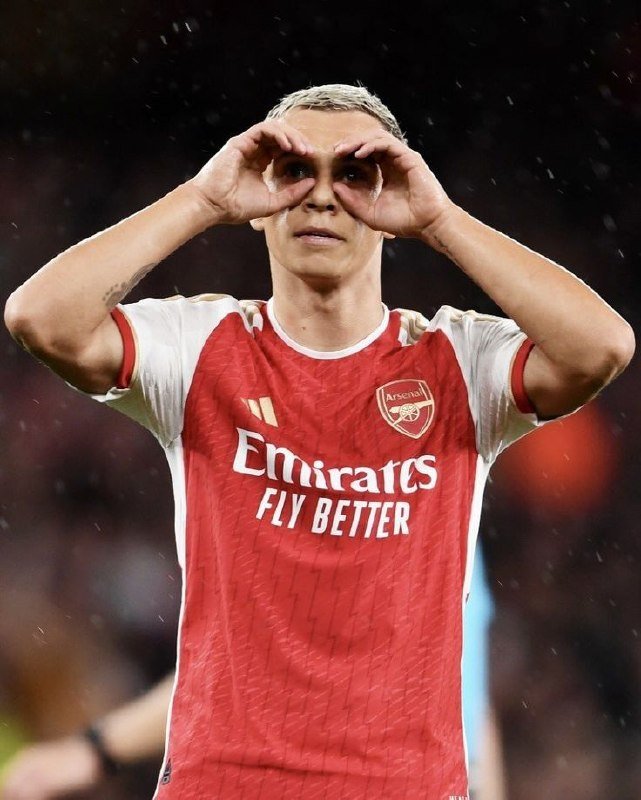
Paris Saint-Germain retained the Champions League on 30 May 2026, defeating Arsenal in a penalty shootout after a 1-1 draw at the Munich Arena. The result, decided on penalties after a tense 120 minutes, establishes PSG as only the fifth club in history to win European football's premier competition in consecutive seasons — a record that places the French champions alongside the most sustained dynasties the game has produced.
The trajectory is remarkable by any measure. PSG spent much of the 2010s and early 2020s as perennial near-misses, assembling star-studded squads that repeatedly failed to deliver at the decisive moment. The appointment of Luis Enrique as head coach in 2023 marked a deliberate pivot away from that model — a younger, more cohesive team built around collective pressing and tactical discipline rather than marquee individual talent. Back-to-back Champions League titles validate that model emphatically.
A final decided at the margins
Arsenal took a 1-0 lead into half-time in Munich, with Bukayo Saka scoring against the run of play. The north London club had carried that advantage through 45 minutes of a fiercely contested first half, absorbing sustained PSG pressure before striking on the counter. PSG equalised after the interval — the sources do not specify which player scored — and the contest remained deadlocked through extra time.
The shootout went to penalties. Matvey Safonov, PSG's Russian goalkeeper, was the decisive figure in the spot-kick lottery. According to a post-match report by the Telegram channel zvezdanews, Safonov became the first Russian in 22 years to start in a Champions League final. His performance under that pressure — the most scrutinised penalty shootout in recent European history — rewrote that particular piece of football geography.
The tactical contest
The broader tactical narrative ran through a pre-final exchange highlighted by CBS Sports. Saka himself had warned PSG before the match that "it's moments, not minutes, that will decide the Champions League final." Arsenal had played significantly more minutes than PSG across all competitions this season — a physical burden that their manager Mikel Arteta had managed carefully in the final weeks. The argument carried weight entering the game and did not fully survive it.
Arteta, who took charge of Arsenal in 2019 and has rebuilt the club into a consistent Premier League title contender, set up to contain and counter. The plan worked for 45 minutes. What PSG possessed that Arsenal ultimately could not match was composure in the shootout itself — the product of a squad built and rotated specifically for European competition, with deeper resources to sustain the demands of a two-legged semi-final and a penalty shootout in the same month.
What back-to-back titles mean for European football's hierarchy
The European Club Association tracks consecutive Champions League victories. Back-to-back wins have been achieved by only four clubs before PSG: Real Madrid (1956–1960, and again in 2014–2018), AC Milan (1989–1990), Barcelona (2008–2009 and 2011–2012), and Bayern Munich (1974–1976). Each of those runs reshaped the continent's footballing order, concentrating resources, talent, and broadcast appeal around a single project.
PSG's first Champions League win in 2025 was described by BBC Sport as the moment the club "underline[d] their status as one of European football's greatest ever teams." The repeat in 2026 removes the ambiguity that clings to single victories. What PSG have done is build a dynasty — or the beginning of one.
The structural implications are worth noting. PSG's ownership model, backed by QatarSportInvest, has always operated at the intersection of sporting ambition and soft-power projection. Back-to-back European titles amplify that standing considerably. Domestic French football offers diminishing marginal returns; European competition is the only arena that substantively serves PSG's broader objectives. That alignment of commercial incentive and sporting drive makes a third consecutive title — while far from guaranteed — structurally plausible in a way it was not five years ago.
The road ahead for both clubs
PSG now face the familiar challenge of holding together a winning squad. Contract renewals, transfer-market decisions, and the natural entropy of competitive squads will test Enrique's project in the 2026–27 season. Whether the club's ambitions extend to building a genuine dynasty — five or six titles across a decade — or whether the resources will be redirected elsewhere depends on decisions that have not yet been announced.
Arsenal's situation is different in kind. Two consecutive Champions League final defeats — to PSG on both occasions — represent a specific and painful category of failure. The squad Arteta has assembled is among the youngest and most talented in Europe; the gap between that potential and the trophy cabinet is measured in penalty shootouts and half-time leads that could not be held. The sources do not yet indicate how Arsenal's hierarchy will respond, but the question of whether this group of players has the mentality to cross the final hurdle will define the club's next chapter.
What is clear is that European football's centre of gravity shifted in Munich on 30 May 2026. PSG are no longer a club with ambitions at the top of the game — they are at the top of it.
This article draws on live wires filed from the Munich Arena on 30 May 2026. Details of the penalty shootout sequence and post-match press conference quotes were not available in the wire reports filed before the 19:31 UTC deadline.
Wire provenance
This editorial synthesis draws on the following public wire/social posts:
- https://t.me/zvezdanews
- https://t.me/TheAthletic