Ramadan as Statecraft: How Iran Wove National Resilience Into Its Holiest Month
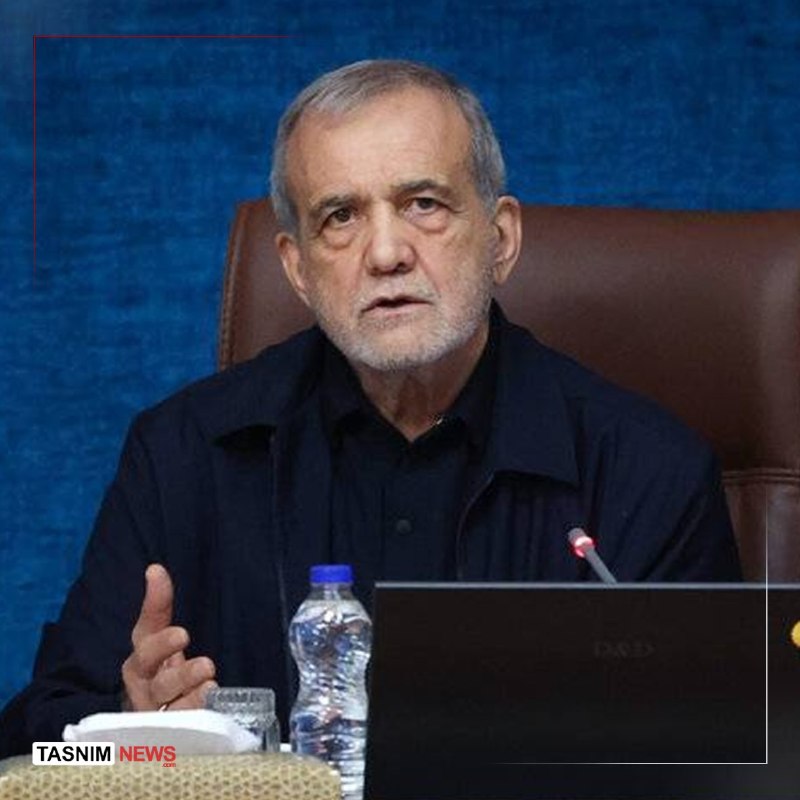
On the twenty-ninth day of Ramadan, Iran's Minister of Culture and Islamic Guidance, Mohammad Mehdi Esmaeili, addressed a public gathering at Revolution Square in Tehran. The occasion was not a religious lecture in the conventional sense. It was a piece of state communication, timed to land in the final stretch of the holiest month — and, by no coincidence, in the same window that nuclear negotiators were reconvening in Vienna.
The substance, as carried by Mehr News on 30 May 2026, followed a recognisable template. The Iranian nation, Esmaeili said, "did not back down in the face of enemies and problems and there was no political vacuum." Earlier in the day, he had described the Iranian people as having passed "the elixir of courage" to one another across the month. A third statement, also released via the same state-affiliated wire, cited him saying the "achievements of the holy defense of Ramadan" included the deepening of national unity and solidarity.
Taken individually, these are the kind of pronouncements that Western wire reports tend to file under the generic heading of official rhetoric. Read in sequence, they reveal something more deliberate: a Ministry of Culture constructing an entire month of religious observance as an act of geopolitical messaging.
The Messaging Architecture of a Sacred Month
Ramadan in Iran has long operated on more than one frequency. It is a period of personal observance for millions of Iranians who fast, pray, and gather with family. It is also an annual opportunity for the state media apparatus to recode religious ritual as a narrative about collective strength under pressure. The Ministry of Islamic Guidance — which oversees press licensing, cultural institutions, and much of the state-aligned media ecosystem — shapes which images circulate, which clerics appear on television, and which vocabulary dominates public statements throughout the month.
What the 30 May statements reveal is the specific language chosen for the final days of this year's observance. "Elixir of courage" is not accidental phrasing. It positions ordinary citizens as conduits of a values-transmission chain — they did not merely endure the month, they actively renewed something that would outlast it. The framing implies a population that self-governs its morale, requiring no external reassurance. The political resonance is obvious: in a period marked by sanctions pressure, currency instability, and renewed nuclear diplomacy, a narrative of autonomous national resilience serves a distinct purpose.
The counter-framing — that this messaging is, itself, a managed construct — is not difficult to mount. The statements were released through a ministry, delivered at an official public gathering, and disseminated via a state-affiliated news agency. The very mechanism of their production undermines the spontaneity they claim to describe. Iranian citizens did not spontaneously generate this language; it was announced from a podium, then pushed through official channels. The irony is that Iranian officials rarely acknowledge this gap. When Esmaeili said authorities "wanted to destroy the hearts of the people by creating great fear and mental anxiety" but that "this plan did not" succeed, he was describing an adversarial psychological campaign — without naming any actor as its author. The ambiguity is structural to the form.
Why This Framing, Why Now
The timing of a culture minister's most explicit Ramadan statements, landing on the final days of the observance, invites a structural reading. When major diplomatic negotiations are active, state media in any system tends to calibrate its public messaging to the negotiating environment. Domestic unity rhetoric during talks serves a dual purpose: it signals to Western counterparts that concessions will not be politically easy to sell at home, and it reassures domestic audiences that whatever the outcome, the national character is intact.
Iranian state media has done this before. What is consistent across cycles is the vocabulary: resistance, national dignity, collective endurance, the eliding of internal political disagreement in favour of a unified national self-presentation. The Ministry of Culture's Ramadan messaging is not separate from foreign policy — it is part of its machinery, operating on a different substrate.
The sources covering this sequence are exclusively from Iranian state-aligned outlets, which is the natural limitation of the available wire context. The framing is one-sided by construction. Independent journalists inside Iran operate under significant constraints; foreign correspondents face reporting restrictions that limit on-the-ground corroboration. What is available — these ministry statements, distributed through Mehr News — represents the authorised version of events. Reading it as such, rather than treating it as transparent description, is the appropriate analytical posture.
Cultural Messaging as a Foreign Policy Instrument
This is the structural layer worth dwelling on. Across governments that manage state-adjacent media ecosystems, religious observance offers a particularly efficient vehicle for international communication because it carries implicit legitimacy. A foreign ministry statement can be dismissed as propaganda; a cleric or culture minister speaking about a shared religious tradition reads differently to audiences in the region and across the wider Islamic world.
Iran has used this instrument more deliberately than most. The vocabulary of resistance — a term that in Iranian state media means something quite specific, rooted in anti-colonial political theology — is designed to travel beyond Iran's borders. Ramadan messages about national courage and solidarity are not only for Iranian domestic consumption. They are, in part, a form of regional communication addressed to populations in Lebanon, Iraq, Yemen, and beyond who share the religious framework but not necessarily the political alignment.
Western diplomatic analysts tend to file these communications in a mental drawer labelled "regime boilerplate." That reading is not wrong, but it underestimates the work the messaging does. Boilerplate implies inertia; what these statements reveal is careful construction — word selection, institutional channel, timing — that reflects genuine strategic thought about the relationship between cultural messaging and negotiating leverage.
The institutionalised nature of this communication is itself the story. When a minister of culture, speaking at an official public gathering, frames an entire month's religious observance as evidence of national resistance, he is not merely describing a phenomenon. He is operating a piece of state infrastructure — one that transforms ordinary religious practice into a geopolitical asset.
What This Means Going Forward
The immediate context is the ongoing Vienna nuclear negotiations, where the shape of any eventual agreement will depend on both technical concessions and the domestic political room that each side can claim. Iranian state messaging during Ramadan — insisting that national unity is intact, that external pressure has not produced internal capitulation, that the people have not wavered — is designed to narrow that room. The message to Western negotiators is not that Iran cannot deal, but that any deal must be compatible with a national self-image the state has spent a month reinforcing.
Whether that self-image reflects lived reality inside Iran is a separate question, and one the available sources do not resolve. What the sources make clear is that the Islamic Republic's Ministry of Culture treats religious observance as a communication channel with both domestic and international dimensions — and that the statements released in the final days of Ramadan 2026 followed that logic precisely.
The sources on this sequence are Iranian state-affiliated wire reports. That is a constraint on the reporting, not a licence to ignore it. State communications are themselves political facts that shape the environment in which diplomacy unfolds. Treating them as such — reading them as instruments rather than descriptions — is the editorial task. The statements are the news. Their production and their timing are the story.
Desk note: Monexus covered this sequence through the Mehr News wire feed, which represents the authorised institutional framing. The absence of independent corroboration is a substantive editorial constraint, and readers should evaluate the claims accordingly. Articles sourced exclusively from state-aligned wires require explicit acknowledgment of that limitation, which this desk note provides.
Wire provenance
This editorial synthesis draws on the following public wire/social posts:
- https://t.me/mehrnews/584322
- https://t.me/mehrnews/584320
- https://t.me/mehrnews/584317