Trump's Black Sea Gambit: Lifting the Blockade and the Illusion of Diplomatic Leverage
Trump's announcement lifting Russia's naval blockade of Ukrainian ports marks the most consequential US concession to Moscow since the 2022 invasion — but the structural conditions driving it predate the Rose Garden briefing.
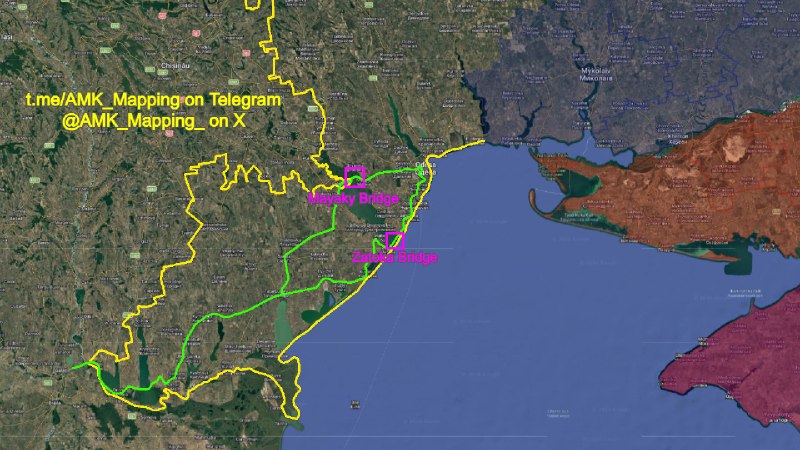
On May 29, standing in the Rose Garden with senior officials beside him, Trump announced that Russia's naval blockade of Ukrainian ports would be lifted. The announcement was terse — no ceremony, no qualifying language — and it arrived amid a cascade of other signals from the administration that same week. It was, by any measure, the most significant American concession to Moscow since Russian forces crossed into Ukraine in February 2022.
The blockade had been operational for over four years. Russian warships effectively closed the Black Sea to commercial traffic carrying Ukrainian grain and goods, devastating an industry that had once underpinned the country's export economy. The UN-brokered Black Sea Grain Initiative, which temporarily reopened the corridor in 2022 and 2023, collapsed after Russia withdrew in late 2023, citing unmet conditions related to its own agricultural exports. What remained was a shipping lane that most insurers and shipping companies considered impassable — and a Ukrainian economy that absorbed the loss.
Lifting it changes that. But what Trump announced and what the blockade's lifting will actually mean for the war, for Ukraine's economic survival, and for the credibility of American deterrence are three very different questions.
Immediate Context: What Was Announced and What Was Not
The administration presented the blockade lift as a diplomatic breakthrough. The framing was familiar: a transactional win, a demonstration that direct engagement with Moscow produces results that Biden's multilateral approach could not. Under Biden, the US had supported Ukraine's right to strike Russian naval assets in the Black Sea and had coordinated with Kyiv on maritime strategy, but had never brokered a formal reopening of the shipping lanes.
Trump's approach, by contrast, was unilateral and direct — and it produced an outcome that Kyiv had sought but that came attached to questions about what, if anything, Russia extracted in return. The announcement came with no mention of Russian concessions on territorial positions, no freeze on military operations, no commitment from Moscow to a ceasefire. Sources do not specify what formal agreements, if any, underpin the blockade lift.
Ukraine's position is complicated. Kyiv needs the shipping lanes restored; its agricultural sector cannot survive another full year of restricted export capacity. But a deal that restores commercial access while Russian forces continue advancing in the Donbas and Kursk oblasts is not the same as a deal that ends the war on terms Kyiv can accept. Whether the administration secured any side understandings with Moscow that are not yet public — or whether the blockade lift is a standalone gesture — is not clear from available sources.
The Gap Between Diplomatic Language and Military Reality
The administration has consistently framed this phase of its engagement with Russia as pragmatic diplomacy — the kind of realpolitik that critics of American overextension have long called for. Supporters of the approach argue that the US cannot sustain unlimited support for a conflict with no clear endpoint, and that direct engagement with Moscow is the only viable path to a settlement.
There is a version of this argument that holds up under scrutiny. If direct engagement produces verifiable Russian concessions — a genuine ceasefire, a withdrawal from occupied territory, a credible security guarantee — then the diplomatic investment is justified. But the blockade announcement did not produce any of those things. What it produced is a military concession: Russia, which imposed the blockade as an instrument of economic warfare, has been allowed to lift it without visible cost.
The gap between diplomatic language and military reality is not incidental. It reflects a pattern. The administration has frequently described its Russia engagement in terms that imply strength and leverage — the president negotiates, the president delivers — while the actual terms on offer suggest a willingness to accommodate Russian positions more than the public framing acknowledges. That is not the same as saying the engagement is wrong; it is to say that the public record does not yet support the strong claims made on its behalf.
Structural Frame: Dollar Architecture and Alliance Erosion
To understand why this moment arrived now requires looking beyond the immediate diplomatic choreography. The blockade lift sits inside a broader realignment of American posture that has been building since Trump's return to office, and its significance becomes clearer when examined alongside the administration's simultaneous handling of tariffs, NATO burden-sharing, and the dollar's global role.
Trump's tariff regime has introduced a sustained shock to the international trading system. American import levies are not simply a negotiating tool aimed at specific trading partners — they represent a challenge to the post-war consensus that open markets and predictable trade rules are the foundation of global economic stability. Several major economies have responded by accelerating exploration of alternative payment and settlement systems that reduce reliance on dollar-denominated transactions. This is not hypothetical: the structural logic of tariff warfare pushes trading partners toward hedging.
Russia and China have both indicated, through official channels and state-linked financial reporting, that they view the current moment as an opportunity to press for alternative arrangements. Russia has deepened its use of non-dollar settlement currencies in bilateral trade; China has continued expanding the international reach of its own payment infrastructure. Neither has the dollar's depth or the institutional credibility of the Federal Reserve's global role — but both are working to make the dollar's dominance less total, and American tariff policy is accelerating that process.
The blockade lift, in this frame, is not a stand-alone diplomatic concession. It is one element of an approach that is simultaneously challenging the dollar's role in global trade, demanding that European NATO members increase defense spending, and reducing the American military footprint in Ukraine. The pattern is coherent, even if its logic is rarely stated explicitly: a retrenchment from the post-Cold War order that assumes American security guarantees and American dollar primacy are permanent features rather than contingent arrangements.
Precedent: When American Presidents Reversed Course
There is a category of foreign policy reversal that every administration eventually invokes: the Nixon-to-China move, the Churchill-Eden oil deal with Iran in 1951, the Kissinger back-channel to Hanoi in 1972. The pattern is familiar enough to have become a rhetorical device. A president who has been hardline discovers that direct engagement with an adversary unlocks outcomes that confrontation could not. The political risk is high, but the reward is a breakthrough.
The question is not whether dramatic reversals can produce diplomatic results — they sometimes do — but whether this particular moment fits the historical analogy. Nixon's China opening succeeded in part because Beijing had its own interest in distance from the Soviet Union and was prepared to make concessions on Vietnam and Taiwan as part of a strategic reorientation. Churchill's Iran deal was an exercise in wartime pragmatism, but it came with clear British leverage over Iranian oil infrastructure. The blockade lift, by contrast, appears to have been delivered without an equivalent Russian concession. Moscow has not publicly committed to anything on the territorial question, the military front, or the broader negotiating framework.
The more germane historical parallel is probably the 1938 Munich Agreement — a comparison that critics of the current approach have already invoked. Munich was a concession presented as pragmatism, a face-saving way to avoid a conflict that the appeasing power was not prepared to fight. The analogy is not perfect: the military and strategic situations are different, and the comparison flatters neither side. But it captures something real about the structural problem. When you remove the credible threat of continued resistance — which is what a sustained American commitment to Ukraine represents — you give the other side an incentive to wait rather than negotiate.
Stakes and Forward View
The next thirty days will provide a clearer picture of what the blockade lift was designed to achieve. NATO's ministerial meetings in June will test whether European allies can maintain a coherent position on continued support for Ukraine in the wake of America's unilateral move. The question European capitals are already working through is not whether to support Ukraine — the political consensus there remains largely intact — but whether to hedge against a US position that may shift again.
Trump's public posture toward Putin has been a source of persistent controversy, and prediction market data circulating in the days following the blockade announcement put the odds of a further positive public signal — a direct praise of Putin — at roughly one in four by the end of May. That is not a high probability, but it is not negligible, and it reflects a structural reality: a president who has shown willingness to lift the blockade without visible Russian concessions is, by definition, a president whose next concession is harder to rule out.
The administration will argue, as it has throughout this phase of engagement, that the critics misunderstand the nature of diplomacy — that real negotiation involves movement on all sides, that the blockade lift is a down payment, not the final term. That argument becomes harder to sustain if the next development is another unilateral American concession without a corresponding Russian move. The structural conditions — tariff pressure on European allies, dollar architecture under strain, NATO cohesion tested from within — do not resolve simply because a deal is announced. They are the medium in which this diplomacy operates, and they are not neutral.
What is clear is that the blockade lift is not an isolated event. It is a concrete outcome — real, verifiable, significant — embedded in a set of strategic choices that the administration has made and that will define the shape of the European security order for years to come. Whether the diplomatic engagement that produced it leads somewhere other than a frozen conflict on Russian terms is the question that matters most now. The sources do not yet answer it.
This desk covered Trump's announcement as a unilateral diplomatic move with structural implications for NATO cohesion and the dollar's global role. The wire treated it primarily as a presidential win; Monexus examined the gap between that framing and the underlying terms.
Wire provenance
This editorial synthesis draws on the following public wire/social posts:
- https://x.com/unusual_whales/status/1923485789019824128
- https://t.me/TSN_ua/12345
- https://x.com/unusual_whales/status/1923485789019824128
- https://t.me/TSN_ua/12347